
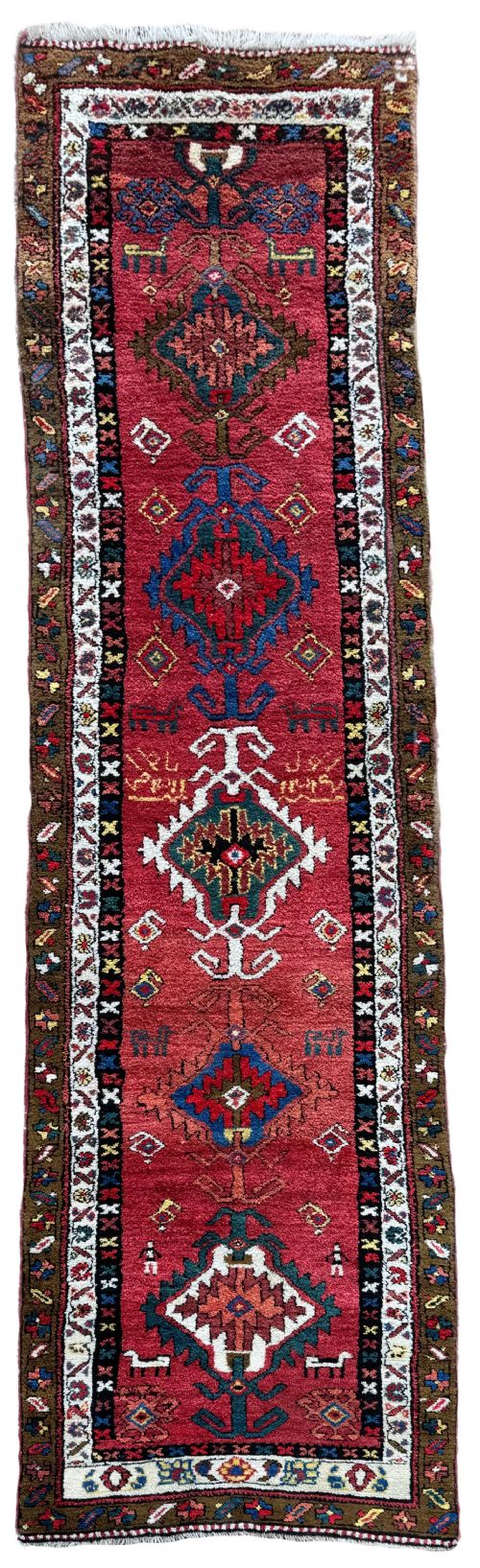
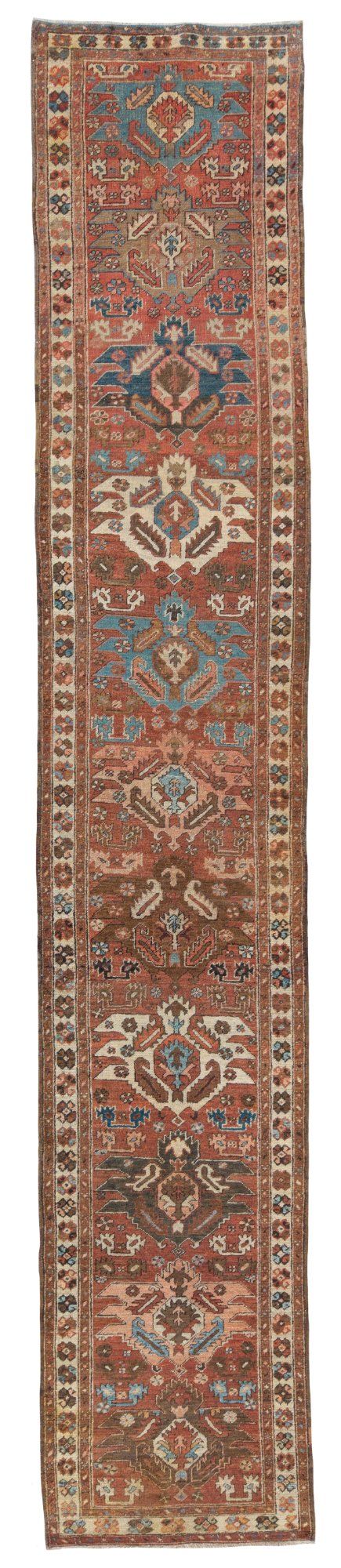


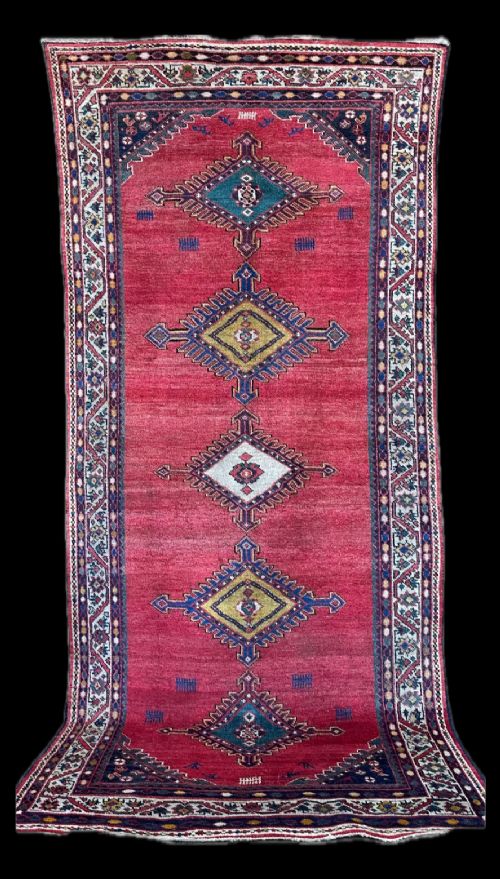
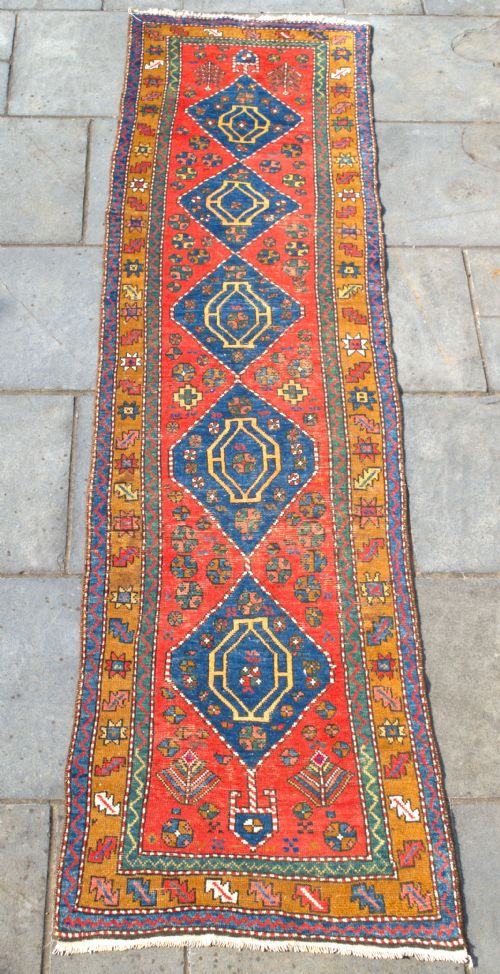


Northwest Persian Long Carpet
These northwest persian long carpet examples bring tribal warmth and distinct village geometry to long corridors and galleries.
Northwest Persian Long Carpet
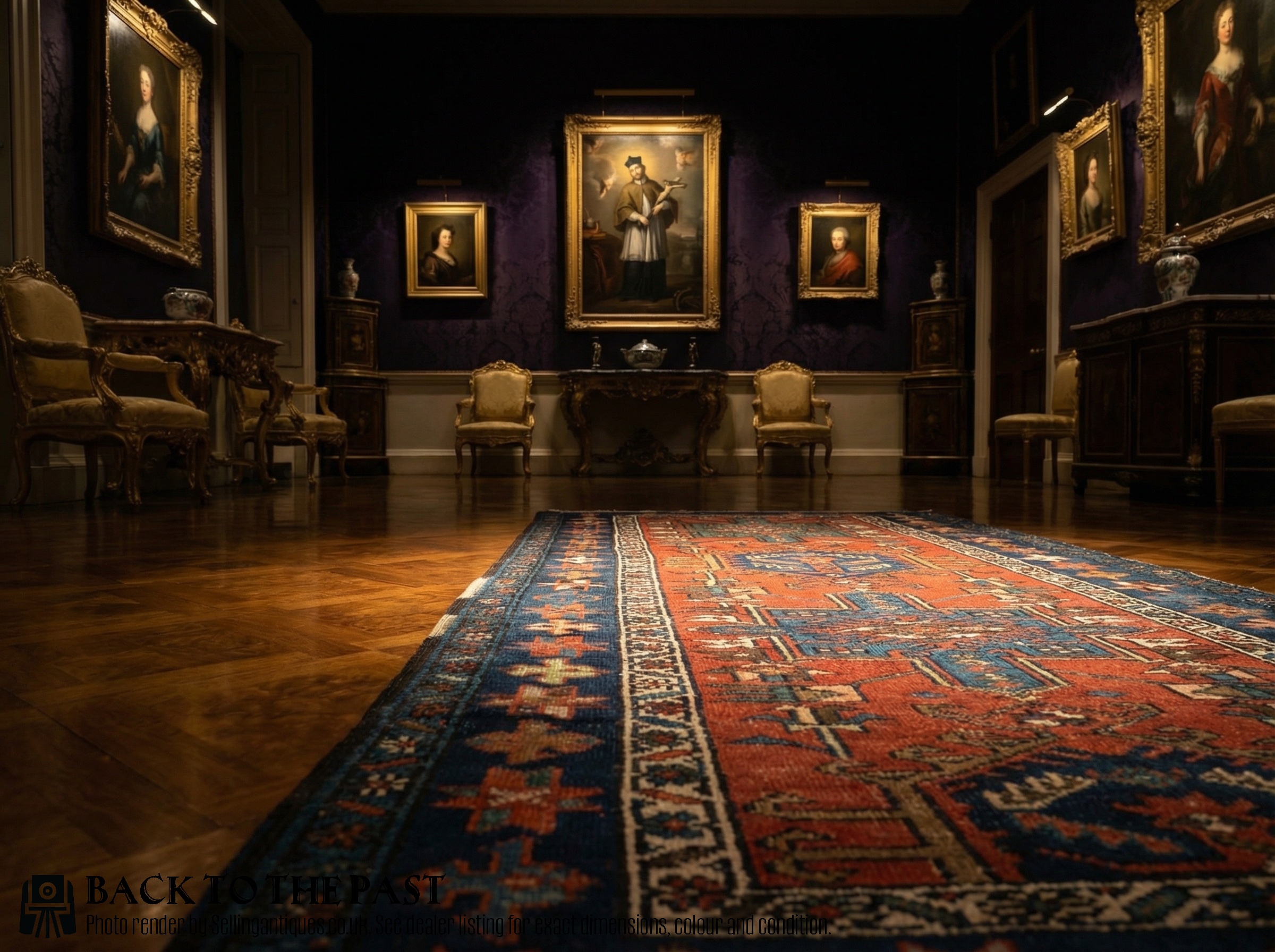
A northwest persian long carpet is a room-lengthening floor covering hailing from workshops and villages across the northwest regions of Persia, spanning periods from the late nineteenth century into the early twentieth century. You encounter these pieces most frequently in formats designed for hallways, corridors and narrow galleries, where their elongated proportions span considerable distances.
The aesthetic vocabulary encompasses traditional Persian designs, geometric Heriz structures, Karaja motifs, Feraghan layouts, and tribal patterns associated with groups such as the Shahsevan and Kurds. Makers deployed these distinct designs across formats categorized in listings as runner rugs, long rugs, and gallery carpets.
Originating from specific villages and tribal districts like Bakshaish, Zanjan, Hastrud and Sarab, each northwest persian long carpet carries the visual markers of its particular locale. The physical scale ranges from narrow utilitarian runners to broader corridor carpets suited for expansive spaces.
What drives quality
Quality in a northwest persian long carpet rests upon the precision of the knotting and the handling of the wool, which dictates the crispness of the geometric and tribal patterns. Finer grades display greater definition in intricate motifs like the harshang border and medallion structures.
The integrity of the structural foundation and the balance of the natural dye palette separate standard village weaving from exceptional examples. Superior pieces maintain straight structural lines along long narrow formats without distortion across the span.
Some weavers snuck tiny animal figures and wandering tribal motifs into the corners of otherwise strict geometric layouts just to amuse themselves.
The Northwest Persian Long Carpet Glossary
- Runner
- A long, narrow carpet format specifically woven for hallways, corridors and staircases. These pieces measure significantly longer than they are wide.
- Kelleh
- A traditional Persian room-size carpet format that is longer than it is wide, though typically broader than a standard runner.
- Harshang
- A classic repeating crab pattern found within the borders or fields of antique Persian carpets. This traditional motif appears frequently in northwest village weaving.
- Medallion
- A central ornamental design motif placed in the middle of the carpet field. Village weavers rendered these in geometric or stylized floral forms.
- Warp and Weft
- The foundational threads that form the structural grid of the carpet. The vertical warp and horizontal weft support the tied wool pile.
Northwest Persian Long Carpet: Frequently Asked Questions
Where should I place a long carpet?
These elongated formats suit hallways, long corridors, and narrow gallery spaces where traditional square rugs do not fit. Their proportions guide movement through a home while protecting timber or stone floors.
Position the piece away from damp areas and rotate it periodically to ensure even wear across the length of the runner.
How do I identify a Heriz runner?
Heriz pieces from northwest Persia display bold geometric medallions, robust corner spandrels, and angular drawing styles executed in saturated reds and blues. The wool feels substantial and dense.
They differ from curved, floral town carpets through their architectural rigidity and strong tribal influences.
What is camel hair used for?
Weavers utilised natural camel hair to provide un-dyed golden-brown tones that created textural depth within the pile. This fibre often ages at a different rate than dyed wool.
Over decades, areas containing camel hair can develop a distinctive lowered pile due to the natural properties of the fibre.
How do I care for an antique runner?
Maintain the piece through regular gentle vacuuming without a rotating brush bar to protect the hand-knotted wool pile. Professional cleaning should occur infrequently and only by specialists in antique textiles.
Utilise a quality underlay beneath the runner to prevent slipping and reduce friction between the foundation and the floor.