

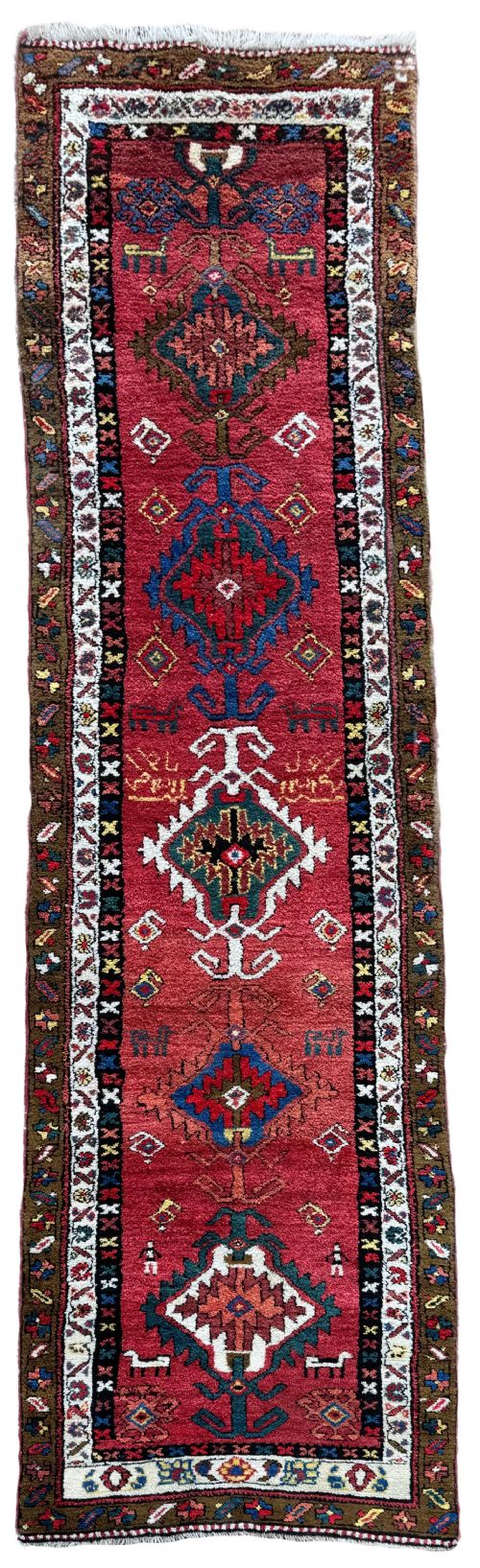
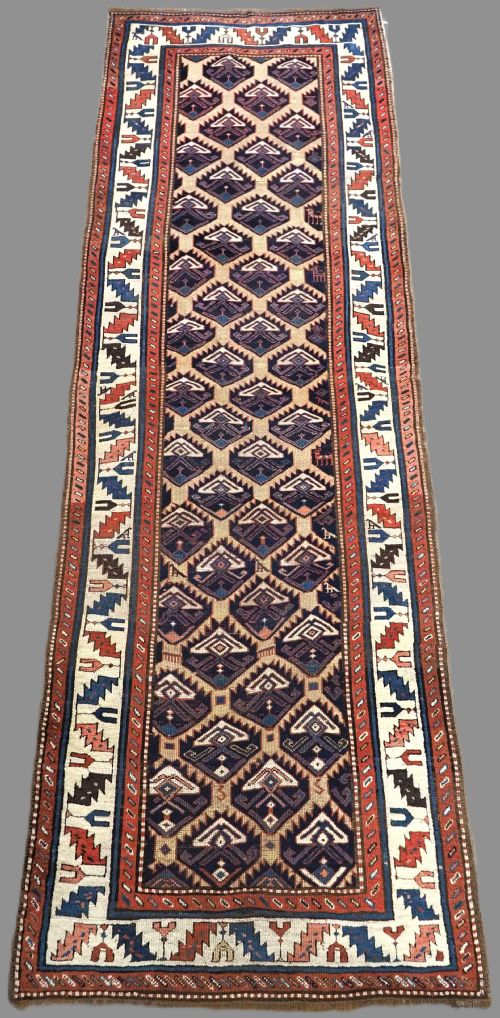

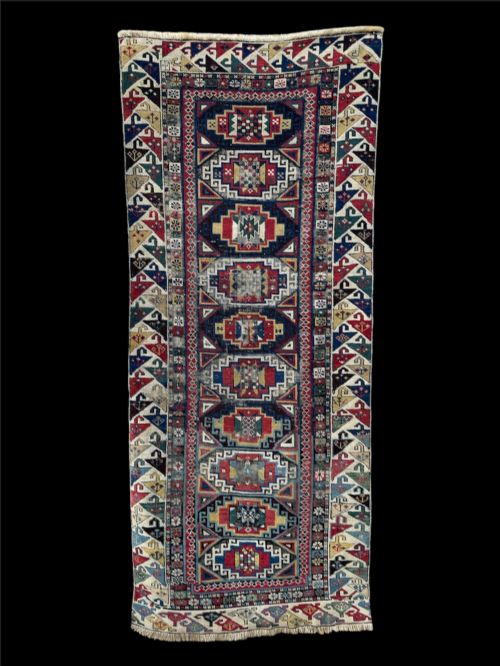
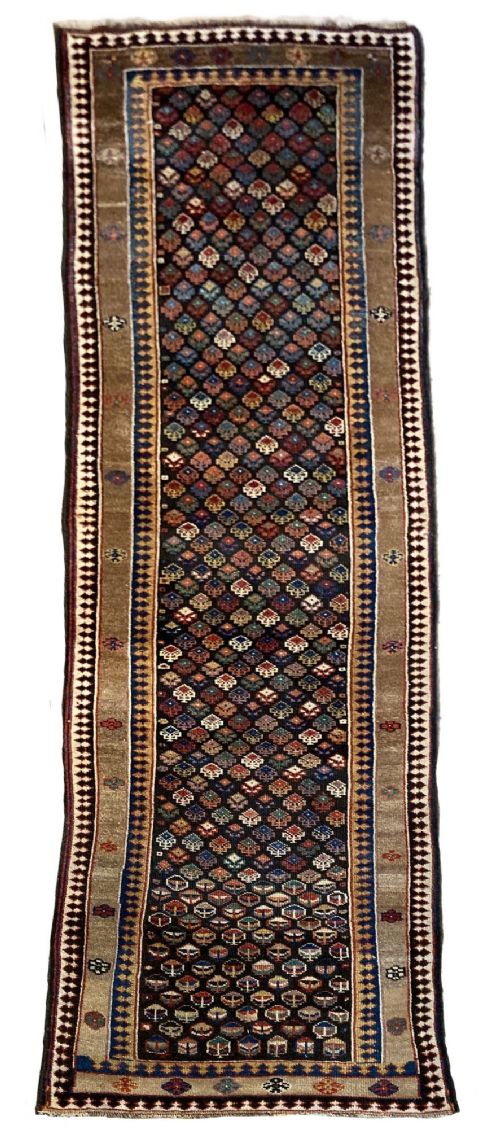
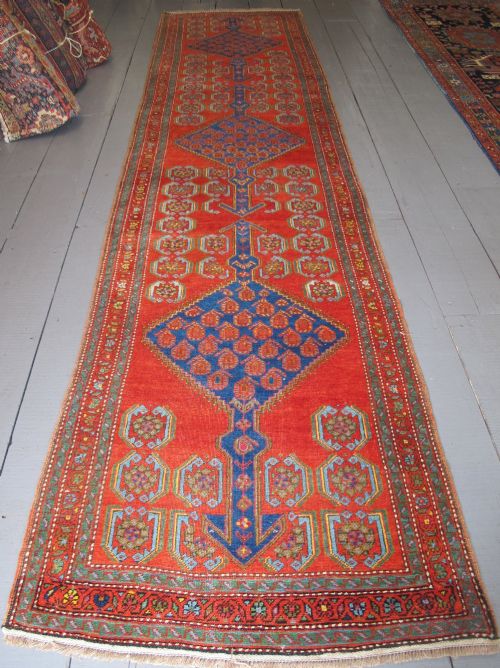


Geometric Tribal Hall Runner
A geometric tribal hall runner brings warmth and structured pattern to a narrow corridor.
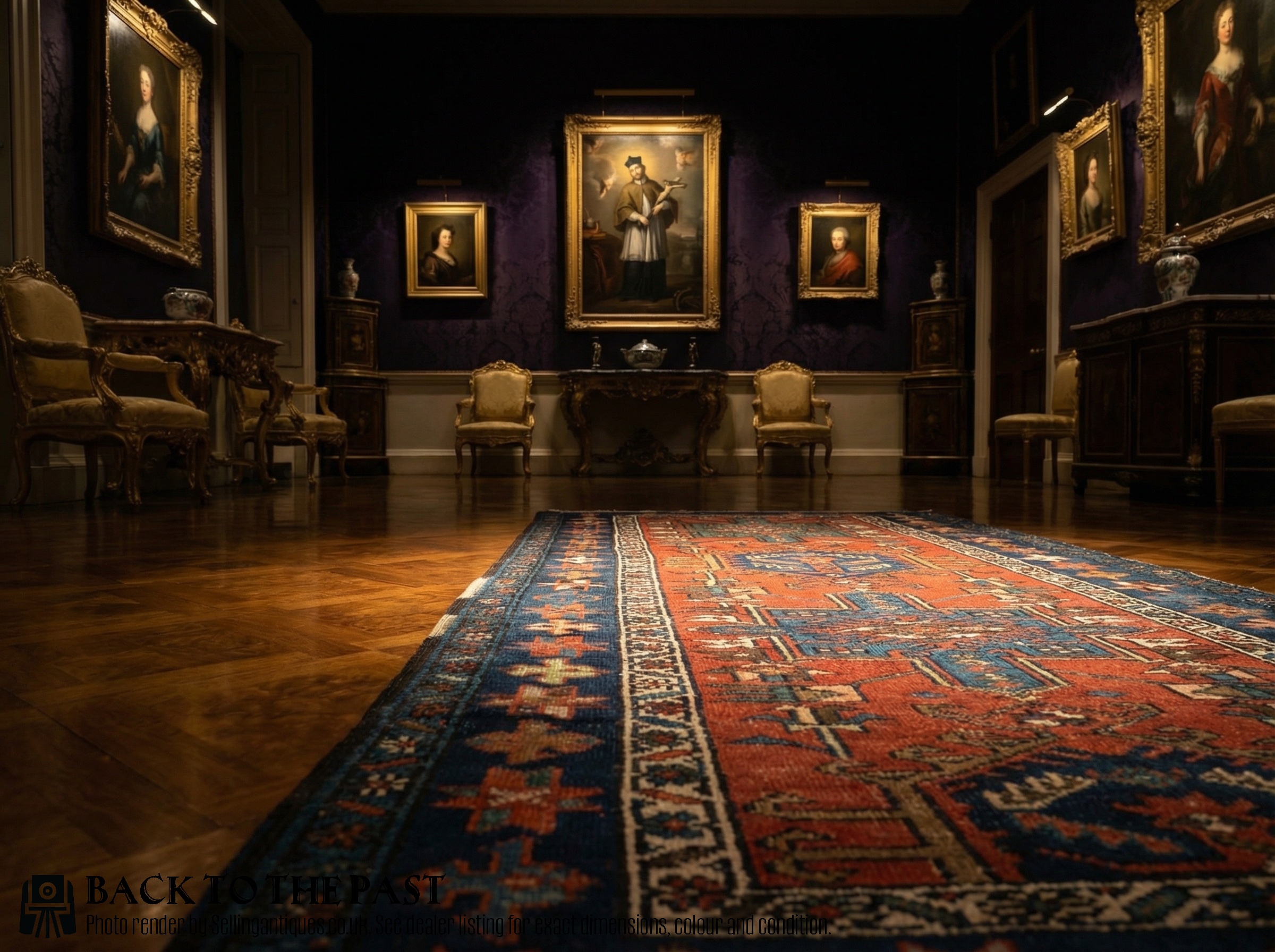
Geometric Tribal Hall Runner
A geometric tribal hall runner provides a linear pathway of woven art designed specifically for narrow spaces like corridors and hallways. When you search for this phrase, you encounter long, rectangular formats originating from nineteenth and early twentieth-century weaving traditions.
The selections on this page span styles from Caucasian and Persian tribal regions, encompassing traditional Anatolian pieces as well. These textiles function effectively as narrow runner rugs, corridor rugs, and long rugs.
Most examples you meet here originate from village and tribal workshops across the Caucasus and Persia. They present characteristic narrow proportions intended to anchor and protect wooden hallway floors.
What Varies in Quality
Quality in these runners rests on the crispness of the geometric drawing and the subtlety of the natural dye palette. Tighter knot density and finer hand-spun wool separate the most resolved village and tribal weaving from simpler utilitarian grades.
The handling of traditional motifs such as lattice designs, hooked medallions, and boteh patterns indicates the weaver's skill. Superior examples maintain balanced proportions and clear symmetry across their extended lengths.
Certain narrow runners measure less than seventy centimetres wide, designed to fit corridor proportions where standard carpets simply refuse to go.
The Geometric Tribal Hall Runner Glossary
- Boteh
- A stylised almond or paisley motif representing a floral spray or cypress tree. It appears frequently in Caucasian and Persian tribal weaving.
- Medallion
- A central decorative geometric or floral ornament set within the field of the rug. These forms often anchor the composition of village runners.
- Pile
- The cut yarn surface of the rug that forms the usable soft layer. It is knotted onto the warp and weft foundation threads.
- Warp
- The vertical foundation threads stretched tightly on the loom before weaving begins. The fringe is typically a direct extension of these parallel cords.
- Weft
- The horizontal threads passed alternately over and under the warp cords to bind the knots in place. Together with the warp, it forms the underlying grid of the textile.
Geometric Tribal Hall Runner: Frequently Asked Questions
Where do these long runners work best at home?
These runners fit naturally into narrow hallways, long corridors, and transitional entryways where floorboards need protection and visual warmth.
Their elongated rectangular proportions also suit galley kitchens and bedside spaces requiring a focused pathway of pattern.
How do I care for a vintage wool runner?
Vacuum the runner gently with the suction attachment rather than a heavy rotating brush roll to protect the vintage pile and foundation.
Use a breathable underlay beneath the textile to prevent slipping and reduce friction against hard floor surfaces.
How can I tell different tribal styles apart?
Caucasian pieces often feature crisper, sharper geometric polygons, primary saturated colour palettes, and narrow formats.
Persian village styles such as Heriz or Kurdish work tend to integrate softer curved elements, earthy tones, and slightly more fluid medallion structures.
What makes these runners suitable for heavy traffic?
The dense hand-spun wool pile and tight foundational knotting provide inherent resilience against daily footsteps.
Natural lanolin present in the traditional wool naturally resists dirt and helps the fibres spring back under pressure.