


Vintage Karaja Tribal Rug
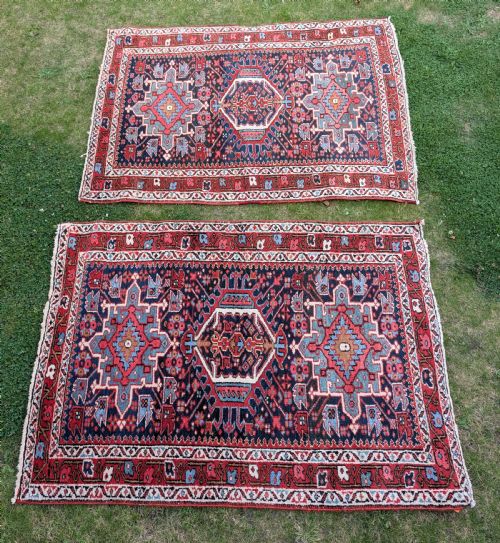
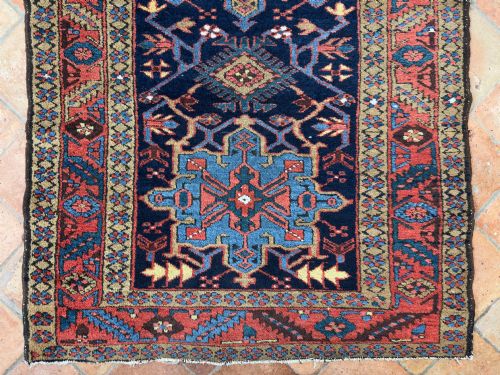
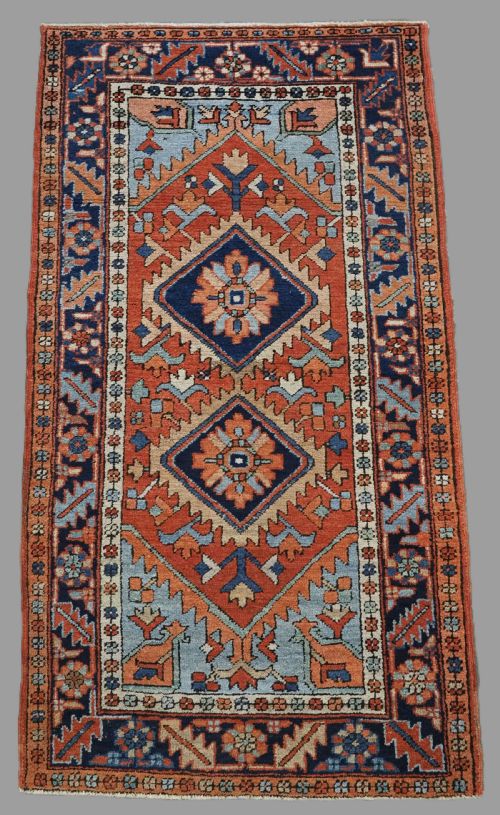
A vintage karaja tribal rug delivers geometric village charm and saturated earthy tones originating from North West Persia.
Vintage Karaja Tribal Rug
Buyers seeking a vintage karaja tribal rug most frequently encounter pieces featuring traditional geometric motifs, medallion formats, and robust formats suited to high-traffic areas. The inventory spans straightforward village rugs alongside narrower runner configurations.
Originating predominantly from the Heriz region and surrounding North West Persian districts, these rugs carry the aesthetic hallmarks of village weavers working within established local traditions. The surviving examples demonstrate utility combined with strong graphic layouts.
How they were made
These floor coverings utilise hand-knotted wool pile secured on cotton foundations, providing the structural density necessary for enduring daily use. The spinning and knotting processes reflect traditional village methods handed down through generations.
Weavers employed durable wool for the surface pile, allowing rich natural dyes to maintain depth and character over decades of wear. The construction incorporates sturdy selvedges and flat-woven ends to protect the foundation from fraying.
Several narrow runners measure barely eighty centimetres wide, proving that nineteenth-century weavers understood the exact dimensions of a cramped Victorian corridor.
What varies in quality
The finesse of the knot density and the precision of the geometric drawing distinguish individual examples, alongside the clarity and saturation of the palette. Pieces exhibiting particularly crisp medallion outlines and balanced proportions represent the higher tier of village output.
Preservation of the original wool pile and structural integrity heavily influence the standing of any given piece. Runners and carpets retaining their initial outer edges and uncompromised foundations command greater appreciation among collectors.
The Vintage Karaja Tribal Rug Glossary
- Karaja
- A village weaving centre in North West Persia known for producing sturdy geometric rugs and runners. These pieces frequently incorporate prominent medallions and bold tribal motifs.
- Runner
- A long, narrow carpet format designed specifically for hallways, corridors, or narrow spaces. The listings feature numerous examples in extended narrow dimensions.
- Heriz
- A neighbouring Persian rug-producing region that shares stylistic traits with Karaja village workshops. Pieces from this broader area often display strong rectilinear designs.
- Pile
- The upright yarn loops that form the usable soft surface of a knotted rug. Wool pile provides both comfort underfoot and protection for the foundation threads beneath.
Vintage Karaja Tribal Rug: Frequently Asked Questions
Where were these rugs made?
These pieces originate from North West Persia, specifically from villages around Karaja and the wider Heriz district. Local weavers produced them using traditional tribal designs.
Production spanned the late nineteenth century through the early decades of the twentieth century, reflecting distinct regional aesthetics.
Are these rugs suitable for hallways?
Many examples are explicitly configured as narrow runners, making them well-suited for hallways and corridors. Their sturdy construction handles regular foot traffic effectively.
Dimensions vary, with specific narrow formats designed precisely for restricted floor spaces.
How do I date a piece?
Dating relies on structural analysis, wool characteristics, and dye palettes seen across comparable nineteenth and early twentieth-century village weaving. Stylistic shifts also offer clues to the era of production.
Most surviving examples date from the late nineteenth century up to the nineteen-thirties.
What materials are used?
The structure relies on hand-knotted wool pile set onto cotton foundation threads. This combination ensures both resilience and flexibility in the finished rug.
Natural materials dominate the construction of these traditional village textiles.