



Nomadic Tribal Woven Panel
When you search for a nomadic tribal woven panel, you are looking at practical household items and trappings transformed into textile art by weavers across Central Asia and Persia.
Nomadic Tribal Woven Panel
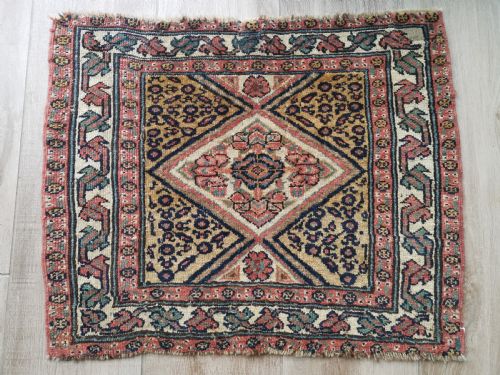
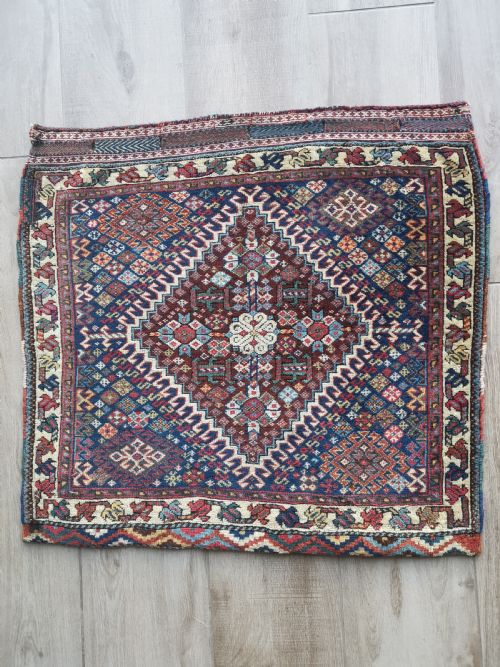
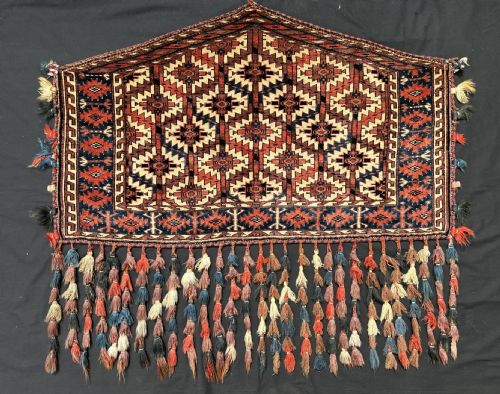
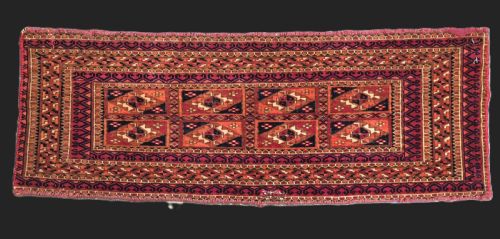
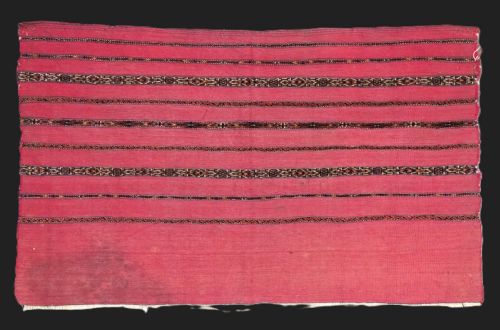
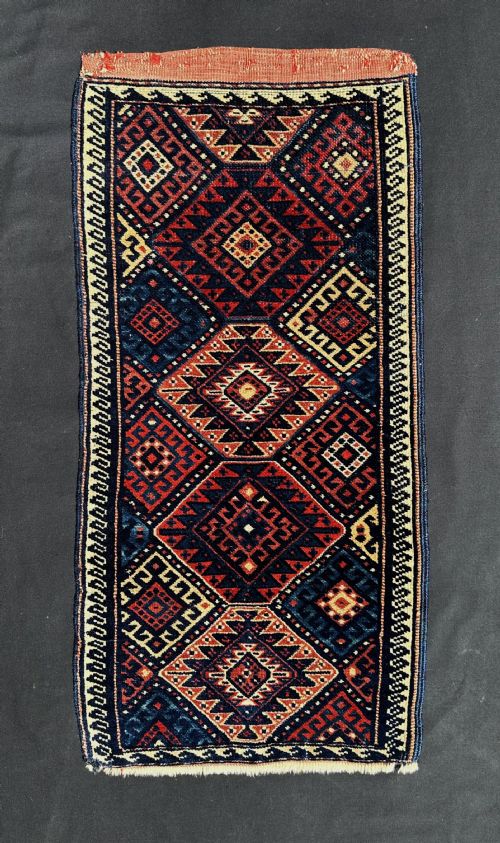
A nomadic tribal woven panel typically originates from functional items created for daily life, such as bagfaces, torbas, chuvals, and saddlebags used by pastoral groups including the Turkmen, Qashqai, Baluch, and Shahsavan.
These pieces represent portions of larger storage containers, tent trappings, or animal coverings that were sheared, repurposed, or preserved for their intricate designs and tribal motifs.
The selection ranges from nineteenth-century Central Asian tent bands and Uzbek kilim panels to Persian saddlebag faces and Turkish embroidered fragments, reflecting the rich heritage of nomadic weaving.
Materials and Construction
Weavers relied primarily on hand-spun wool for the pile and foundation, often supplemented by cotton and occasionally silk for finer details, structural stability, or contrast.
Natural dyes provided the deep reds, indigos, and earth tones characteristic of these textiles, derived from local plants and minerals that aged gracefully over decades.
Techniques varied from pile weaving using symmetrical or asymmetrical knots to flatweaves like sumac, jajim, and cicim, depending on whether the item required heavy durability or flexible structure.
Listings feature textiles from nineteenth-century Central Asian and Persian traditions, utilising hand-spun wool, cotton, silk, and natural dyes across various tribal forms.
Defining Quality in Weaving
Quality rests upon the fineness of the weave, the clarity of the drawing, and the precision with which tribal guls or geometric motifs are executed across the surface.
An exceptional piece displays depth and saturation in its natural dyes, maintaining harmonious colour balances even as the materials age and soften.
Structural integrity, the survival of original borders or complete formats, and the crispness of the wool handle further distinguish standard utility pieces from masterworks.
The Nomadic Tribal Woven Panel Glossary
- Gul
- A medallion or repeated octagonal motif used extensively in Turkmen and Central Asian carpet design. Each tribe utilised distinct variations to signify ancestry and identity.
- Torba
- A small storage bag produced by nomadic tribes for domestic use inside the tent. They frequently survive today as individual decorative wall panels.
- Chuval
- A large tent storage bag traditionally used for bedding and household goods. Surviving faces show elaborate primary guls and secondary minor motifs.
- Sumac
- A warp-wrapping flatweave technique that creates a durable, textured surface resembling embroidery. It provides raised structural lines alongside flat sections.
- Mafrash
- A rectangular storage bale or chest cover used during migration. Fragments and panels often display banded flatweave or pile designs.
Nomadic Tribal Woven Panel: Frequently Asked Questions
What were nomadic panels used for?
These woven panels were originally parts of utilitarian items such as storage bags, saddlebags, and tent trappings used by nomadic families during seasonal migrations. They served practical functions inside tents for organising belongings, storing wheat, or carrying household goods.
Over time, many of these utilitarian objects were separated from their original backs or bases, surviving as decorative wall hangings and textile art due to their intricate tribal patterns.
How do I care for an antique textile?
Protect antique wool and natural dyed textiles by keeping them away from direct sunlight, which causes natural colours to fade over time. Gentle vacuuming with a low suction attachment through a mesh screen helps remove dust without pulling loose fibres.
Avoid hanging heavy panels by a single point, as this places undue stress on the ancient foundation threads. Professional textile conservation cleaning should be sought if deep washing becomes necessary.
How do I identify different tribal designs?
Tribal attribution relies heavily on specific recurring motifs, structural characteristics, and colour palettes associated with particular groups. For instance, Turkmen weavers utilised distinct octagonal guls such as the kepse or tekke variations, while Persian groups like the Qashqai incorporated rich reds, dark blues, and complex geometric fields.
Examining the weave density, side-finishes, and wool preparation offers further clues to the specific region and nomadic confederation responsible for the work.
What is the difference between a pile and flatweave panel?
Pile panels are created by knotting individual strands of wool onto a foundation warp and weft, resulting in a plush, tactile surface similar to a small rug. These typically feature dense repeating guls and sculptural depth.
Flatweave panels, including kilims, sumacs, and cicim work, contain no pile and are constructed by interlacing warp and weft threads or wrapping structural yarns. They offer a flatter, graphic profile with crisp geometric boundaries.