


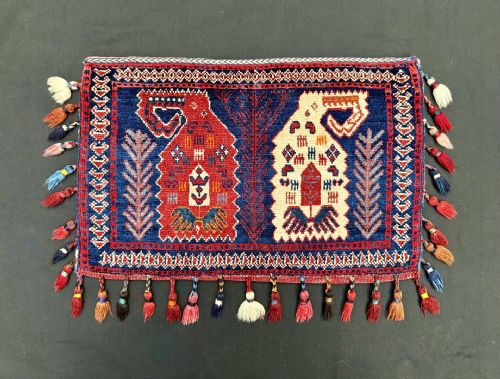

Nomadic Saddle Bag
A nomadic saddle bag brings the storied weaving traditions of Persian, Caucasian, and Anatolian tribes straight into a modern interior.
Nomadic Saddle Bag
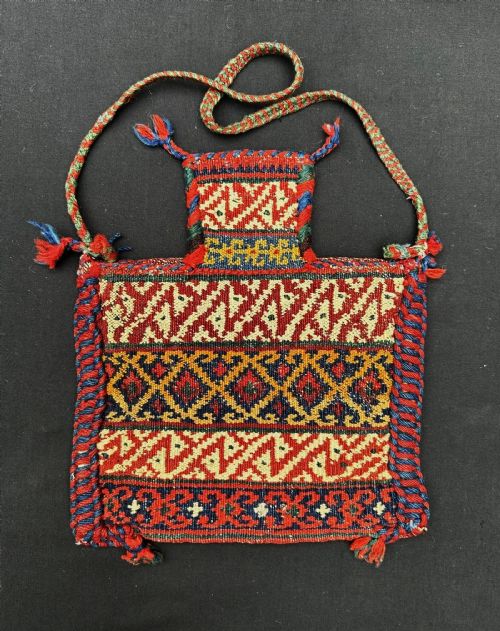
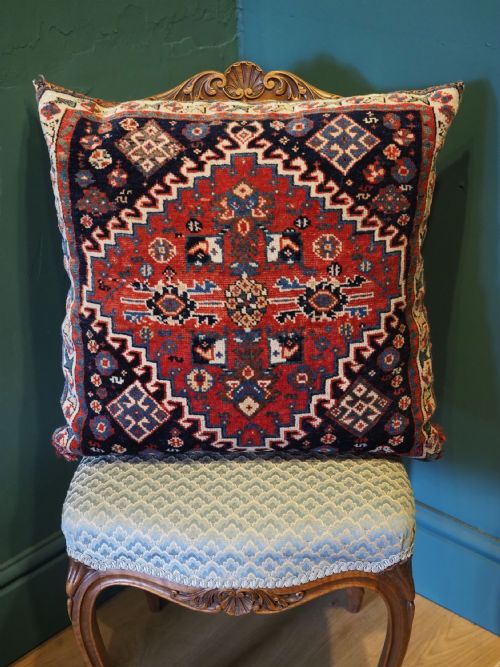
A nomadic saddle bag represents functional tribal art created for transport on animals across regions like Persia, the Caucasus, and Anatolia. These pieces typically take the form of complete pairs, single faces, or adapted cushion covers originating from the nineteenth and early twentieth centuries.
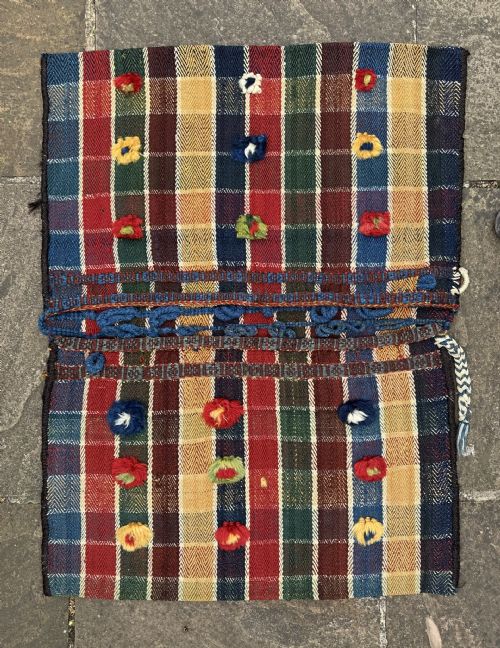
The most common formats encountered on this page include single bag faces, complete pairs joined by a web, and smaller utility pouches or vanity bags. Tribal groups such as the Qashqa'i, Afshar, Shahsavan, and Khamseh produced these woven containers for daily nomadic life.
Materials and construction
Makers utilised hand-spun wool for its durability and resilience, often pairing pile-woven sections with flat-woven soumak or plain-weave backs. Natural dyes provided the rich palette characteristic of these tribal textiles.
Structural integrity relied on sturdy cotton or wool foundations, sometimes reinforced with leather trim and metal fastenings. The combination of dense pile knots and crisp geometric flat-weave techniques defined the structural vernacular.
Some surviving bags still retain their original leather loops, having traded camel transport for a quiet retirement on the sofa.
Distinguishing quality in tribal weavings
The standard of a nomadic saddle bag rests upon the handle and lustre of the wool, alongside the saturation and complexity of the natural dyes. Superior examples display tightly packed knots and precise geometric drawing.
Preservation of the original flat-weave backs, side cords, and complete closing mechanisms elevates a piece. Pieces with crisp iconography and minimal restoration retain greater structural and visual integrity.
The Nomadic Saddle Bag Glossary
- Khorjin
- The traditional Persian term for a double saddle bag used by nomads for transport and storage. These were woven as a pair joined by a central slit or web.
- Soumak
- A flat-weave technique where pattern wefts are wrapped over the warp threads to create a textured, durable surface. Shahsavan weavers utilised this method extensively for crisp geometric designs.
- Chuval
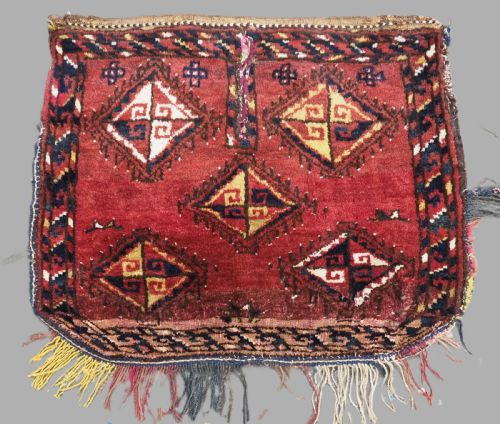
- A large tent bag produced by Turkmen tribes for storing household goods. They often feature prominent primary guls arranged in rows across the face.
- Gul
- A repeating medallion motif used extensively in Central Asian and Turkmen tribal rugs and bags. Each tribal group adapted specific variations of these polygonal forms.
- Boteh
- An ancient almond or pear-shaped motif symbolising life and eternity. Afshar and Persian nomadic weavers frequently incorporated this design into field patterns.
Nomadic Saddle Bag: Frequently Asked Questions
What is a nomadic saddle bag?
A nomadic saddle bag is a utilitarian textile woven by tribal groups to carry possessions on pack animals during seasonal migrations. These containers were constructed in pairs joined by a web so they could balance across a horse, camel, or donkey.
Over time, many of these bags have been separated into single faces or converted into decorative cushions and rugs for interior display. They preserve the distinct geometric patterns and cultural motifs of the weavers who made them.
How were these bags used originally?
Nomads utilised these heavy-duty woven bags to transport grain, clothing, bedding, and domestic utensils during journeys across harsh terrain. Their dense pile and flat-weave construction protected contents from weather and friction against the animal.
When camp was established, the bags served as permanent storage containers inside tents. Their sturdy structure and secure openings kept belongings organised in a mobile household.
How do I care for an antique bag face?
Protect antique tribal textiles by keeping them out of direct sunlight to prevent natural dye fading. Gentle vacuuming with a low suction attachment across a mesh screen helps remove dust without damaging fragile wool fibres.
For wall hanging or table display, ensure the weight is distributed evenly across the textile. Professional rug conservators should handle any necessary cleaning or structural stabilization.
How can I identify tribal origins?
Attribution relies on examining the specific weave structure, colour palette, and recurring geometric or animal motifs. For instance, Shahsavan pieces frequently display intricate soumak technique, while Qashqa'i work often incorporates deep madder reds and rich blues.
Edge finishes, selvedges, and wool characteristics also provide clues to specific regional groups like the Afshar or Luri. Comparing the design vocabulary to documented tribal corpuses confirms the likely provenance.