





Antique Nomadic Saddle Cover
An antique nomadic saddle cover brings bold tribal geometry and rich textile history straight from Central Asian and Persian tent floors into modern rooms.
Antique Nomadic Saddle Cover
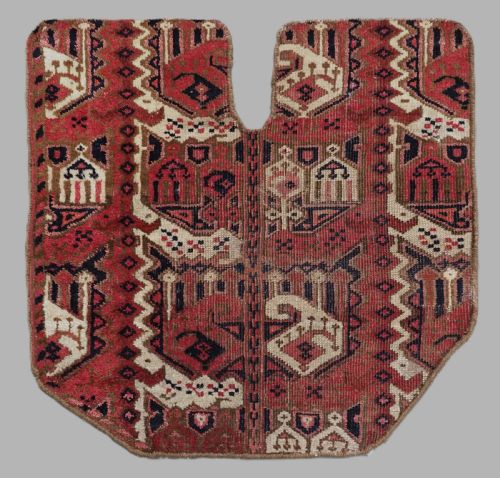
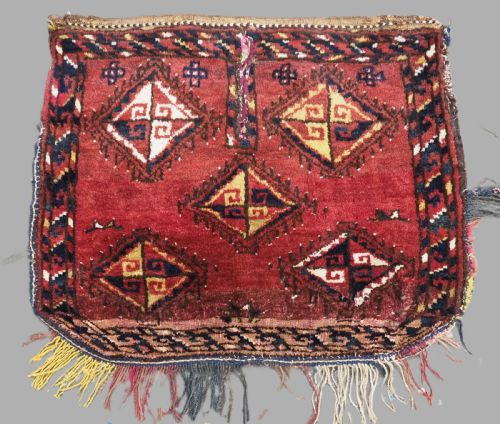
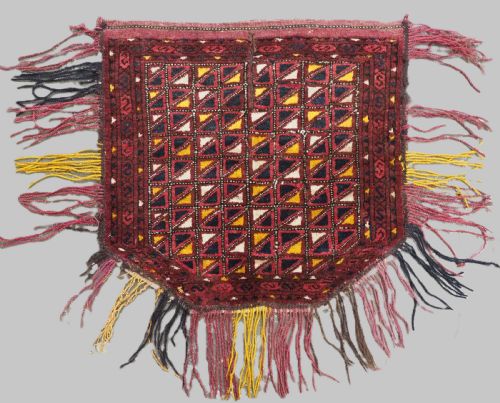
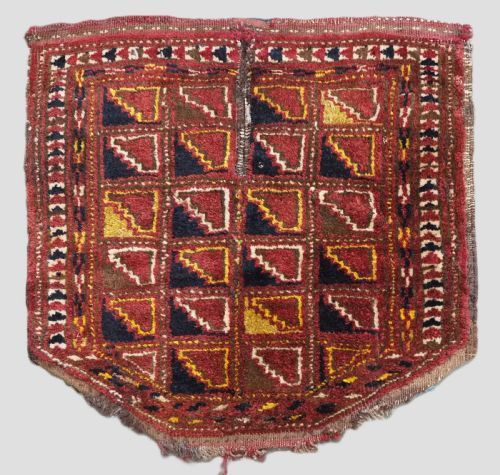
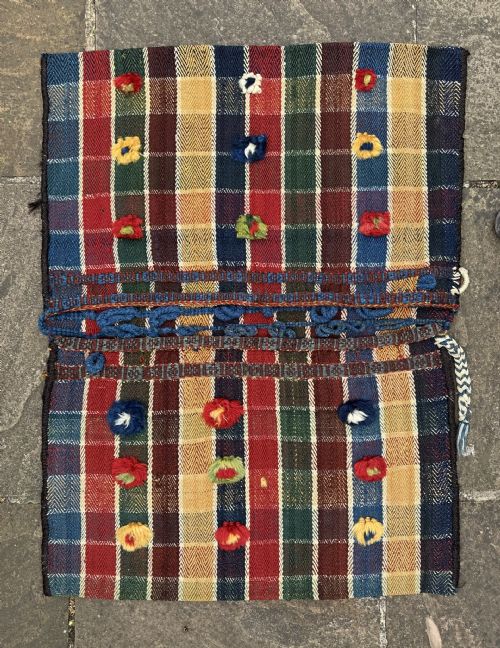
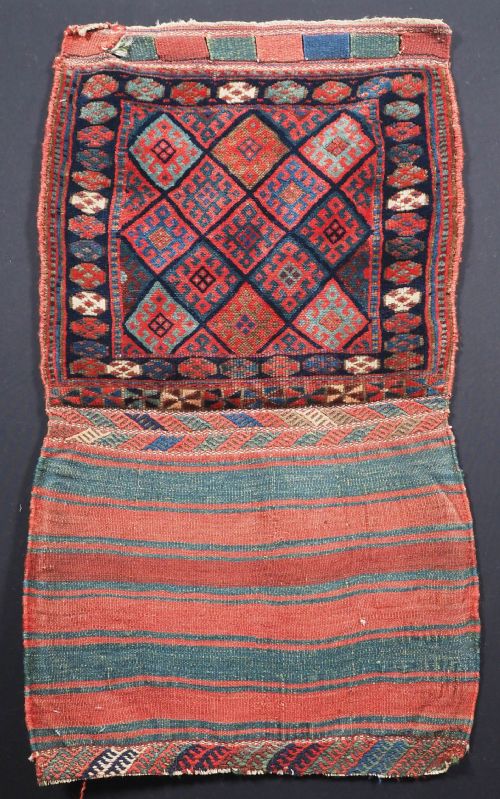
An antique nomadic saddle cover represents the functional artistry of tribal weavers from Persia, Central Asia, and the Caucasus. These pieces include complete saddle bags, rug covers, and ceremonial horse pieces produced to withstand hard daily use on horseback.
The versions most commonly met on this page date from the late nineteenth century to the early twentieth century. They originate from tribal groups such as the Ersari Turkmen, Qashqa'i, Afshar, Khamseh, and Lakai Uzbek.
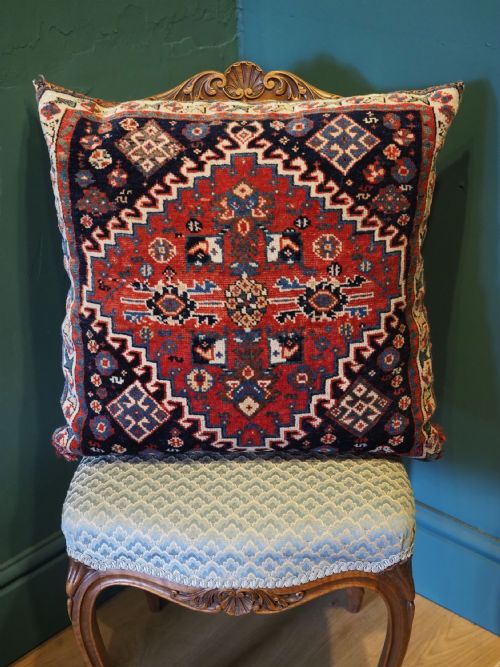
Makers fashioned these textiles as practical gear for animals, utilising durable weaves like pile carpets and flatweaves. Today, collectors value them as portable wall hangings, floor rugs, and decorative cushions.
How they were made
Weavers constructed these covers using hand-spun wool and cotton foundations, often dyed with natural colourants to achieve deep, rich tones. Lustrous wool fibres give the pile surfaces a varied texture that catches the light differently from synthetic yarns.
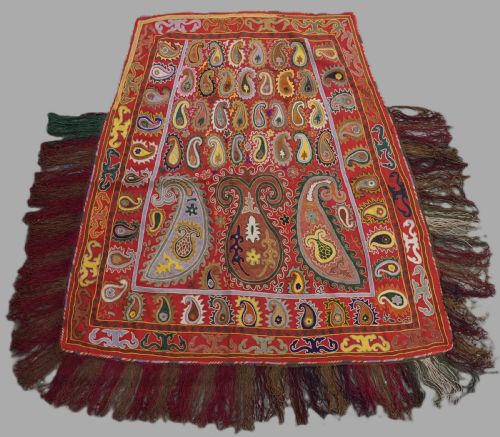
Certain pieces incorporate supplementary embroidery in silk to highlight ceremonial motifs on horse covers. Artisans finished edges with original tassels and plain weave backs to ensure durability during transit.
Some horses walked out in finer embroidery than their riders wore.
What varies in quality
Quality rests primarily on the integrity of the wool, the clarity of the tribal design, and the survival of original components like tassels and plain weave backs. Pieces with luminous, high-grade wool and well-defined motifs command greater attention from discerning collectors.
The precision of the tribal weave and the vibrancy of the natural dyes distinguish standard utility items from exceptional examples. Completeness, such as retaining both halves of a saddlebag pair or original backing material, elevates the standing of a textile.
The Antique Nomadic Saddle Cover Glossary
- Khorjin
- A traditional double-sided saddlebag used by nomadic tribes for transport and storage. These bags feature two compartments joined by a central web.
- Boteh
- A stylised floral motif resembling a pear or curved almond, frequently found in Persian tribal weavings. This ancient symbol represents life and eternity.
- Plain weave
- A simple structural technique where warp and weft threads cross alternately to create a flat, unpiled fabric. Backings and kilim bags rely heavily on this method.
- Pile
- The upright yarn ends that form the soft surface of a rug or saddle cover. Knotting wool around warp threads creates this tactile layer.
- Natural dyes
- Colourants derived from plants, insects, and minerals rather than synthetic chemicals. These substances produce complex, harmonious tones that age gracefully.
Antique Nomadic Saddle Cover: Frequently Asked Questions
What is a nomadic saddle cover?
A nomadic saddle cover is a woven textile originally created by tribal peoples in regions like Persia and Central Asia to adorn riding animals. They served practical roles in daily nomadic life while displaying traditional tribal patterns.
Over time, these durable utilitarian items transitioned into decorative art objects prized for their cultural heritage and bold geometric designs.
How were saddlebags used?
Nomadic tribes utilised saddlebags, known as khorjin, draped across horses or camels to carry personal possessions during seasonal migrations. The paired compartments balanced weight evenly across the animal.
They also functioned as storage containers inside tents when unmounted from the animal, serving as functional household furnishings.
How do I care for an antique textile?
Protect antique wool textiles by keeping them out of direct sunlight to prevent natural dyes from fading. Gentle vacuuming without a beater bar removes surface dust safely.
Display pieces on walls using breathable cotton sleeves or place them in low-traffic floor areas where they experience minimal abrasion.
How do I identify tribal regions?
Tribal attribution relies on specific design vocabulary, colour palettes, and structural techniques unique to groups such as the Qashqa'i, Ersari Turkmen, or Afshar. Specific border motifs and wool characteristics often point directly to a particular region or confederation.
Comparing knot types and weave density further clarifies whether a piece originated in South-West Persia or Central Asia.