
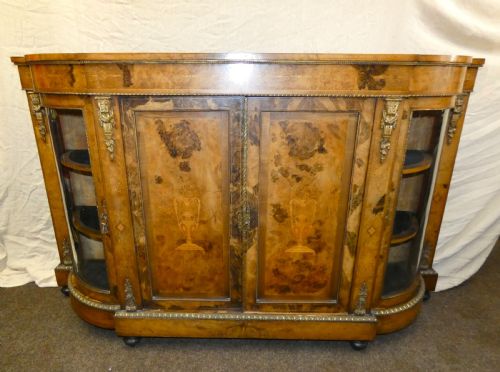


Nineteenth Century Walnut Credenza
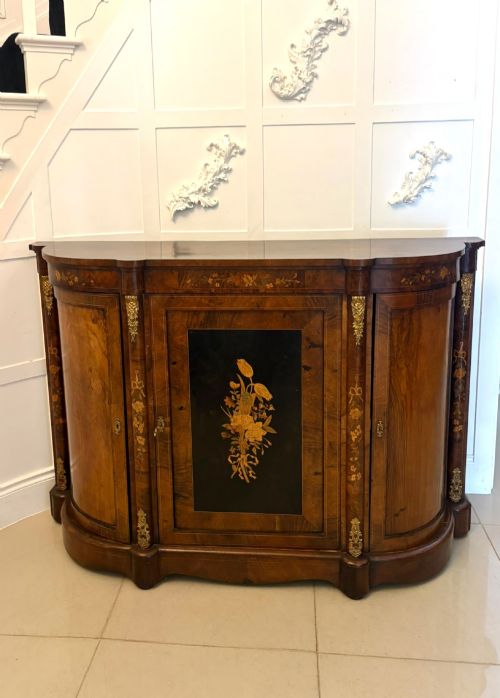
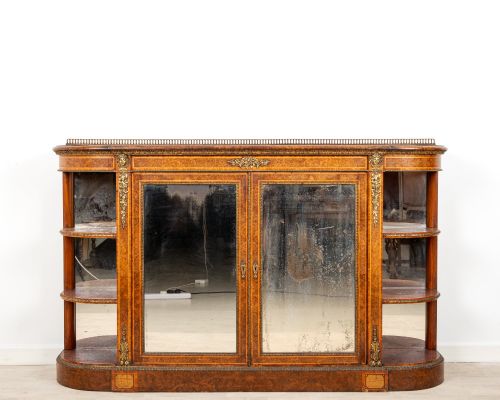
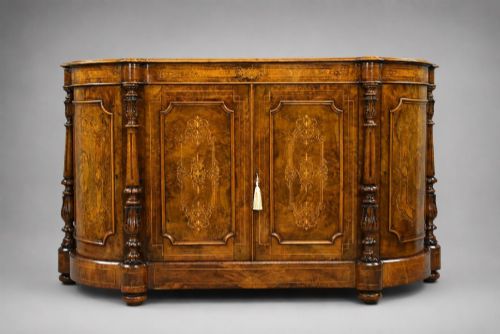
Nineteenth century walnut credenza pieces combine burr walnut veneers with ormolu mounts and marquetry inlay to anchor a formal interior.
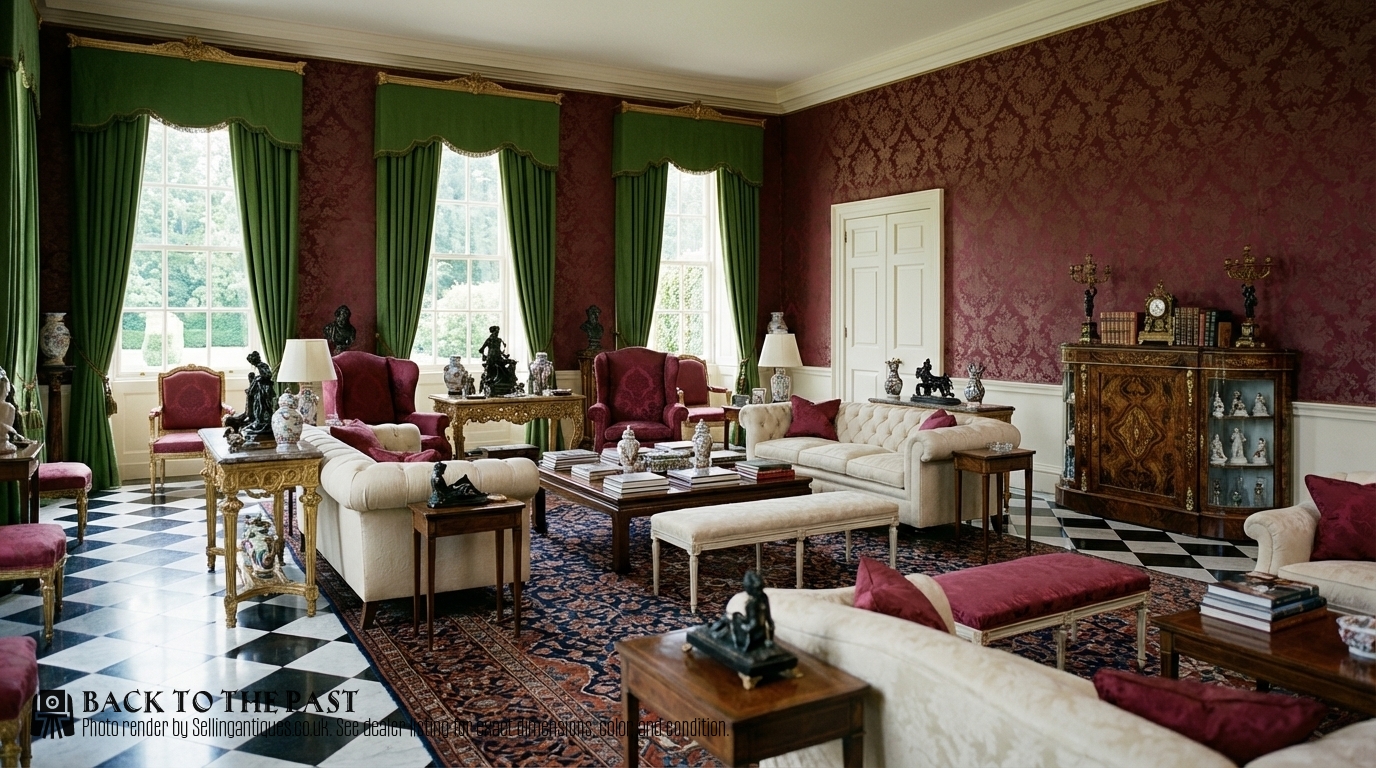
Nineteenth Century Walnut Credenza
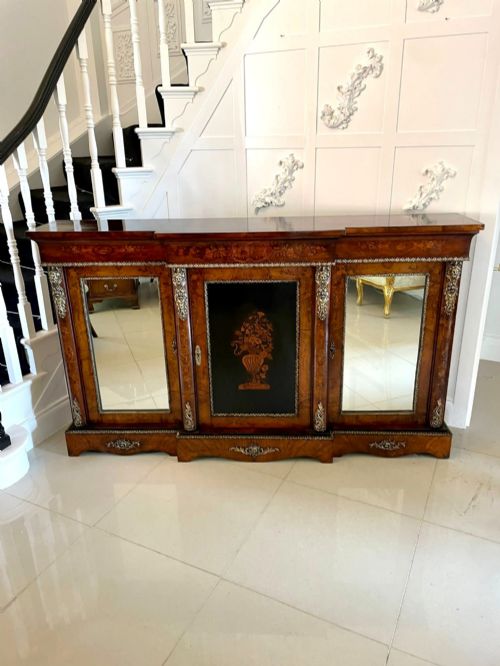
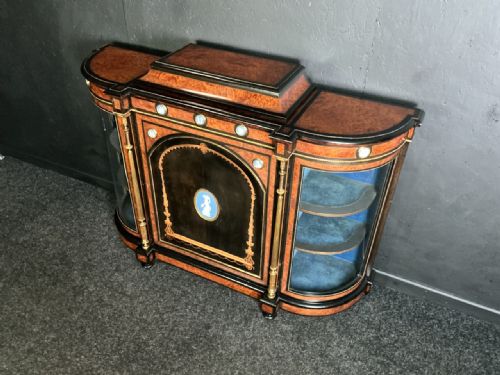
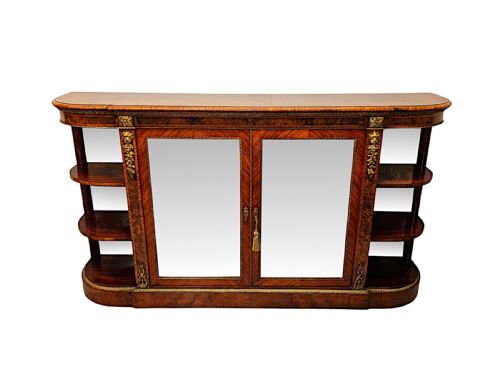
A nineteenth century walnut credenza serves as a low display cabinet or sideboard, frequently shaped with serpentine fronts or central mirrored doors.
Buyers meet Victorian examples most often on this page, spanning decades from eighteen fifty to eighteen eighty.
The form incorporates side display cupboards flanking a central door, often styled with French Revival or Aesthetic Movement details.
Construction and Materials
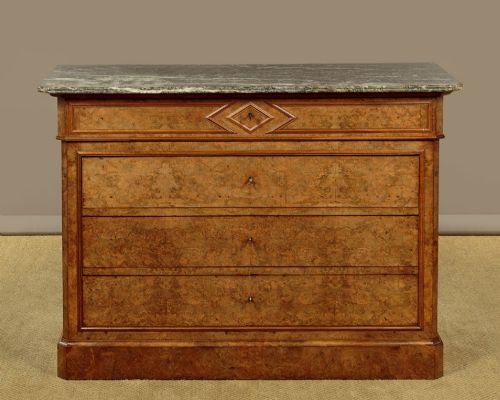
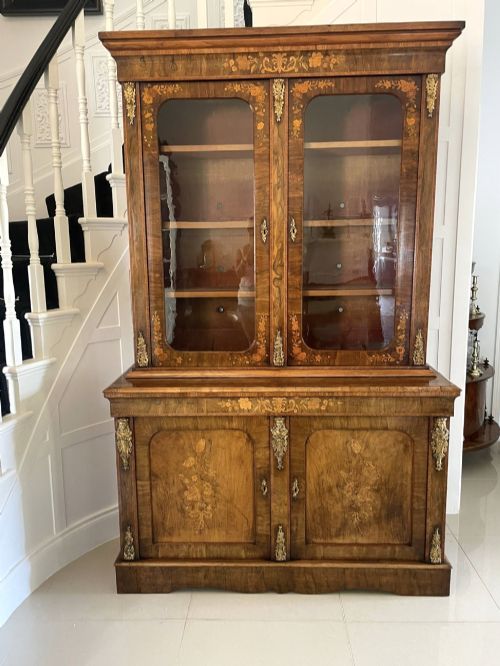
Craftsmen applied figured burr walnut veneers over solid carcases, incorporating boxwood inlay and marquetry for surface pattern.
Mounts in cast ormolu decorate the corners and borders, whilst glass panels form the doors for display purposes.
Listings span the nineteenth century, featuring Victorian, Aesthetic Movement, and Louis XVI Revival styles.
Judging Quality and Execution
Superior examples demonstrate meticulous selection of burr walnut grain across curved serpentine surfaces, paired with finely chased ormolu mounts.
The intricacy of the floral marquetry and the precision of the boxwood inlay distinguish standard cabinet work from exhibition pieces.
Gillows
The Nineteenth Century Walnut Credenza Glossary
- Burr walnut
- A figured wood grain taken from the wart or burl of the walnut tree, prized for its swirling patterns.
- Ormolu
- Gilt bronze mounts applied to furniture edges and corners for decorative enrichment.
- Marquetry
- Inlaid wood veneers forming pictorial or floral patterns across the surface of the cabinet.
- Serpentine
- A furniture front curved in a concave-convex-concave wave shape, typical of finer credenzas.
Nineteenth Century Walnut Credenza: Frequently Asked Questions
How were these cabinets used?
These pieces functioned in principal reception rooms to display porcelain plaques and decorative objects behind glass doors.
They also provided low surface space for serving or arrangement during formal entertaining.
How do I identify a Victorian piece?
Look for characteristic timber choices such as burr walnut combined with boxwood inlay and ebonised wood details.
Construction traits often include glazed central doors flanked by curved side cabinets reflecting French Revival styles.
Are porcelain plaques common?
Certain credenzas incorporate Sevres style porcelain plaques mounted directly into the woodwork alongside ormolu frames.
These ceramic insertions elevate the decorative scheme of the cabinet.
How do I care for walnut veneer?
Keep the wood away from direct sunlight and sudden temperature changes to protect the delicate burr walnut surface.
Apply gentle wax polish occasionally to maintain the sheen without building up heavy residues.