
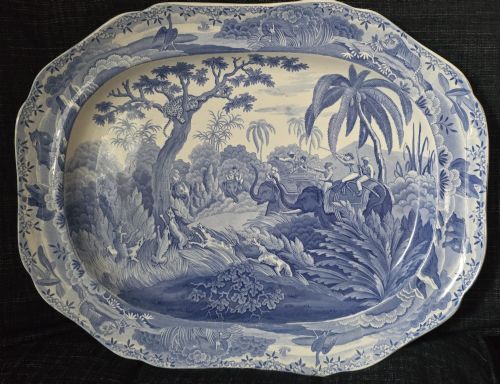
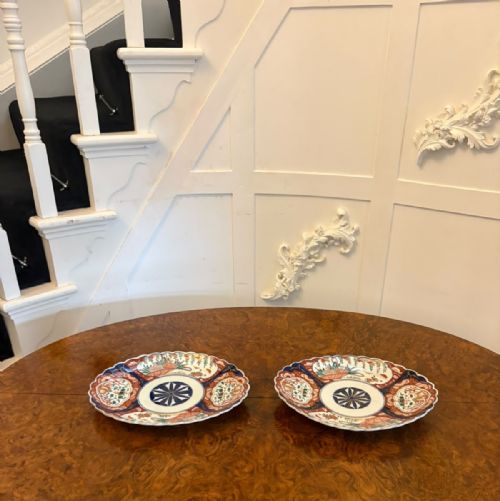


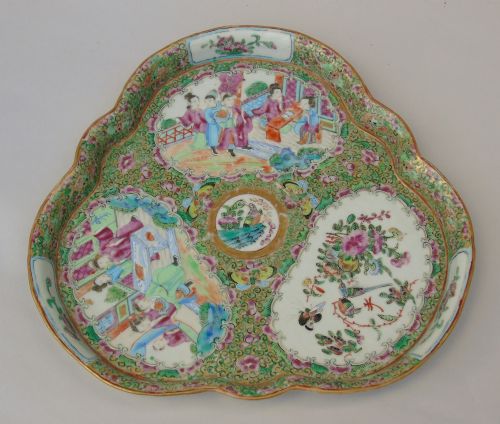
Nineteenth Century Serving Dish
These nineteenth century serving dish examples are practical table antiques that bring character to any modern dining room.
Nineteenth Century Serving Dish
A nineteenth century serving dish encompasses a range of domestic tableware designed for presenting food at the dining table. The listings here present diverse forms including platters, tureens, comports, and bowls originating from various global traditions.
Buyers will encounter wares spanning the Georgian, Regency, and Victorian eras alongside Japanese Meiji period pieces and Chinese Export examples. Materials vary from durable ironstone and earthenware to refined porcelain, bone china, and sterling silver.
The decorative styles applied to these serving pieces display significant breadth, ranging from blue and white transfer printing to hand-painted botanical and Chinoiserie motifs. Many items survive as individual vessels or matched pairs ready for active service.
Judging quality in a nineteenth century serving dish
Quality rests in the crispness of the transfer print or the execution of hand-painted brushwork applied to the surface. Finer pieces demonstrate superior ceramic body preparation and more delicate modeling of handles, feet, and rims.
The reputation of the maker, whether a prominent English pottery like Spode or an international studio, influences the desirability of the dish. Preservation of original gilding, glaze clarity, and overall structural integrity also mark the upper tier of examples.
Styles range from Georgian blue and white transferware to Japanese Meiji period porcelain and Victorian Chinoiserie.
Mann & Co·Coalport·Masons Ironstone·Tiffany & Co·Spode·Thomas Lakin·J. & R. Clews·Barr, Flight & Barr Worcester·Louis Pierre Malpass
The Nineteenth Century Serving Dish Glossary
- Ironstone
- A durable type of heavy earthenware patented in the nineteenth century to withstand rigorous table use. It frequently mimics porcelain while offering robust utility.
- Transfer printing
- A method of applying detailed monochromatic designs to ceramics using a copperplate and tissue paper. This technique allowed factories to produce uniform patterns efficiently.
- Comport
- A raised footed dish or bowl used for presenting fruit or sweetmeats centrally on a dining table. These vessels elevate the food display above the table surface.
- Tureen
- A deep covered serving vessel designed for holding soup, sauce, or vegetables at table. The fitted lid helps retain heat during long meals.
- Spongeware
- Pottery decorated by dabbing pigment onto the biscuit body using a natural sponge or fabric. This creates a speckled, rustic pattern common in country wares.
Nineteenth Century Serving Dish: Frequently Asked Questions
Can I use these antique dishes for everyday dining?
Many nineteenth century serving dish options, particularly ironstone and durable earthenwares, remain robust enough for regular domestic use on the dining table.
However, delicate hand-painted porcelain or pieces with sensitive gold leaf decoration require gentle hand washing rather than automated cleaning to preserve their condition.
How do I identify the period of a serving dish?
Dating relies on combining backstamps, ceramic body characteristics, and the stylistic cues of the painted or transferred decoration.
Makers' marks often indicate specific working dates, while Regency and Victorian aesthetic movements display distinct colour palettes and motifs.
Why are some blue and white dishes stamped with place names?
Potters frequently decorated earthenware with romantic topographical scenes, historical views, or imaginary landscapes inspired by travel literature.
These patterns often featured titles on the reverse to identify the specific scenic view for the Victorian buyer.