
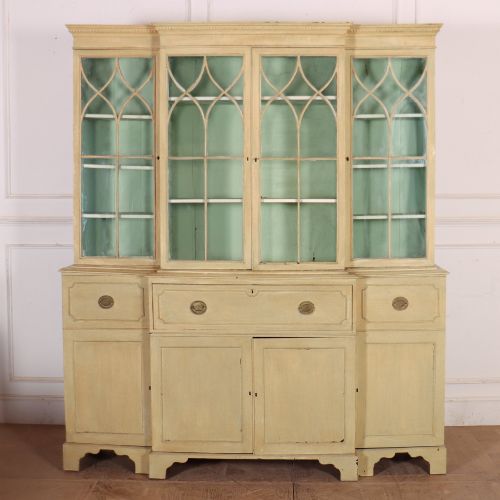


Nineteenth Century Secretaire Desk
A nineteenth century secretaire desk offers a clever combination of a writing surface and concealed storage, making it a practical choice for period interiors.
Nineteenth Century Secretaire Desk
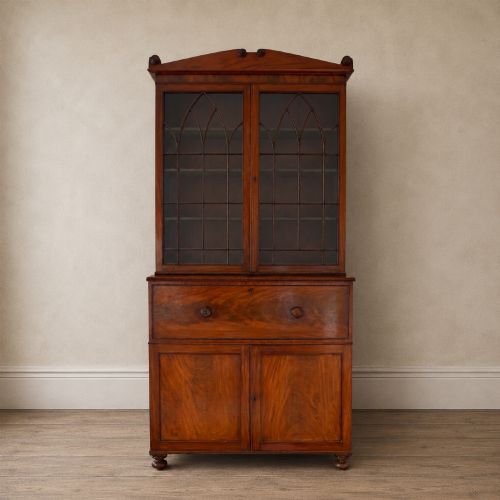
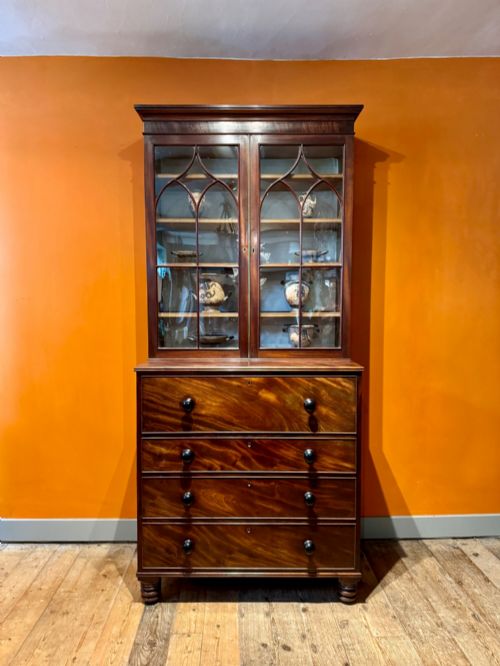
A nineteenth century secretaire desk combines a practical writing surface with hidden compartments, often taking the form of a tall bookcase or a compact cabinet. The most common iteration met here is the substantial mahogany secretaire bookcase, which pairs glazed upper shelves with a drop-front writing drawer below.
Makers also produced specialised variants during this period, including French cabinets with marble tops, campaign chests in teak or rosewood, and Biedermeier Commodes. These pieces served domestic and professional needs in sitting rooms, libraries, and studies throughout the era.
How they were made
Cabinet makers relied heavily on timber framing, using solid or veneered mahogany, walnut, kingwood, rosewood, and pollard oak over sturdy secondary woods. Surface grain patterns, particularly flame or figured varieties, received careful attention to create visual depth on large cabinet doors and fall-front writing drawers.
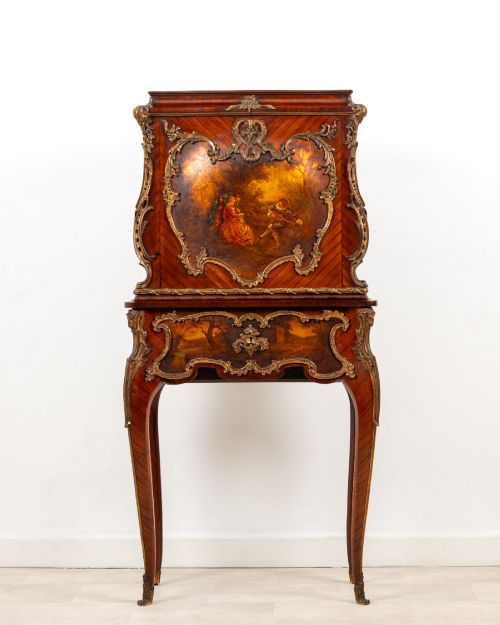
Metalwork played a structural and decorative role, with brass hardware securing fitted interiors and ormolu mounts adding ornamentation to French revival pieces. Glass panels appeared on bookcase doors, whilst marble slabs provided durable tops for specific continental cabinets.
Captain Fairbrother left his name attached to a teak campaign secretaire chest.
What varies in quality
The selection of timber veneers dictates much of the visual hierarchy, with highly figured flame mahogany or choice kingwood setting apart the finer examples from plain equivalents. The execution of internal pigeonholes, small drawers, and secret compartments also reveals the skill invested by the original maker.
Mounts and hardware contribute to the overall standard, where cast ormolu and detailed brass fittings distinguish superior pieces. Structural integrity in the fall-front mechanism and drawer construction further separates standard workshop output from exceptional cabinet work.
The Nineteenth Century Secretaire Desk Glossary
- Secretaire
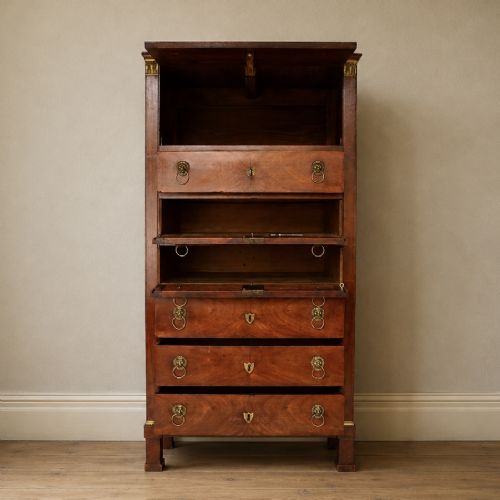
- A desk or cabinet featuring a pull-out or drop-front drawer that conceals a writing surface and small pigeonholes. This clever mechanism allows a standard piece of furniture to double as a compact bureau.
- Abattant
- A French term for a fall-front desk or cabinet where the writing flap drops vertically on hinges. It frequently conceals fitted internal compartments for correspondence and stationery.
- Ormolu
- Gilded bronze used for decorative mounts and furniture trim. It appeared frequently on French revival pieces to accent corners, friezes, and key escutcheons.
- Campaign chest
- A portable set of drawers or a desk made in sections with brass corners and recessed handles for military transport. These pieces utilised durable timbers like teak and rosewood.
- Biedermeier
- A style originating in Central Europe during the early nineteenth century that prioritised clean lines and warm wood grains over heavy ornamentation.
Nineteenth Century Secretaire Desk: Frequently Asked Questions
How do I use a secretaire desk?
The drop-front writing surface pulls down or folds forward to create a flat writing area. Internal drawers and pigeonholes remain accessible behind the flap for storing stationery and small items.
When closed, the drop-front secures the contents and restores the neat appearance of a standard cabinet or chest. This dual function makes the piece useful in rooms where a permanent desk takes up too much floor space.
How do I tell Regency from Victorian pieces?
Regency items often display classical restraint, clean lines, and dark rosewood or mahogany veneers. They date from the early part of the century and frequently employ brass inlay or restrained mouldings.
Victorian examples span a longer period and tend towards heavier proportions or specific revivals like Gothic and Louis XV styles. Walnut and figured mahogany appear regularly in these later cabinets alongside more elaborate decorative carving.
What woods were used in these desks?
Mahogany remained the dominant timber for British examples throughout the nineteenth century, often selected for its rich colour and stability. Walnut, kingwood, and rosewood also featured prominently, particularly on continental or high-end cabinet work.
Specialist pieces incorporated pollard oak or teak for specific regional uses such as campaign furniture. Veneers were applied over sturdy structural woods to showcase striking grain patterns.
Where were secretaire bookcases placed?
These tall cabinets found homes in libraries, drawing rooms, and studies where books required storage alongside writing facilities. The upper glazed sections displayed volumes while the lower desk accommodated daily correspondence.
In smaller rooms, a compact secretaire cabinet or commode served a similar dual purpose without dominating the floor plan. Their versatility suited the domestic arrangements of nineteenth-century households.