



Parquetry Drop Front Desk
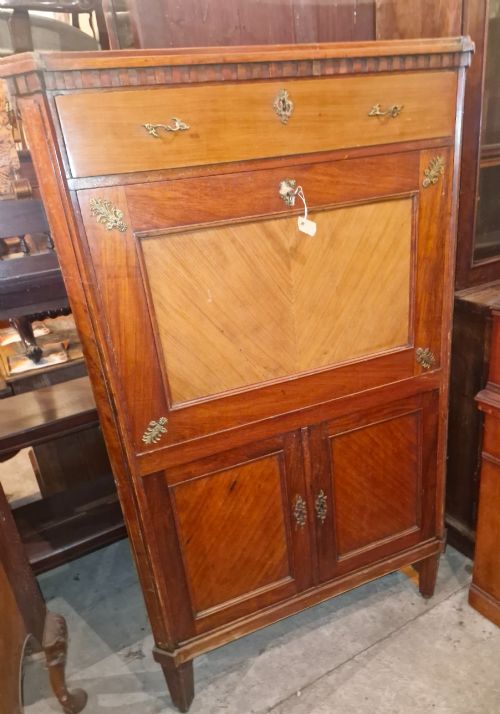
A parquetry drop front desk is a fitted writing cabinet with geometric wood veneers that conceals a practical workspace behind a hinged writing flap.
Parquetry Drop Front Desk
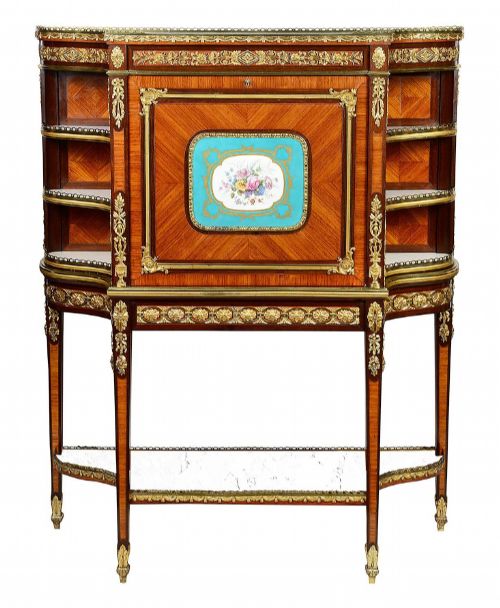
A parquetry drop front desk combines geometric wood veneers with a vertical cabinet structure that opens to reveal a writing surface and small compartments. Buyers seeking a parquetry drop front desk will find pieces spanning several centuries, from early oak examples to elaborate nineteenth-century French creations.
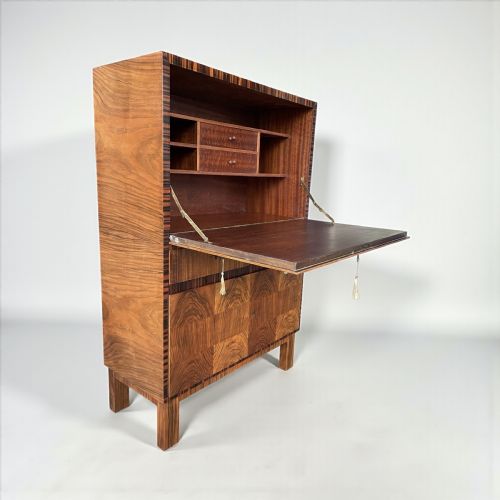
The selections on this page encompass various interpretations including the French secrétaire à abattant, Art Deco bureaux, and fitted drinks cabinets. Most examples originate from the nineteenth century, rendered in styles such as Louis XVI Revival, Louis XVI Style, and French Transitional.
Object forms range from traditional writing desks and secretaire chests to specialised drinks cabinets equipped with mirror fittings. These pieces function simultaneously as decorative furniture and practical storage for correspondence or beverages.
Materials and construction methods
Craftsmen built these pieces using supportive carcassing timbers overlaid with precise geometric patterns of decorative veneers like kingwood, tulipwood, walnut, rosewood, and fruitwood. This technique required immense skill to cut and fit small wood tiles into complex patterns that stabilized the underlying structure.
Many nineteenth-century examples incorporate cast or chased ormolu mounts, gilt bronze details, and polished marble tops to frame the veneered surfaces. These contrasting bronze and stone elements protect vulnerable corners while adding architectural weight to the composition.
Listings feature woods including kingwood, tulipwood, walnut, rosewood, satinwood, fruitwood, and mahogany.
Distinctions in construction and design
Quality in these desks depends heavily on the precision of the veneer work and the integration of secondary elements like marble tops and bronze mounts. Finer pieces demonstrate seamless alignment in their geometric patterns and utilise heavier, more detailed cast bronze rather than simple pressed metal.
The interior fit-up of drawers, pigeonholes, and secondary compartments reveals the maker's dedication to hidden details. Superior examples maintain structural integrity in the drop-down flap mechanism, ensuring smooth operation over decades of use.
Blake London·Millet
The Parquetry Drop Front Desk Glossary
- Parquetry
- Geometric mosaic woodwork formed by small veneer pieces laid down in repeating patterns like cubes, chequers, or triangles. This technique creates a textured visual depth across flat cabinet surfaces.
- Secrétaire à abattant
- A tall vertical writing cabinet featuring a hinged drop-down front panel that serves as a desk surface. Behind this flap lie numerous small drawers and pigeonholes.
- Ormolu
- Gilded bronze mounts applied to furniture edges and corners for decoration and reinforcement. The term derives from the French for milled or ground gold.
- Kingwood
- A dense, heavily figured timber with dark violet-brown streaks frequently used in high-end cabinet making. It provides strong visual contrast when combined with lighter woods in geometric patterns.
Parquetry Drop Front Desk: Frequently Asked Questions
What is a secretaire abattant?
A secretaire abattant is a tall upright cabinet with a hinged front flap that pulls down to create a writing surface. When closed, it presents a neat vertical facade that conceals internal drawers and compartments.
These pieces were designed for domestic studies and reception rooms where space was valued. They allowed owners to lock away correspondence and writing materials while keeping the room tidy.
How do I care for marble topped desks?
Marble tops require gentle cleaning with mild, pH-neutral soap and warm water to avoid damaging the polished stone surface. Acidic liquids like wine or citrus should be wiped away immediately to prevent staining.
Using coasters and protective pads under heavy items helps preserve the finish. Periodic gentle polishing maintains the natural sheen without wearing down the stone.
Where were these cabinets placed?
These cabinets traditionally stood in private drawing rooms, libraries, or bedrooms where owners managed their personal correspondence. Their vertical orientation allowed them to provide substantial storage without occupying excessive floor space.
Today, they function well in home offices, living rooms, or hallways as both display surfaces and functional storage units.