
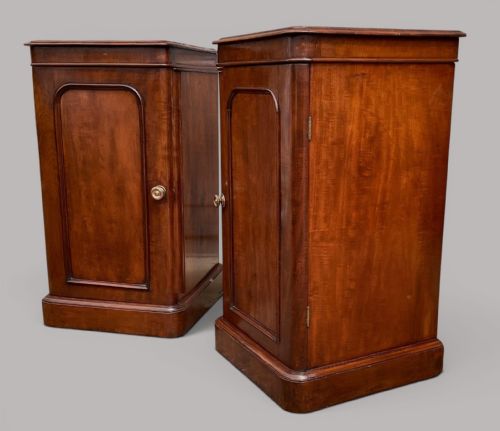
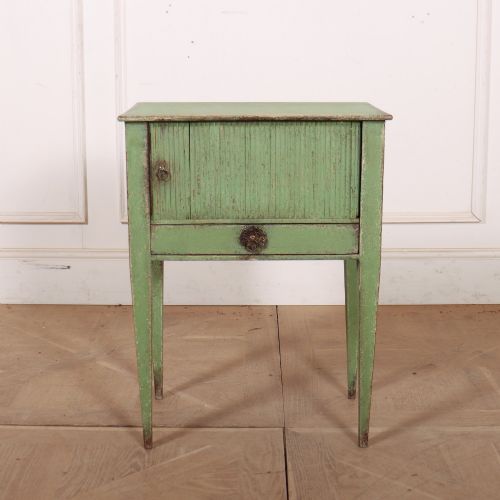
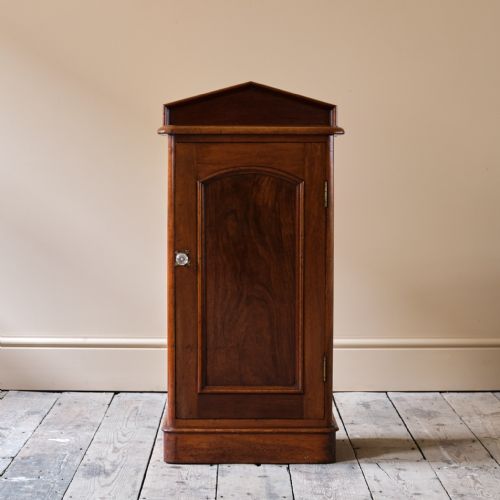


Nineteenth Century Pot Cupboard
A nineteenth century pot cupboard brings compact storage to a bedroom, offering a timber cabinet designed to house a chamber pot beside the bed.
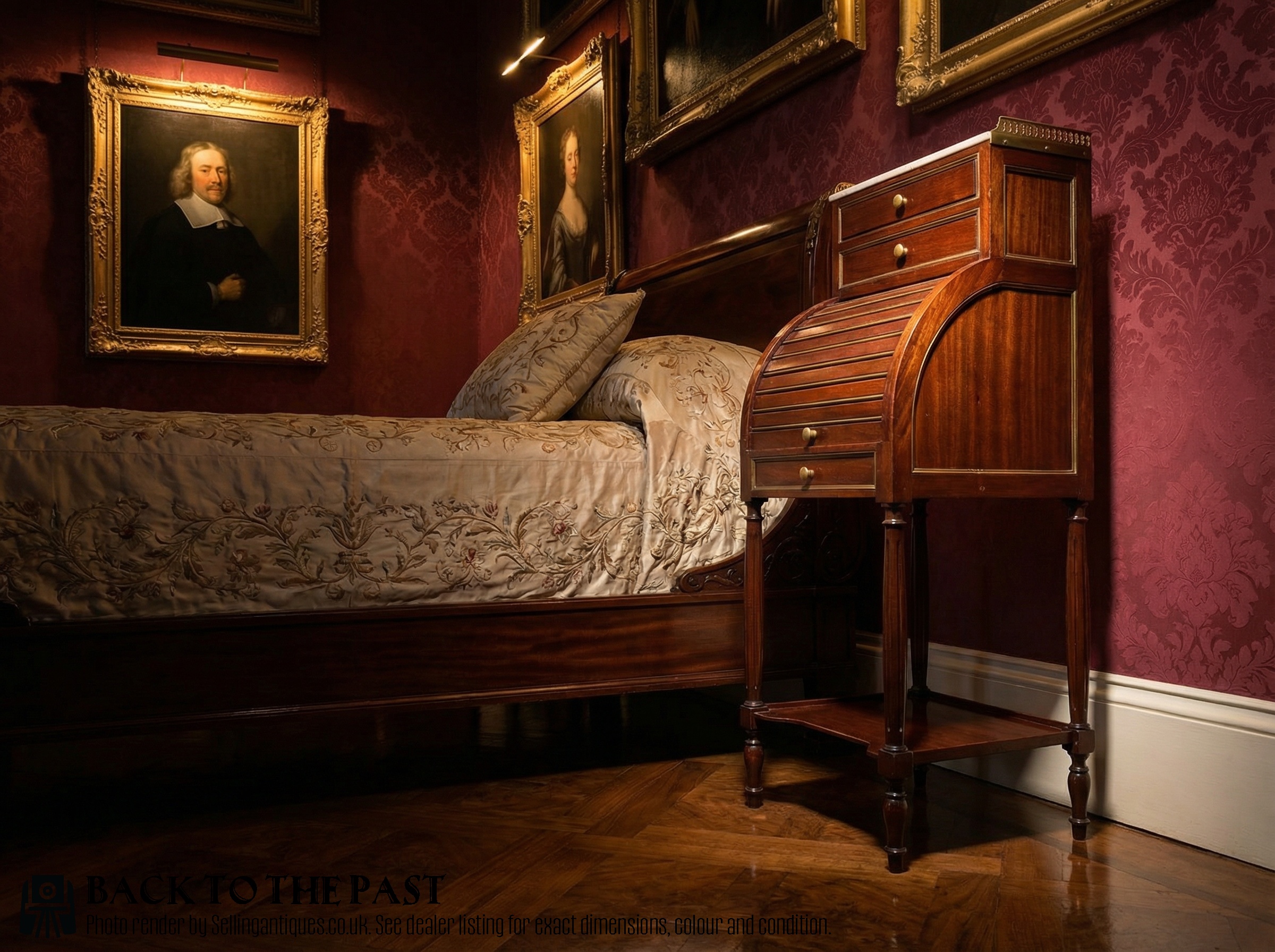
Nineteenth Century Pot Cupboard
When you search for a nineteenth century pot cupboard, you are looking at practical bedroom furniture produced across the decades, often taking the form of a pedestal cabinet or bedside table. These pieces range from Georgian and Regency examples to Victorian and continental styles, designed to stand neatly next to a bed.
The versions you are most likely to meet on this page are mahogany pedestal cupboards and French bedside cabinets, alongside Dutch painted and Biedermeier variations. Makers such as Holland & Sons and Howard & Sons also appear among these listings, alongside simpler architectural column designs and oval pedestal cabinets.
How they were made
Cabinetmakers constructed these pieces primarily from solid mahogany, softwood, and burr wood, frequently applying amboyna veneer, paint, or intricate inlay to the exterior surfaces. Brass hardware, including handles and hinges, provides functional detail, while occasional glass elements complete the construction.
The structural forms draw on various regional traditions, encompassing George IV architectural column designs, Dutch Provincial marquetry, French neoclassical shaping, and Danish Biedermeier curves. Workshops relied on traditional joinery to build stable pedestals and roll tops capable of daily domestic use.
Some nineteenth century French pot cupboards double quite happily as lamp stands today, keeping their original nocturnal duties strictly confidential.
What varies in quality
The standard of a nineteenth century pot cupboard rests on the selection of timber and the ambition of its design. Finer examples display carefully matched mahogany grain, subtle amboyna veneers, or precise inlay work, whereas simpler pieces rely on painted softwood surfaces.
Execution of form also distinguishes the range, from straightforward rectilinear bedside cabinets to architectural column designs or rounded Biedermeier and oval pedestal shapes. The presence of attributed cabinetmakers adds distinct historical weight to specific pieces.
Holland & Sons·Howard & Sons
The Nineteenth Century Pot Cupboard Glossary
- Pot cupboard
- A small bedside cabinet originally constructed to enclose a chamber pot behind a single door or roll top. These items now function widely as lamp stands or general bedside storage.
- Pedestal cabinet
- A freestanding piece of furniture built on a vertical pillar or column form, offering enclosed storage within a compact footprint. Many examples feature a door opening to reveal internal shelving.
- Amboyna veneer
- A decorative wood layer applied to the exterior of a carcass to provide a rich, figured surface. This material appears on select Victorian French bedside cabinets.
- Biedermeier
- A Central European design style emphasising clean lines and domestic comfort, represented here through Danish oval pedestal cabinets. The aesthetic prioritises unadorned wood grains over heavy carving.
Nineteenth Century Pot Cupboard: Frequently Asked Questions
What is a pot cupboard?
A pot cupboard is a small bedside cabinet historically designed to conceal a chamber pot behind a closed door. They offer compact storage next to a bed.
Today, these pieces serve readily as bedside tables or lamp stands while retaining their traditional enclosed form.
How do I spot a Regency piece?
Regency pieces often display architectural influences, such as column designs, alongside rich mahogany timbers. They date from the early part of the nineteenth century.
Proportions tend to be classical and restrained, reflecting the neoclassical tastes of the period.
Were these made in pairs?
Many nineteenth century bedside cabinets were produced as individual items, but pairs do appear across Georgian, Victorian, and continental styles.
Matching pairs are particularly sought after for balancing the layout of a master bedroom.
How do French and English styles differ?
English examples on this page favour mahogany and architectural column forms, often linked to prominent cabinet makers. French variations frequently incorporate amboyna veneer, roll tops, or marquetry.
Both traditions maintain a compact pedestal format suited for bedside use.