


Antique Cylinder Nightstand
An antique cylinder nightstand offers compact cylindrical storage beside the bed, bringing nineteenth-century utility and rich timber grain to the bedroom.
Antique Cylinder Nightstand
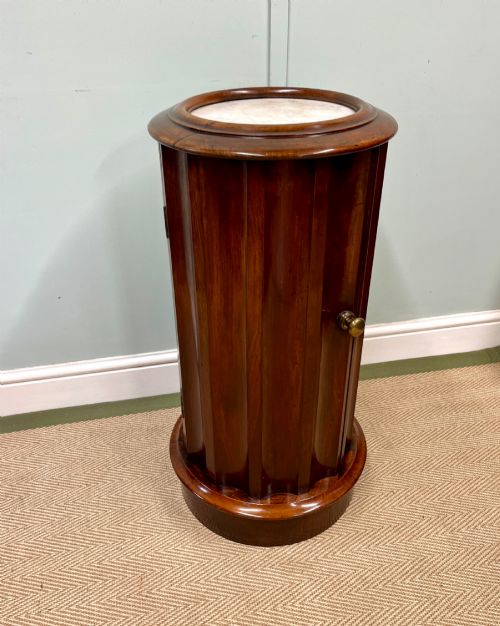
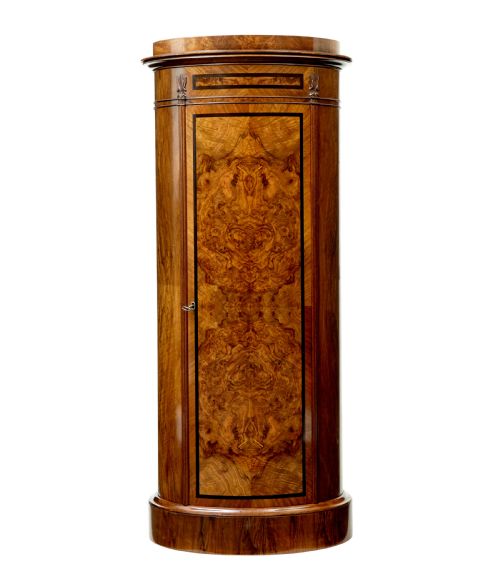
When you search for an antique cylinder nightstand, you are looking at small cylindrical bedside cabinets, pot cupboards, and pedestals dating mainly from the nineteenth century. The forms range from plain mahogany drums to taller French Empire pedestals and marble-topped Victorian cabinets.
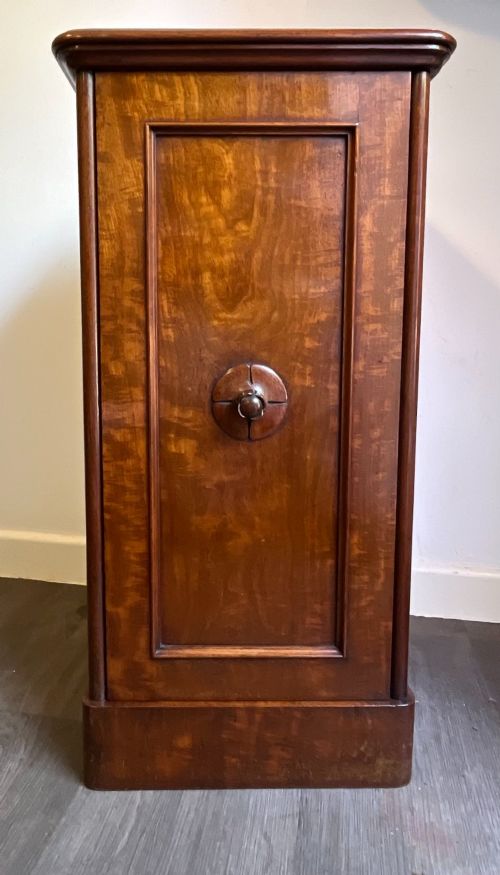
You are most likely to meet flame mahogany and burr walnut versions on this page, often topped with marble or ceramic surfaces. These pieces were designed to hold chamber pots or bedside essentials discretely within a circular carcass.
The styles span Regency, French Empire, and Victorian periods, showing how a simple cylindrical form was adapted across different decades. Regional variations include English mahogany designs alongside continental Empire pieces.
How they were made
Cabinet makers constructed the curved carcasses of an antique cylinder nightstand using bent timber techniques or stave-built construction. Timbers such as flame mahogany and burr walnut were selected for their striking grain patterns and applied as veneers.
Fitted interiors often included shelves or compartments behind a curved door, sometimes complemented by brass hardware. Tops were finished in matching wood, ceramic, or inset marble slabs to provide a durable surface.
Some nineteenth-century makers concealed the door handle entirely within the grain of the curved wood.
What varies in quality
The quality of an antique cylinder nightstand rests on the choice of timber veneer and the precision of the curved door fitting. Finer examples display carefully matched flame mahogany or burr walnut that wraps seamlessly around the circular body.
Surface treatments such as original marble tops and integrated brass details distinguish superior pieces from simpler utilitarian cupboards. The tightness of the joinery where the curved door meets the frame indicates the maker's skill.
The Antique Cylinder Nightstand Glossary
- Cylinder nightstand
- A small bedside cupboard with a rounded or circular body designed to fit neatly in compact spaces. These pieces date primarily from the nineteenth century.
- Flame mahogany
- A figure in mahogany timber showing a flame-like pattern caused by the grain meeting the branch at an angle. It was favoured by cabinet makers for high-status furniture fronts.
- Burr walnut
- A prized wood veneer showing dark swirling knots and growths that create a highly decorative surface. It appears on finer nineteenth-century cabinets.
- Pot cupboard
- A small bedside cabinet originally built to house a chamber pot behind a single door. Many later found use as general nightstands.
- Pedestal cupboard
- A freestanding vertical cabinet, often cylindrical or column-like in shape, standing on a plinth or feet.
Antique Cylinder Nightstand: Frequently Asked Questions
What is an antique cylinder nightstand used for?
These small circular cabinets function as bedside tables, offering enclosed storage for night-time essentials within a compact footprint.
Historically, many served as pot cupboards before adapting to modern bedroom storage needs.
Are marble tops original to these cabinets?
Many Victorian and French Empire cylindrical cabinets were manufactured with fitted marble or ceramic tops to provide a durable, wipe-clean surface.
These stone slabs were set directly into the wooden rim of the circular carcass.
How do I clean timber and marble surfaces?
Maintain mahogany and walnut veneers with gentle dusting and occasional wax polishing suited to antique wood.
Marble tops require simple wiping with a damp cloth, avoiding acidic cleaners that might etch the polished stone.