
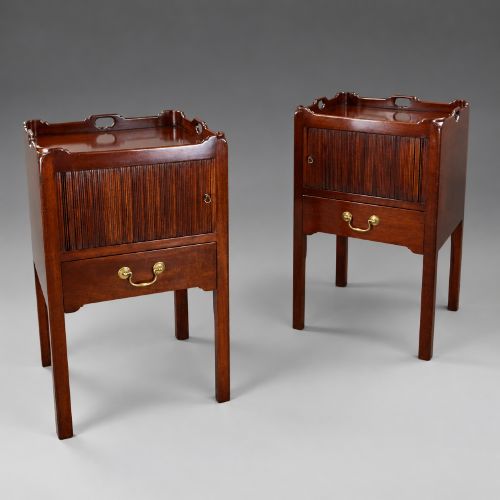
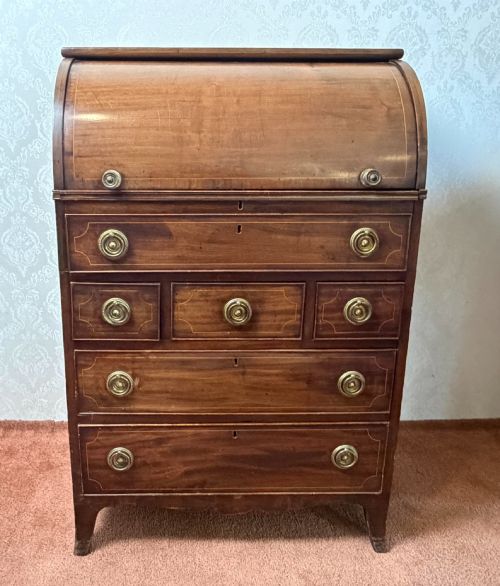
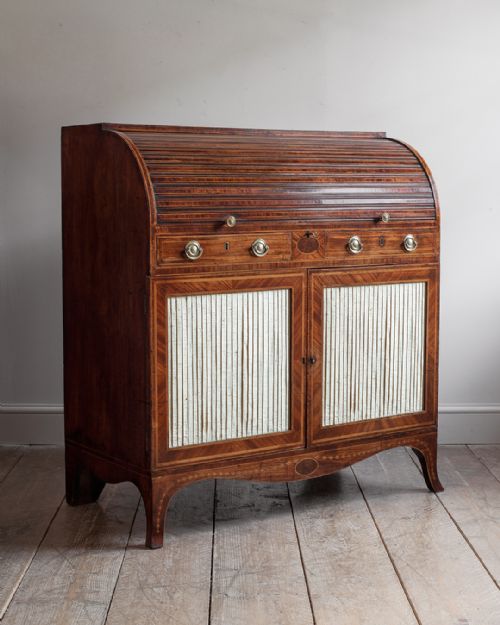
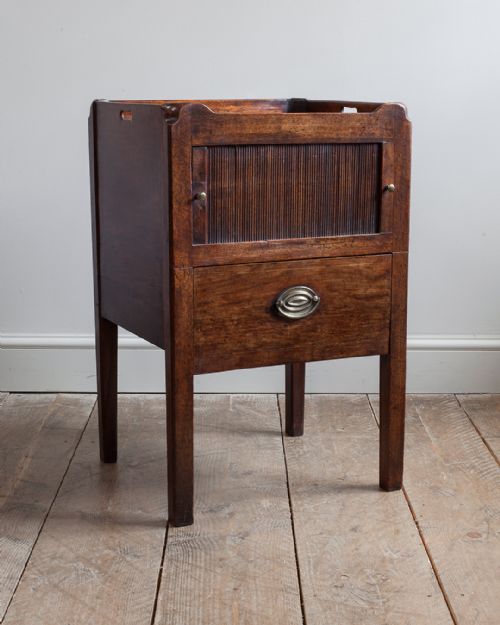

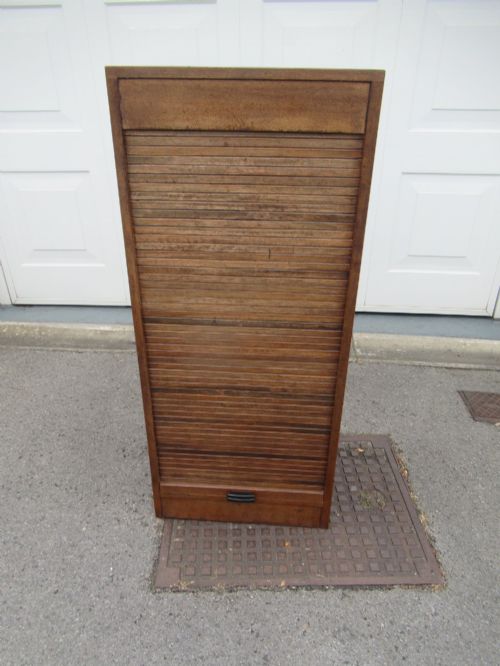
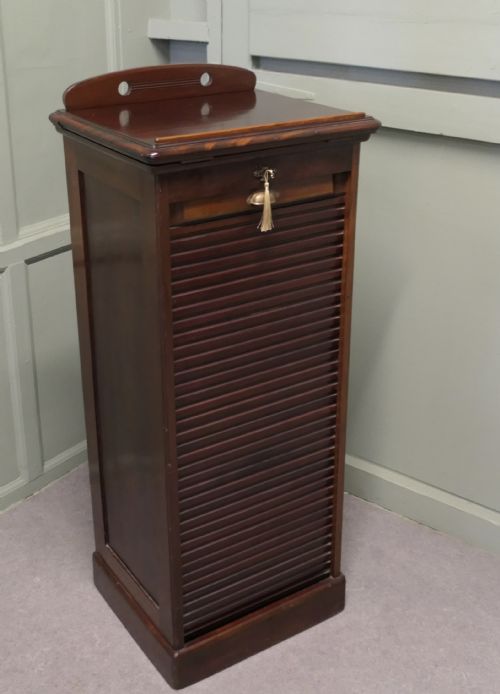

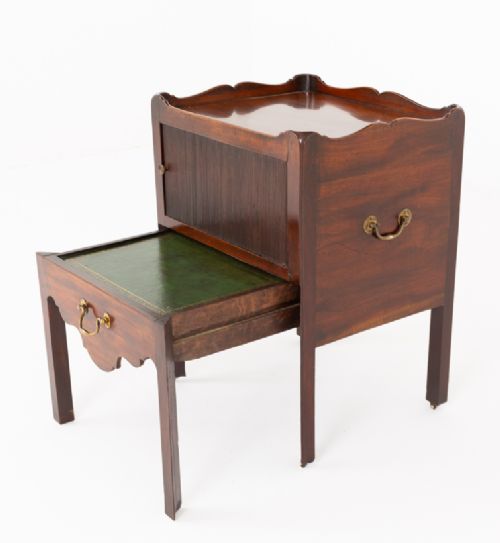

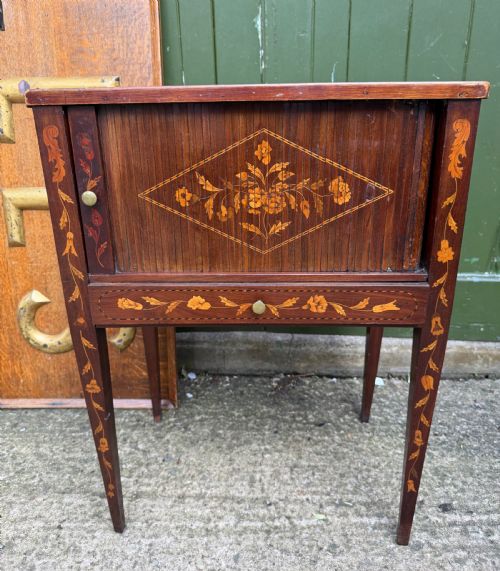


Mahogany Tambour Cabinet
A mahogany tambour cabinet brings flexible slatted sliding doors to refined Georgian and later storage forms.
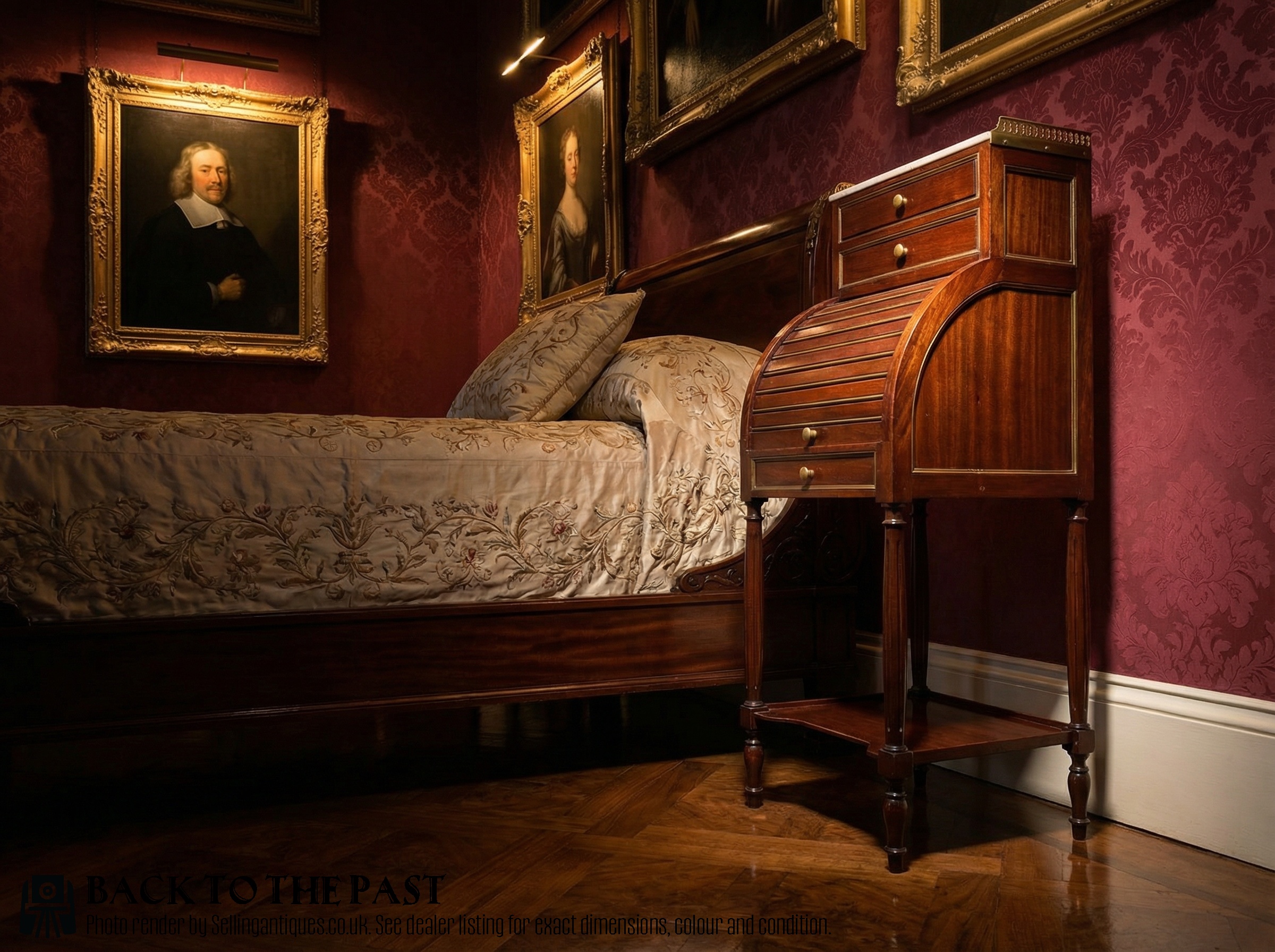
Mahogany Tambour Cabinet
A mahogany tambour cabinet operates through narrow wooden slats running in tracks to conceal interior spaces. These pieces appear across Georgian, Regency, and Victorian periods in various formats.
The selections span functional office furniture and domestic bedside tables. Buyers encounter bedside cupboards, nightstands, and specialised filing cabinets utilising the characteristic slatted shutter.
Origins include English workshops and continental makers employing rich timber and marquetry inlay. The form bridges utilitarian filing storage and elegant bedroom furniture.
How they were made
Construction relies on solid mahogany and mahogany veneers applied to secondary timbers. Cabinetmakers integrated boxwood, satinwood, and fruitwood for contrast and decorative inlay work.
The tambour mechanism requires precision joinery where individual strips are glued to canvas or leather backings. This allows the wooden shutter to glide smoothly around curved cabinet corners.
Listings feature Georgian, Regency, and Victorian periods alongside later twentieth-century filing units.
What varies in quality
The alignment and movement of the tambour slats determine daily functionality. Superior examples maintain smooth tracking without binding or sagging in the tracks.
Selection of timber grain and the crispness of boxwood inlay distinguish finer workshop output. Original brass hardware and intact tray tops elevate the standing of individual pieces.
The Mahogany Tambour Cabinet Glossary
- Tambour
- Slatted wooden sliding shutters running in recessed tracks. They allow access to cabinet interiors without swinging doors.
- Commode
- A decorative low cabinet or bedside table with enclosed storage. Georgian iterations frequently feature tray tops.
- Marquetry
- Inlaid wood designs using various tinted veneers. Dutch examples show floral motifs.
- Nightstand
- A small bedside table designed to hold chamber utensils or personal items. Many incorporate tambour doors.
- Satinwood
- A yellow-brown exotic timber used for contrasting inlay and stringing. It highlights Georgian and Regency drawer fronts.
Mahogany Tambour Cabinet: Frequently Asked Questions
What is a tambour cabinet?
A tambour cabinet uses flexible wooden slats glued to fabric backing to slide around curved tracks. This mechanism conceals the interior without requiring clearance for swinging doors.
Craftsmen applied this system to bedside commodes, writing desks, and office filing furniture during the Georgian and later periods.
How do I maintain the sliding door?
Keep the wooden tracks clean and free from dust buildup to ensure smooth movement. Gentle waxing helps the individual slats glide without catching.
Avoid excessive moisture which can warp the backing canvas and cause the slats to bind in the channels.
Are these cabinets office or bedroom furniture?
They serve both functions depending on the specific period and form. Earlier Georgian pieces typically act as bedside commodes or writing desks.
Later Victorian and Edwardian variations frequently appear as modular office filing cabinets and music storage units.
How can I date a mahogany cabinet?
Examine the secondary woods, construction methods, and hardware styles. Georgian and Regency pieces display hand-cut dovetails and rich mahogany patination.
Later filing formats from the twentieth century utilise standardised internal mechanisms and heavier structural frames.