
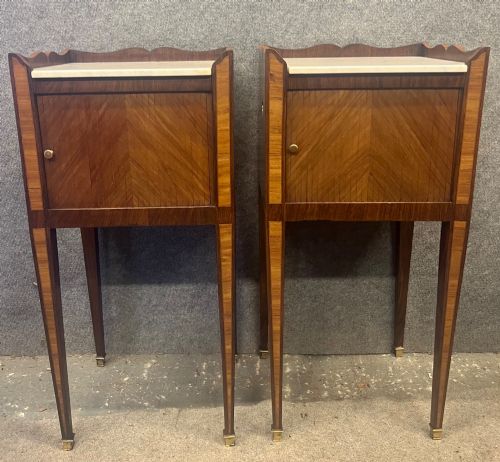
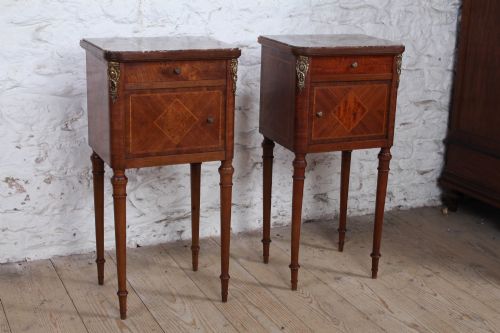


French Bedside Pedestal
These French bedside pedestals combine practical bedside storage with refined continental style, offering neat surfaces and cabinets for the bedroom.
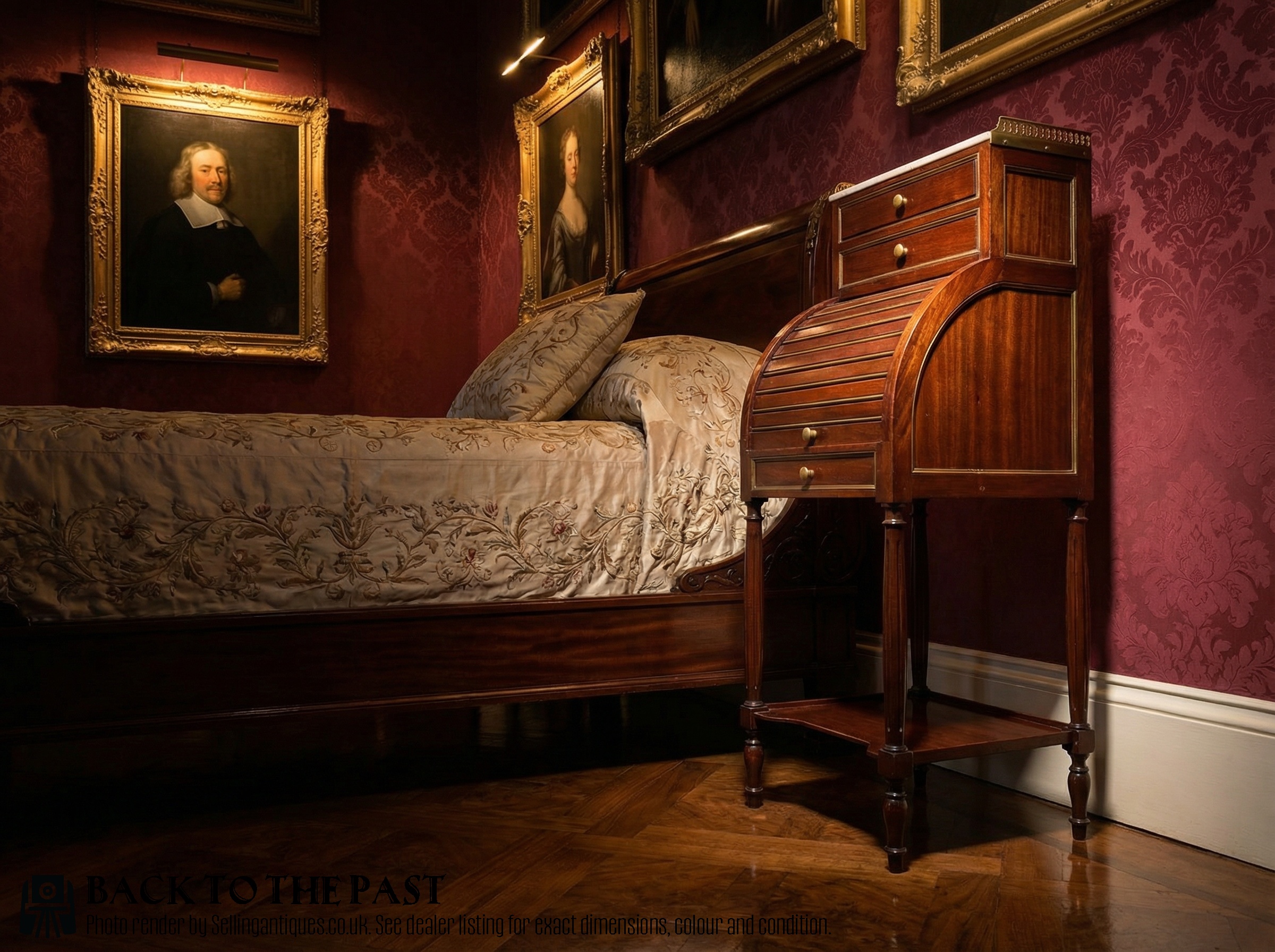
French Bedside Pedestal
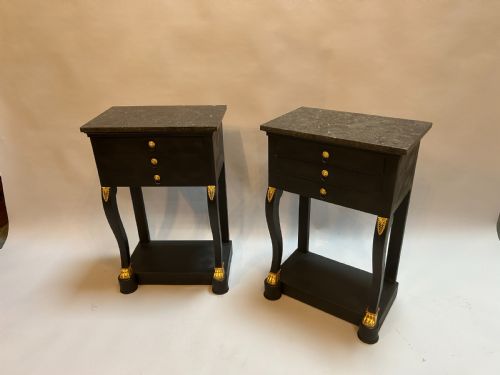
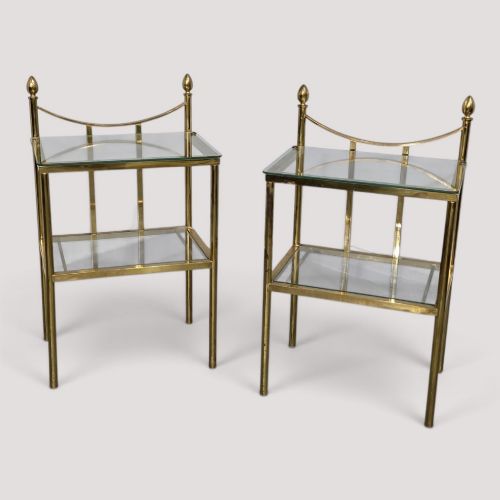
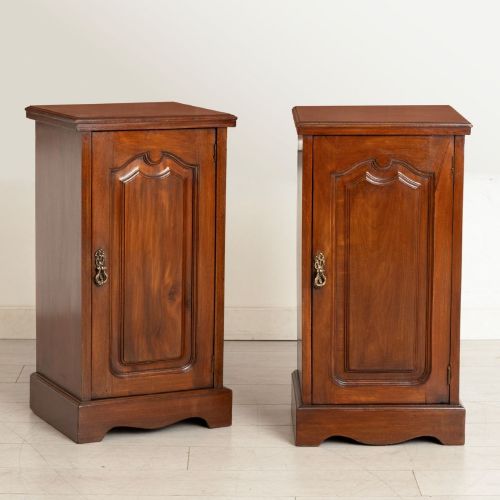
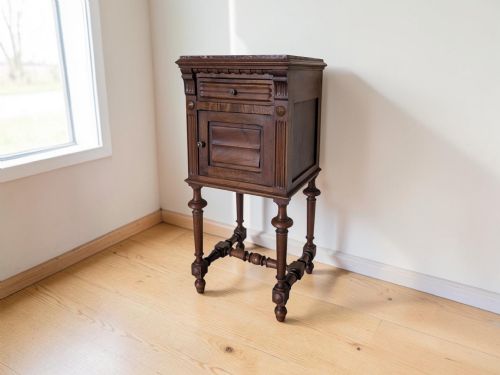
A french bedside pedestal provides compact bedside storage through enclosed cupboards, drawers, or open surfaces designed to sit beside a bed. You will find these pieces appearing in various historical styles, including Louis XV, Louis XVI, and French Empire designs.
Origins stretch across the nineteenth and early twentieth centuries, encompassing Victorian periods and decades up to nineteen thirty. Buyers encounter both restrained provincial woodwork and highly decorative urban pieces mounted in gilt bronze or ormolu.
Evaluating quality and execution
Quality rests in the precision of the timber matching and the intricacy of the parquetry or marquetry work across the doors and sides. Superior examples display crisp carving, balanced proportions, and tight joints that maintain structural integrity over generations.
Periods represented span the nineteenth century through to nineteen thirty, including Victorian eras and Louis XV and XVI revival styles.
The French Bedside Pedestal Glossary
- Ormolu
- Gilt bronze mounted onto furniture as decorative trim. This technique became prominent in French cabinetmaking during the eighteenth and nineteenth centuries.
- Parquetry
- Geometric wood veneer patterns arranged in repetitive motifs. Cabinetmakers applied these thin wooden tiles to tabletops and cabinet doors.
- Tambour
- Flexible strips of wood glued to canvas backing to form sliding doors. This mechanism allows curved cabinet fronts to open smoothly.
- Pot cupboard
- A small bedside cabinet originally designed to house a chamber pot. These pieces typically feature a single door and an internal shelf.
- Kingwood
- A dense, richly figured Brazilian timber utilised in high-end cabinetmaking. It displays dark brown and violet colouring with striking grain patterns.
French Bedside Pedestal: Frequently Asked Questions
How do I identify a true period french bedside pedestal?
Examine the construction methods, timber ageing, and hardware style to determine the era of manufacture. Nineteenth-century pieces often utilise hand-cut dovetails and traditional timber framing that differs from later reproductions.
Look closely at the underside and interior surfaces for tool marks and timber shrinkage consistent with age. Genuine examples display wear patterns appropriate to their stated period without modern fixings.
What is the difference between a pedestal and a pot cupboard?
A pedestal generally refers to a tall, narrow columnar cabinet, whereas a pot cupboard is specifically built with an internal compartment for a chamber pot. Both serve well as bedside tables in modern settings.
Many antique pieces labeled as pot cupboards function identically to standard bedside cabinets today. The interior layout usually consists of a single shelf behind a hinged door.
Are marble top bedside tables practical for daily use?
Marble surfaces offer excellent resistance to liquid spills and heat from drinking glasses or lamps. The stone provides a durable top that withstands daily bedroom routines with ease.
Care should be taken with acidic liquids like citrus juice, which can etch polished marble. Simple wiping with a damp cloth keeps the stone surface in good condition.
How do I care for antique wood veneers?
Protect veneered surfaces by avoiding direct sunlight and maintaining stable humidity levels in the room. Excessive dryness can cause old veneers to lift or crack over time.
Apply quality beeswax sparingly and buff with a soft cloth to nourish the timber grain. Avoid modern silicone sprays that can damage historic polished finishes.