


Victorian Night Stand
A victorian night stand brings practical bedside storage and period character to a bedroom.
Victorian Night Stand
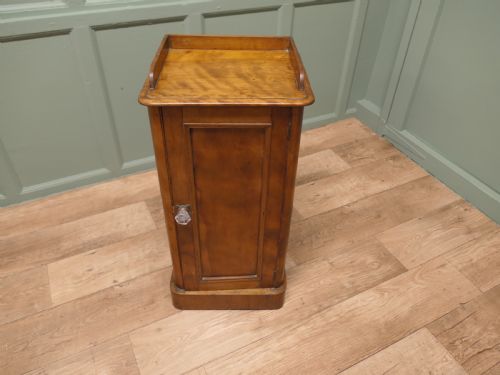
A victorian night stand encompasses various forms intended for bedside use, including cupboards, cabinets, chests, tables, and lamp stands originating across the nineteenth century.
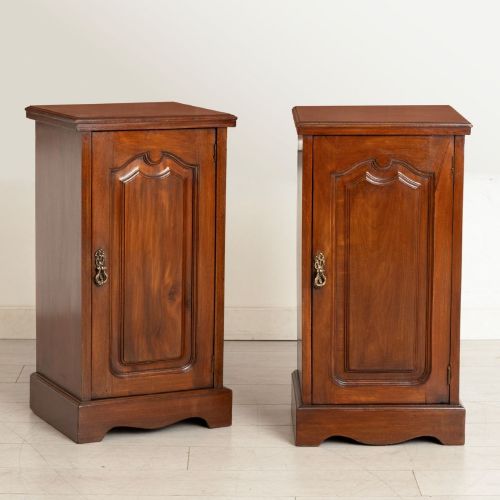
The versions most commonly met on this page include mahogany bedside cupboards and cabinets, often found as pairs.
Makers and workshops working during the Victorian period constructed these pieces in forms designed to hold chamber pots, candles, and lamps beside the bed.
Materials and Construction
Cabinet makers utilised solid timbers and veneers such as mahogany, walnut, oak, satin birch, and exotic hardwoods.
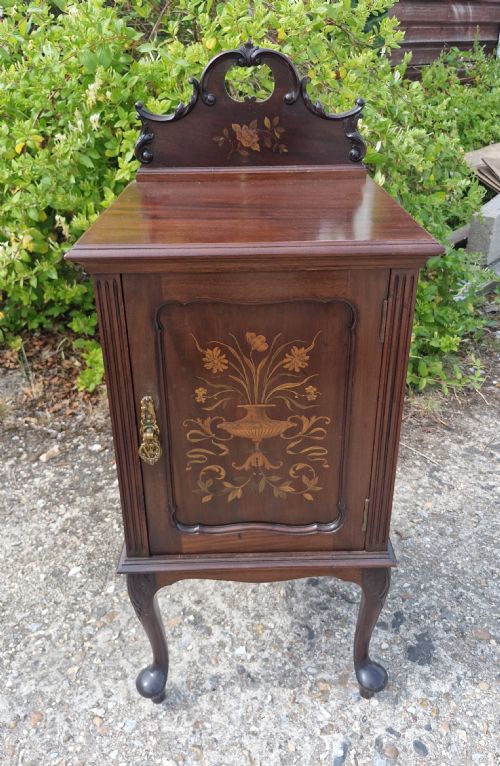
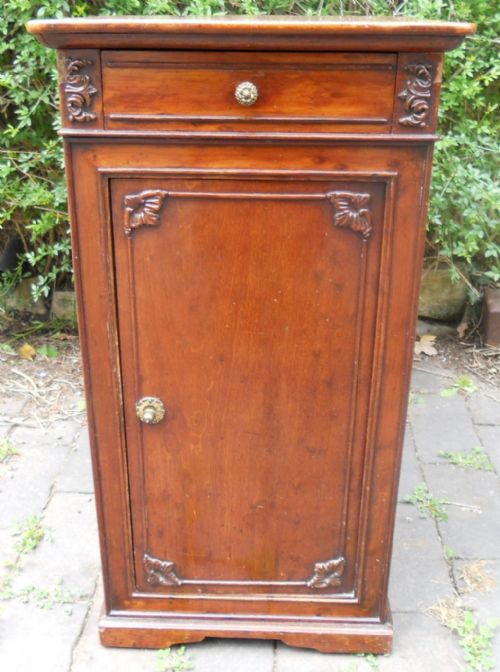
Decorative touches included marquetry inlay, carved details, and marble tops.
Workshop construction methods yielded sturdy pedestals, cupboards with doors, and functional drawers suited to daily bedroom use.
Listings feature nineteenth-century bedside furniture in mahogany, walnut, oak, and birch, alongside brass and tin lighting items.
Quality Variations
The standard of timber selection divides standard pieces from superior examples, particularly where figured mahogany or flame mahogany graining displays strong patterns.
Refinement of detail, such as careful marquetry inlay and crisp carving, distinguishes workshop output.
Original matching pairs demonstrate greater consistency in timber and proportion than assembled pairs or single items.
HOWARD & SONS·Gillow & Co
The Victorian Night Stand Glossary
- Pot cupboard
- A bedside cabinet originally designed to enclose a chamber pot. These typically feature a single door above or beside a small compartment.
- Night locker
- An alternative nineteenth-century term for a bedside cupboard or cabinet. These pieces provided enclosed storage for personal items near the bed.
- Marquetry
- The art of applying decorative veneer pieces to a structure to form geometric or floral designs. This technique appeared on nineteenth-century cabinet doors and tops.
- Chamberstick
- A portable candle holder fitted with a pan to catch dripping wax and a handle for carrying. These items were used for lighting the way to bed.
Victorian Night Stand: Frequently Asked Questions
What is a victorian night stand used for?
These pieces served nineteenth-century bedrooms as functional stands for lamps, candles, and personal belongings. Many incorporated enclosed spaces to keep chamber pots out of sight.
Today, they function as bedside tables or lamp tables that provide concealed storage alongside modern beds.
How do I identify a victorian night stand?
Identification relies on nineteenth-century timber choices such as mahogany, walnut, and pine, combined with period construction methods. Cabinet forms often include enclosed cupboards and small drawers designed for bedroom use.
Looking for hallmarks of nineteenth-century cabinet-making helps distinguish genuine period pieces from later reproductions.
Are pairs common for these tables?
Makers frequently produced bedside cabinets and chests in matched pairs to flank a bed symmetrically. Surviving pairs remain sought after for traditional bedroom schemes.
Single pieces also appear regularly, reflecting how bedrooms were furnished originally.
What woods were used?
Mahogany served as the predominant timber, appearing in figured, flame, and solid varieties across many nineteenth-century examples. Walnut, oak, satin birch, and exotic hardwoods also featured.
Inlay work utilised contrasting light woods and marquetry patterns to decorate door panels and tops.