

Late Victorian Bedside Table
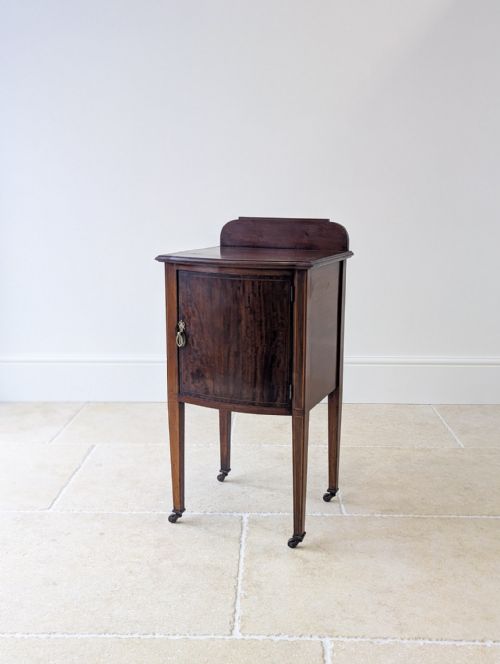
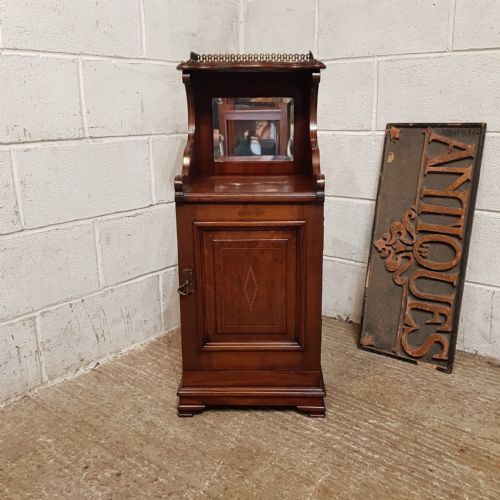
A late victorian bedside table brings solid timber and sensible storage to the bedroom, grounding the space with nineteenth-century craftsmanship.
Late Victorian Bedside Table
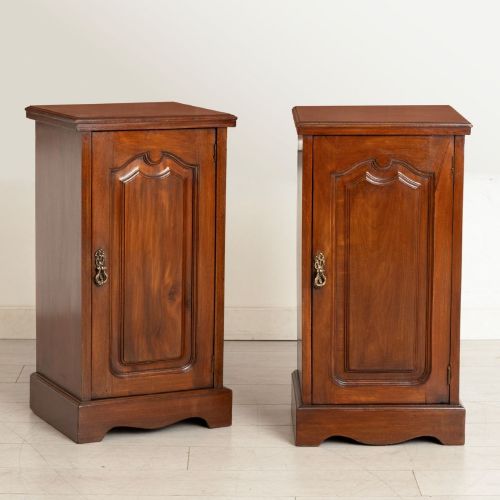
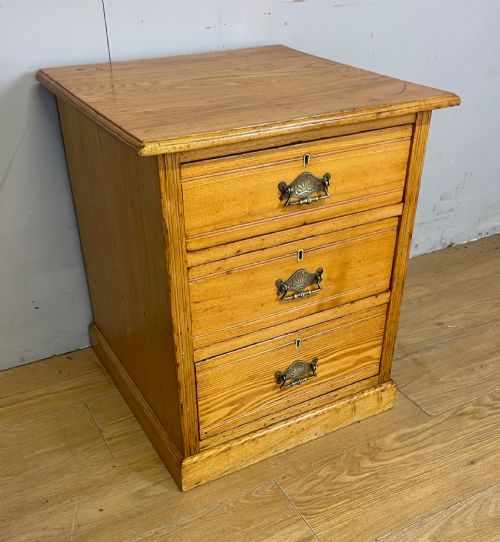
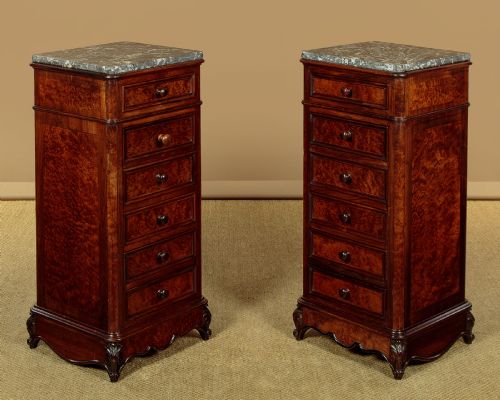
A late victorian bedside table serves as a functional companion beside the bed, frequently taking the form of an enclosed cabinet, a small chest of drawers, or a pedestal. These pieces date predominantly from the late nineteenth century, spanning the eighteen-seventies through to nineteen hundred.
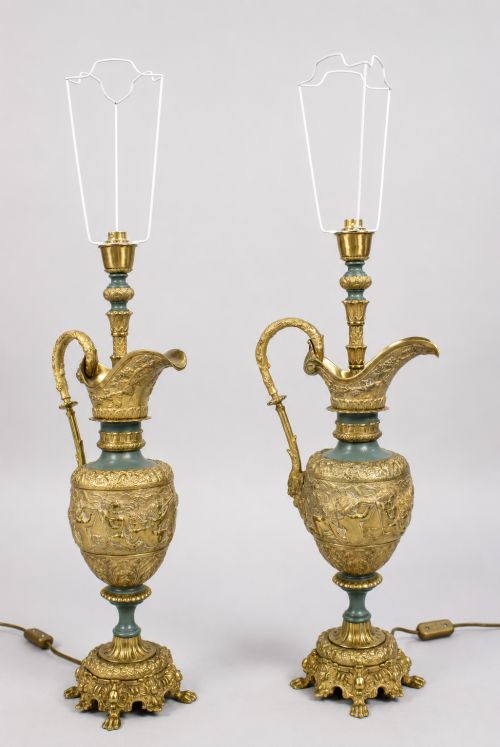
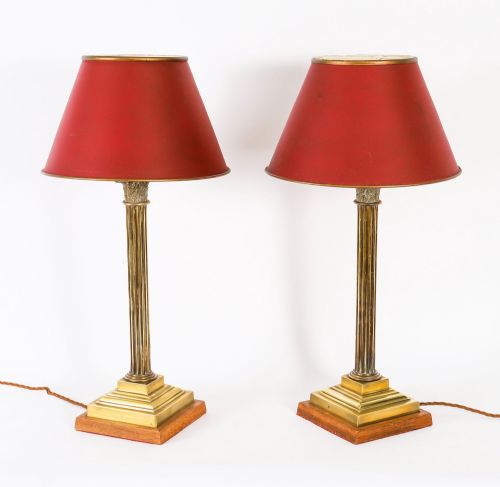
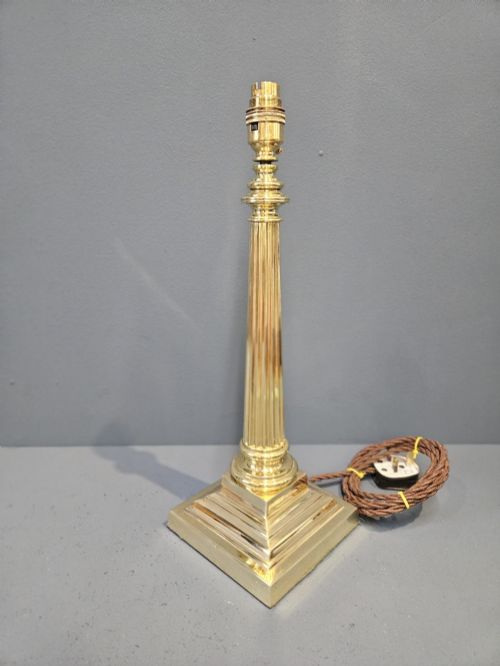
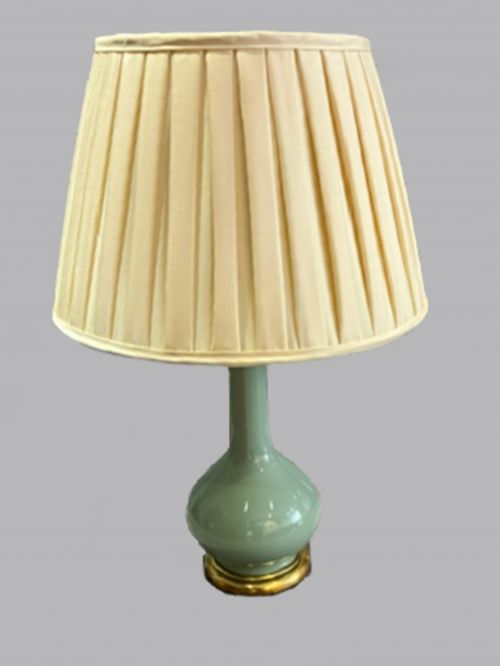
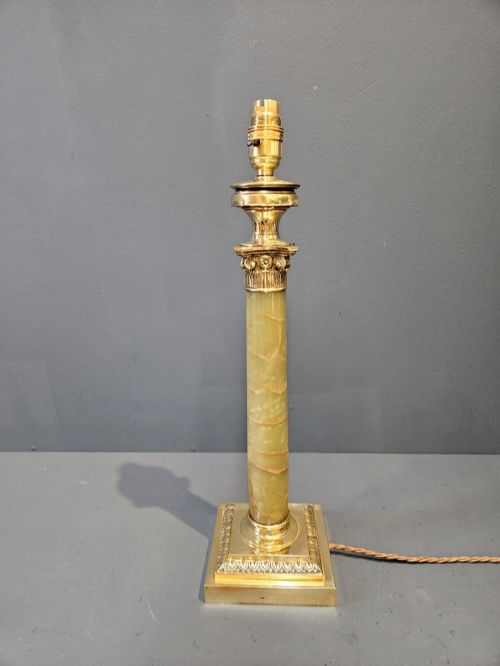
Cabinets and lockers on this page appear in single pieces and in matched pairs, offering enclosed cupboards or multiple stacking drawers. Alongside timber cabinets, the listings include occasional tables and table lamps adapted for bedside use.
How They Were Made
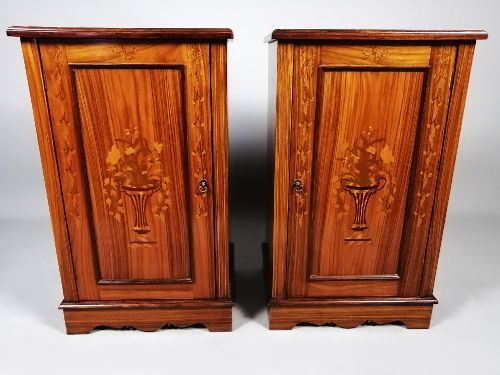
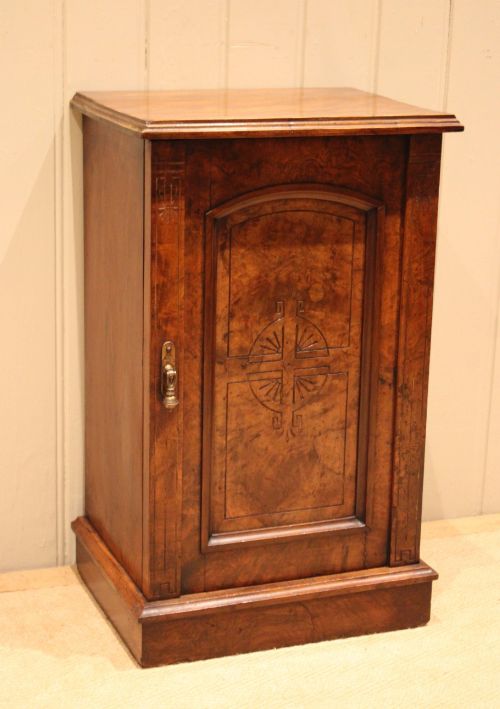
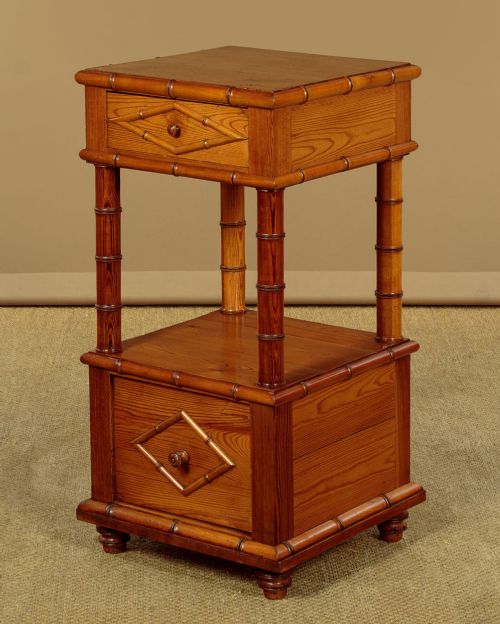
Cabinetmakers built these pieces using dense hardwoods such as mahogany, walnut, burr walnut, rosewood, and oak, frequently incorporating marquetry, inlay, or exotic veneers on the exterior surfaces. Structural stability relied on traditional joinery, while decorative variations included faux bamboo turnings and applied brass or ormolu mounts.
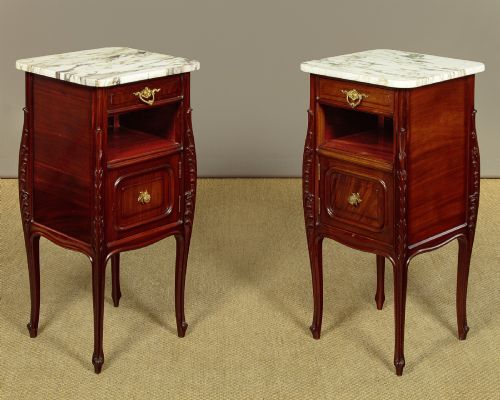
Many cabinets incorporate inset marble tops, providing a durable and cool surface resistant to water and daily wear. Drawer interiors and secondary carcases utilised supportive secondary timbers, constructed to withstand decades of regular opening and closing.
Listings feature marble, brass, fabric, and glass alongside primary hardwoods like mahogany, walnut, and rosewood.
What Varies in Quality
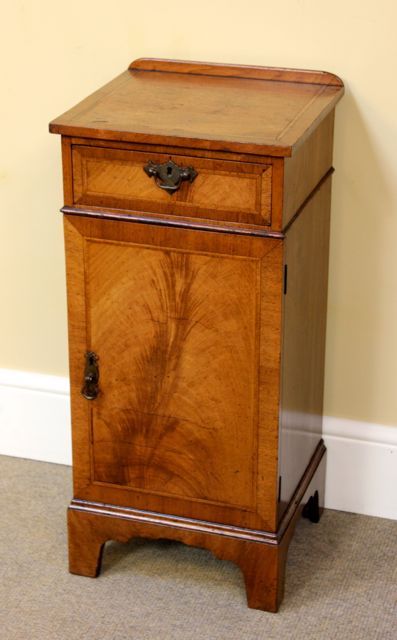
The choice of primary timber and decorative technique distinguishes standard production from finer cabinetwork, particularly where burr veneers, intricate marquetry, or exotic hardwoods are employed. Grain selection and the precision of inlaid elements dictate the visual depth of the piece.
Construction details such as dovetailed drawer boxes, matching wood figure across drawer fronts, and original marble slabs elevate a piece. Maker attributions, including stamps from established workshops, separate ordinary items from notable workshop productions.
Heals·James Shoolbred·Gillows of Lancaster
The Late Victorian Bedside Table Glossary
- Marquetry
- Decorative patterns formed by fitting together thin veneers of wood, shell, or ivory onto a structural surface. This technique creates pictorial or geometric designs across cabinet doors and tops.
- Burr Walnut
- Timber taken from the abnormal growth of a walnut tree, producing swirling and mottled grain patterns. Cabinetmakers prized this wood for its rich visual texture on prominent surfaces.
- Aesthetic Movement
- A late nineteenth-century design style emphasising simplicity, artistic expression, and Japanese-inspired motifs. Pieces from this movement move away from heavy historic revivalism towards cleaner lines.
- Ormolu
- Gilded bronze mounts applied to furniture and lamps for decorative effect. This finish adds metallic contrast to dark timber surfaces.
- Faux Bamboo
- Timber turned and carved by hand to imitate the segmented stalks of natural bamboo. This decorative treatment reflects the nineteenth-century fascination with exotic botanicals.
Late Victorian Bedside Table: Frequently Asked Questions
What woods were used for these cabinets?
Makers utilised a variety of timbers including mahogany, walnut, burr walnut, rosewood, ash, and oak. Exotic hardwoods and decorative veneers also appear frequently on cabinet exteriors.
Secondary timbers were chosen for internal drawer construction to ensure structural longevity and smooth operation.
Are marble top bedside cabinets practical?
Marble tops provide a durable, heat-resistant, and easily cleaned surface suitable for holding water jugs, glasses, and lamps. This material protects the underlying timber from accidental spills.
Most marble slabs rest loose upon the cabinet carcase or secure with simple brackets for easy cleaning.
Did these pieces come in pairs?
Cabinets and chests were constructed both as individual items and as mirror-image pairs to flank a larger bed. Pairs often feature matching wood grain and symmetrical door swings.
Finding matched pairs from the nineteenth century remains particularly desirable for symmetrical bedroom layouts.
How do I identify the Aesthetic Movement style?
Aesthetic Movement pieces display simpler rectilinear forms, darker oak or walnut timbers, and restrained decorative carving. They avoid excessive ornamentation in favour of honest construction.
These designs often incorporate subtle brass hardware and unpretentious bracket feet.