



Nineteenth Century Persian Heriz
Nineteenth century persian heriz rugs are substantial northwest persian wool and cotton floor coverings that anchor a room with geometric authority.
Nineteenth Century Persian Heriz
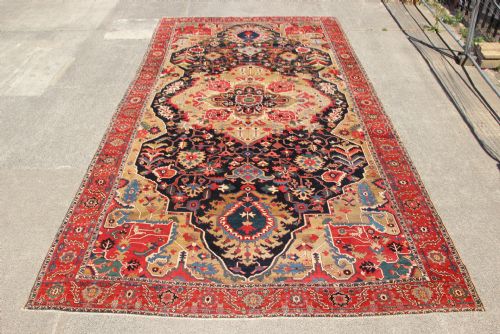
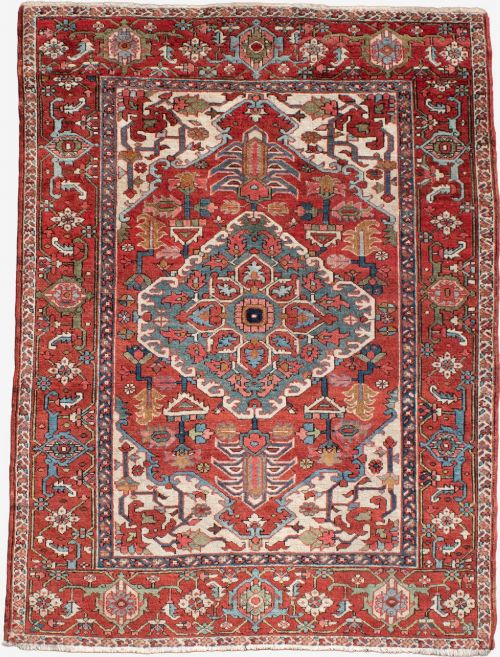
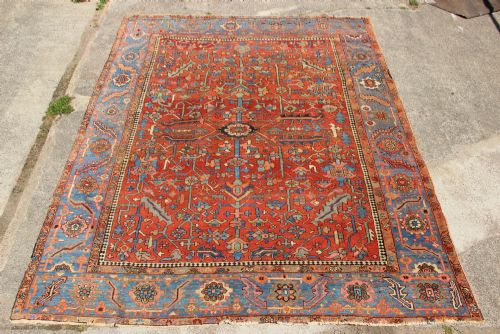
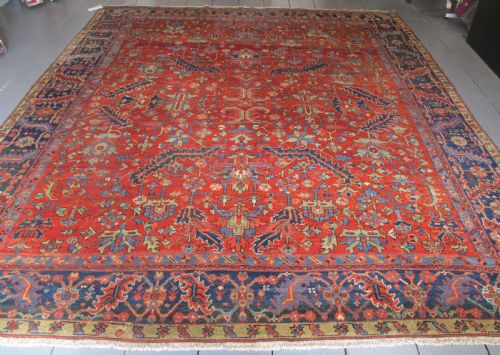
Nineteenth century persian heriz carpets provide the bold medallion designs and robust structures characteristic of northwest persian weaving. These pieces appear in traditional persian and serapi styles, spanning the decades from eighteen fifty to nineteen twenty.
Buyers on this page most frequently encounter large area rugs and carpets formed from wool and cotton. The selection incorporates related northwest persian workshops including bakshaish and karaja alongside standard heriz weaving.
The format ranges from smaller serapi rugs measuring under two metres to expansive carpets exceeding six metres in length. Each object displays the distinctive geometric layouts and palette typical of the region during this era.
Materials and construction
These carpets utilise a durable foundation of cotton threads that carry dense wool piles hand-knotted across the surface. This pairing provides the structural stability necessary to withstand heavy foot traffic over generations.
Weavers in northwest persian districts employed sturdy knotting techniques and vegetable dyes to achieve saturated reds, blues, and neutrals. The resulting textiles present a firm handle and resilient pile tailored for domestic utility.
Nineteenth Century Persian Heriz Retail Price Guide 2026
Typical asking prices for nineteenth century persian heriz among the pieces listed under this phrase on Sellingantiques today, from the lower quarter to the upper quarter. They describe what is for sale here now, not the wider market.
Listings span seven distinct production decades between eighteen fifty and nineteen twenty, constructed from wool and cotton.
Distinctions in quality
Quality in these rugs rests upon the precision of the geometric drawing and the fineness of the weave. Finer examples, often designated as serapi or very fine, exhibit crisper medallion outlines and more intricate spandrels.
The handling of the wool and the depth of colour saturation further separate standard production from superior pieces. Older works from the mid nineteenth century derive distinction from abrash colour shifts and spontaneous village drawing.
The Nineteenth Century Persian Heriz Glossary
- Serapi
- A sub-style of heriz carpet known for bolder, more spacious geometric designs and a lighter palette. These pieces generally date to the nineteenth century.
- Bakshaish
- An adjacent northwest persian village style featuring simplified, whimsical geometric patterns and earthy tones. It forms part of the broader heriz weaving tradition.
- Karaja
- A northwest persian carpet type characterised by distinct geometric medallions arranged in vertical rows. These runners and rugs share materials with heriz production.
- Abrash
- Natural variations of shade within a single field of colour caused by changes in dye batches. This phenomenon indicates traditional dyeing methods utilising natural materials.
- Spandrel
- The triangular corner ornaments framing the central field or medallion of a carpet. In heriz weaving, these areas often display contrasting geometric foliage.
Nineteenth Century Persian Heriz: Frequently Asked Questions
Can I place these rugs in high traffic areas?
The robust wool pile and sturdy cotton foundations of nineteenth century persian heriz carpets make them well suited for living rooms and hallways. Their original purpose was domestic flooring.
Using a quality underlay prevents slipping and cushions the fibres against abrasive wear from hard floors. This simple addition significantly extends the working life of the textile.
What is the difference between serapi and heriz?
Serapi carpets represent an earlier, coarser, and more spacious village aesthetic associated with the heriz region. They typically feature larger medallions and softer, more open colour fields.
Standard heriz carpets often display tighter knotting and more intricate, denser geometric patterns. Both styles share the same northwest persian geographic origins and materials.
How do I identify a nineteenth century piece?
Dating relies on examining the structural materials, hand-spun wool characteristics, and natural dye palettes found across the reverse of the carpet. Older pieces from the mid nineteenth century show distinct village irregularities.
Stylistic shifts from open medallion formats to denser floral geometries help place pieces between eighteen fifty and nineteen twenty. Comparing structural fineness provides further chronological context.