


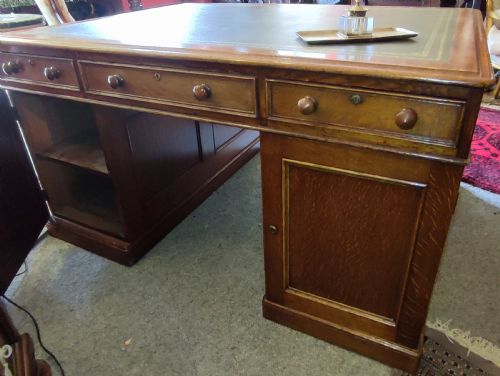


Nineteenth Century Oak Desk
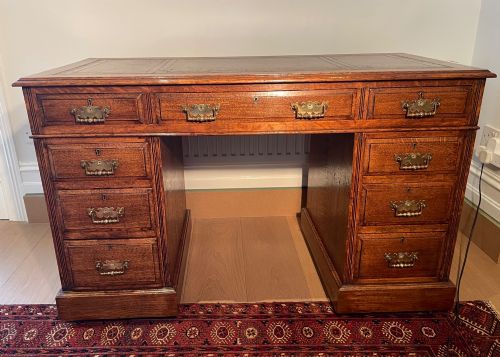
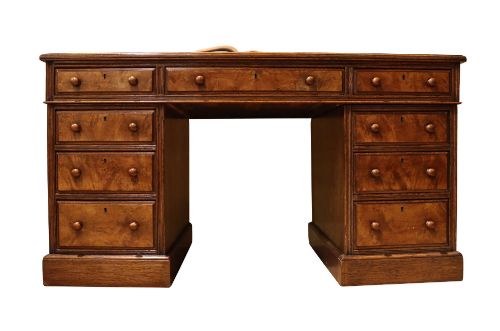
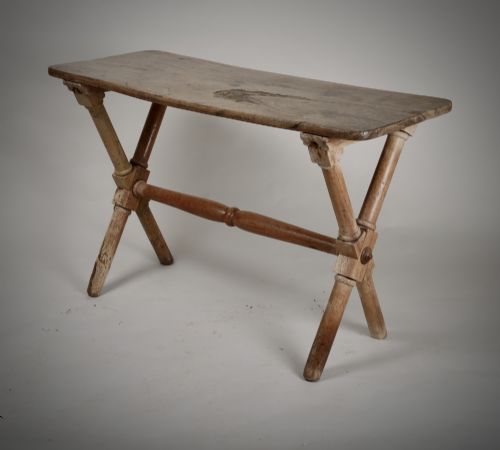
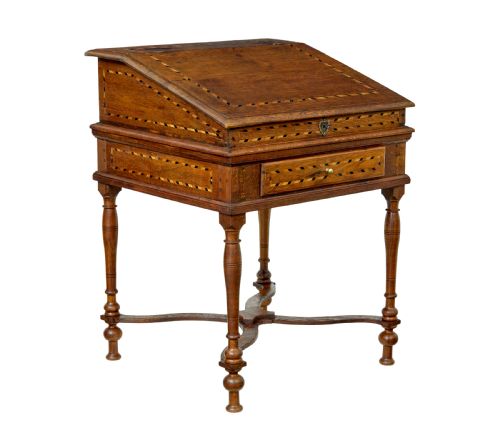
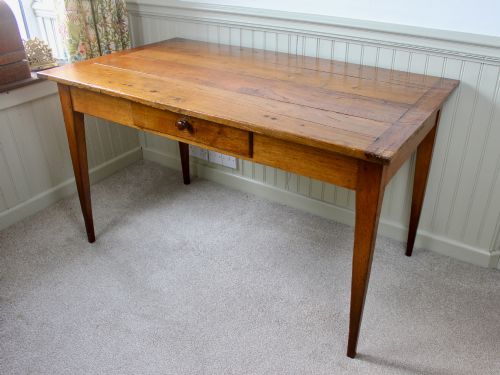
A nineteenth century oak desk brings substantial timber and practical writing space into a room.
Nineteenth Century Oak Desk
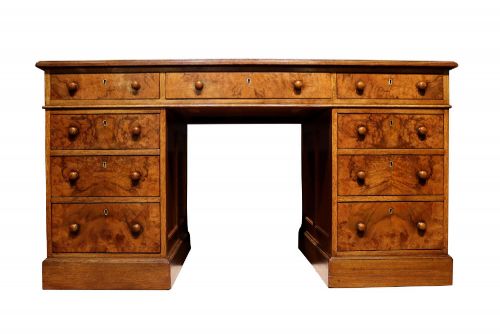
When you search for nineteenth century oak desk, you encounter robust pedestal forms, twin pedestal partners desks, and slope fronts designed for serious paperwork. Most examples date from the Victorian era, spanning decades from eighteen fifty to eighteen ninety, constructed to serve in studies, libraries, and commercial offices.
Pedestal formats feature banks of drawers flanking a central kneehole, often inset with a leather writing surface. Partners desks provide storage and writing space on both sides, while cylinder top and roll top variants conceal the writing area beneath a slatted or curved wooden tambour.
Materials and construction
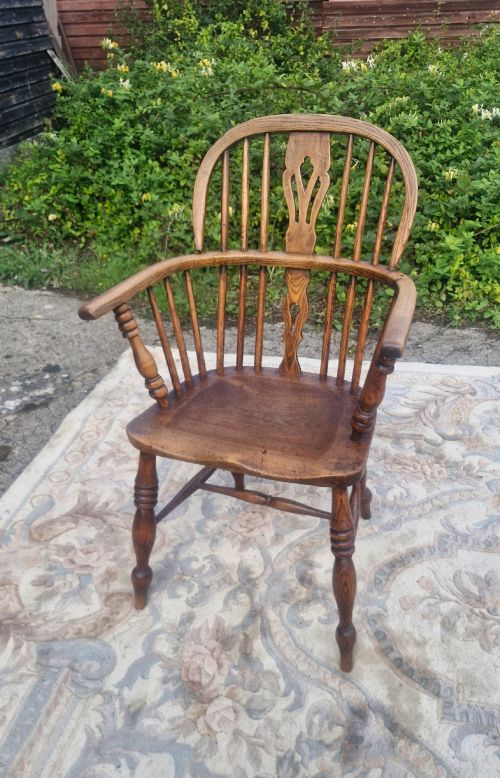
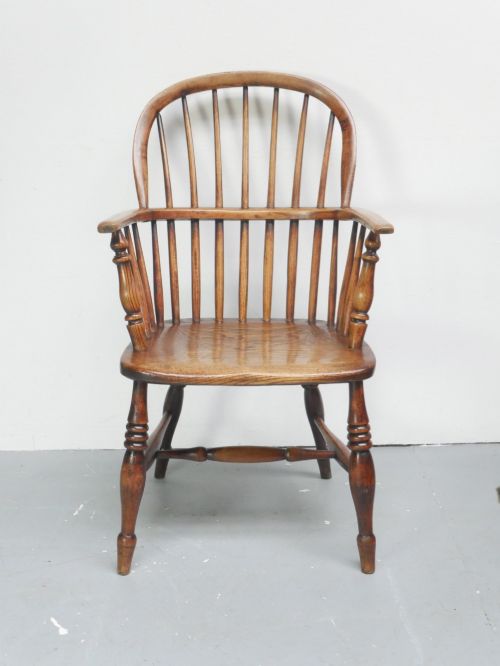
Makers utilised solid oak, golden oak, and pollard oak veneers, frequently pairing the timber with inset leather writing surfaces and brass hardware. Secondary timbers such as beech or elm appear in associated seating like Windsor armchairs and captain's chairs.
Drawer construction relies on hand-cut dovetails, while structural joins use traditional mortise and tenon techniques. Burr walnut and ebonised details provide contrast on decorative mouldings and drawer fronts.
Listings feature solid oak, pollard oak, burr walnut, and leather, alongside Gothic Revival, Aesthetic Movement, and French Provincial styles.
Evaluating quality
The distinction between standard commercial office furniture and exceptional pieces lies in timber selection and secondary wood usage. Figures in the grain, such as burr or pollard oak, elevate the visual weight, while secondary pine drawers indicate utilitarian manufacture compared to solid oak linings.
Carved ornament, fielded panels, and architectural Gothic details separate ambitious workshop output from plain workshop production. Maker stamps and brass tags confirm workshop attribution, anchoring the piece to documented London and provincial cabinet makers.
Gillow & Co·Deighton & Dunthorne·Edwards & Roberts·James Lamb·Holland and Sons·Carter of London·Howard & Son's·Payne & Co
The Nineteenth Century Oak Desk Glossary
- Pedestal desk
- A freestanding writing table comprising two separate drawer pedestals supporting a top with a central kneehole. This form provides substantial storage beneath the writing surface.
- Partners desk
- A large double-sided pedestal desk designed for two people to work opposite one another. These pieces feature drawers and cupboards on both front and reverse elevations.
- Pollard oak
- Oak timber taken from trees that have been pollarded, producing tightly clustered knots and a decorative speckled grain. Cabinet makers utilised this prized veneer for high-status furniture surfaces.
- Secretaire
- A cabinet or desk incorporating a pull-down writing flap that conceals small drawers and pigeonholes. It combines storage capacity with a dedicated writing surface.
- Leather top
- An inset panel of cattle hide, often tooled with gilt decoration, covering the writing surface of a desk. Oxblood and green are traditional leather colours found on nineteenth-century examples.
Nineteenth Century Oak Desk: Frequently Asked Questions
What is a partners desk?
A partners desk is a large pedestal writing table finished with drawers and cupboards on both sides. It allowed two people to work face to face in a library or study.
These pieces require ample floor space because drawers pull out from both the front and the back elevations.
How do I care for the leather top?
Leather writing surfaces benefit from occasional cleaning with a damp cloth and treatment with appropriate leather balms. Avoid excessive moisture and harsh chemical cleaners.
Keep direct sunlight away from the leather to prevent the dyed surface from fading or drying out over time.
What is pollard oak?
Pollard oak is a decorative wood taken from trees cut back above animal browsing height, which creates a dense, patterned grain. Cabinet makers used veneers of this timber on prominent desk surfaces.
This figured wood contrasts with straight-grained oak panels found on the structural frames of the furniture.
Are these desks suitable for daily computer work?
Nineteenth century desks provide generous surface areas and sturdy construction suitable for modern office equipment. Kneehole clearances vary, so check internal dimensions before placing a chair underneath.
Cable management requires care to preserve the original backboards and modesty panels of older pedestal desks.