
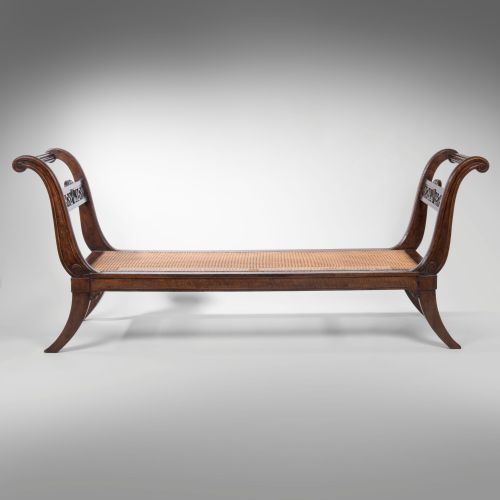

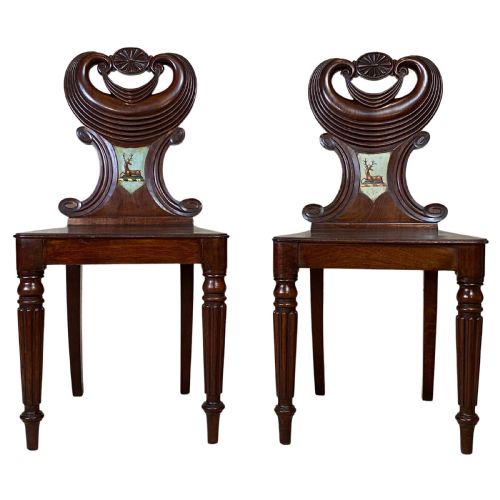


Nineteenth Century Hall Seat
A nineteenth century hall seat welcomes guests with carved timber and sturdy architecture, offering an authentic anchor for any grand entranceway.
Nineteenth Century Hall Seat
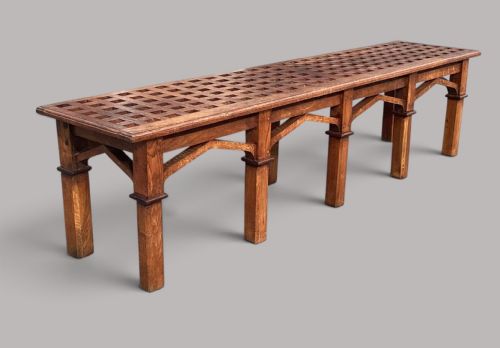
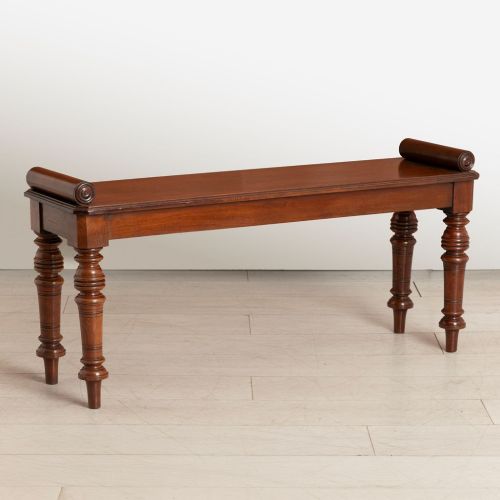
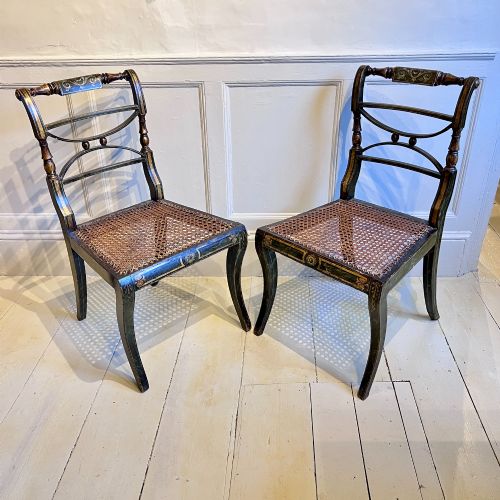
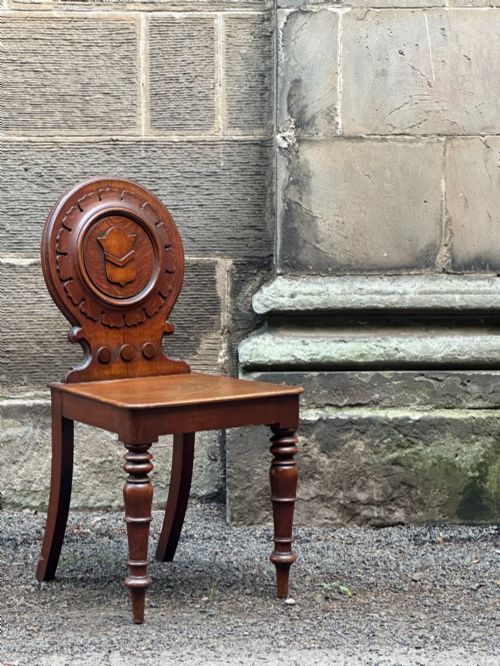
When you search for a nineteenth century hall seat, you encounter robust wooden furniture created for the entryways and vestibules of period homes. These utilitarian yet decorative pieces take the form of heavy oak hall chairs, mahogany benches, and framed window seats designed to withstand heavy daily use. Most examples you meet on this page date from the Regency and Victorian eras, often bearing carved crests or armorial details.
The selection ranges from tall-backed single chairs in solid oak to pairs of mahogany hall chairs featuring shield backs or shell motifs. You will also discover alternative seating such as teak veranda benches, pitch pine Glastonbury chairs, and X-frame window seats. These forms reflect the changing domestic tastes of the eighteen-hundreds, moving from neoclassical restraint toward Gothic Revival ornamentation.
How they were made
Cabinetmakers constructed these pieces primarily using dense hardwoods such as mahogany, oak, and pitch pine, ensuring the frames supported upright posture in a hallway. Workshops employed traditional joinery techniques, combining mortise and tenon joints to build rigid structures that endured generations of use. Decorative treatments included hand-carved relief work, parcel gilding, and applied brass inlays.
Surface finishes varied from clear wax polish that highlighted the natural grain of mahogany and oak to painted faux finishes like rosewood simulation. Some items incorporated woven cane seats or intricate bone inlays, demonstrating the varied craftsmanship applied to utility furniture. These construction methods prioritised durability alongside stylistic ambition.
Some nineteenth century sitters faced the door on solid wood so upright it practically checked your posture before you left the house.
What varies in quality
The distinction between ordinary and exceptional pieces lies in the crispness of the wood carving and the choice of primary timber. Master workshops utilised highly figured mahogany or dense quarter-sawn oak, executing deep, clean relief work on crest rails and shield backs. Lesser examples display softer detailing and simpler plank construction intended for purely functional service.
Proportion and structural integrity further divide the range, as superior pieces maintain balanced dimensions and tight joinery without excessive modern reinforcement. The inclusion of documented cabinetmaker attribution or distinctive decorative elements like brass inlay elevates a piece above standard utilitarian production. Quality reveals itself in the harmony between robust daily construction and refined ornamental design.
Gillows
The Nineteenth Century Hall Seat Glossary
- Hall chair
- A rigid wooden seat designed for an entrance hall, typically featuring a solid wooden seat and a carved back bearing family crests or heraldic motifs.
- Gothic Revival
- An architectural and decorative style popular during the nineteenth century that revived medieval forms, pointed arches, and heavy tracery.
- Shield back
- A chair back shaped in the outline of a heraldic shield, frequently seen in Regency and Georgian mahogany seating.
- X-frame
- A structural furniture form utilising intersecting diagonal members to support benches and window seats, common in the Regency period.
- Sgabello
- A Renaissance style wooden chair featuring a padded or plain wooden seat supported by two solid carved board legs rather than four conventional posts.
Nineteenth Century Hall Seat: Frequently Asked Questions
Where did they place hall seats?
These pieces stood primarily in the entrance hall, vestibule, or corridor of substantial period residences. Servants and visitors used them briefly while waiting.
Their upright posture and lack of deep upholstery discouraged lingering, keeping corridors clear for movement.
Are hall chairs comfortable?
Most nineteenth century examples prioritise upright posture and durability over plush comfort. The wooden seats and rigid backs suited the formal atmosphere of an entranceway.
They function best as occasional seating rather than lounge chairs for extended sitting.
How do I identify Regency pieces?
Regency designs often draw inspiration from classical antiquity, featuring clean lines, mahogany timber, and brass inlay. Look for architectural motifs such as X-frames and shield backs.
These details separate the lighter neoclassical aesthetic from later Victorian Gothic interpretations.
How do I care for antique wood?
Maintain the timber by applying a traditional beeswax polish sparingly and buffing with a soft cloth. Keep the furniture away from direct heat sources and strong sunlight to prevent splitting.
Regular gentle dusting preserves the natural patina developed over the centuries.