



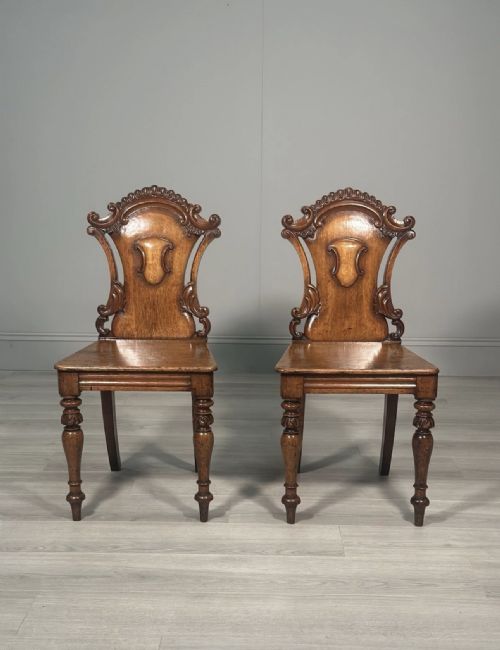


Antique Timber Hallway Chairs
Antique timber hallway chairs are sturdy, purposeful seats designed for entrance spaces, combining practical utility with formal display.
Antique Timber Hallway Chairs
These pieces are rigid, wooden seats built to furnish entrance halls, vestibules, and reception areas from the Georgian period through the Victorian era. When searching for antique timber hallway chairs, buyers encounter single items alongside matched pairs and larger sets intended for grander hallways.
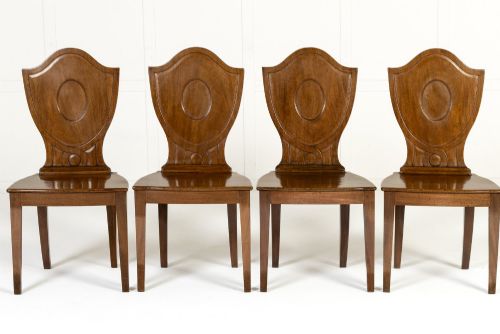
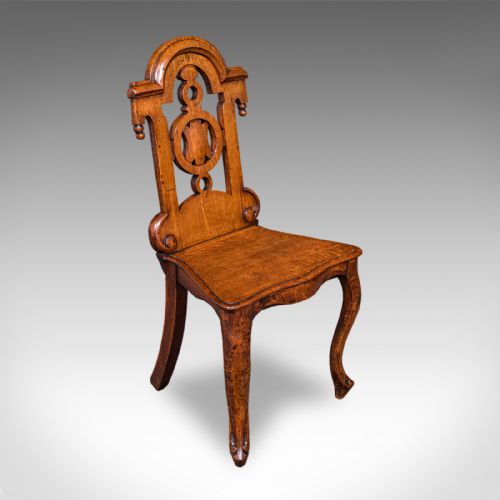
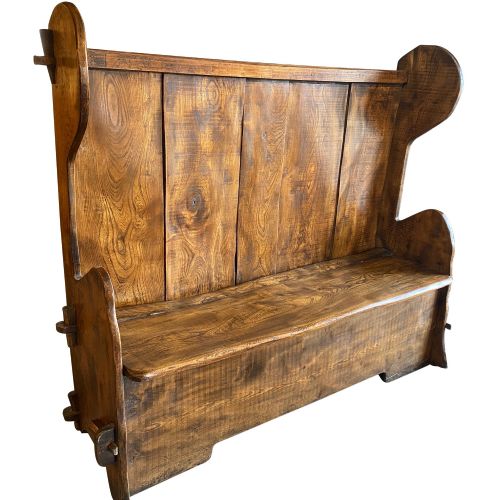
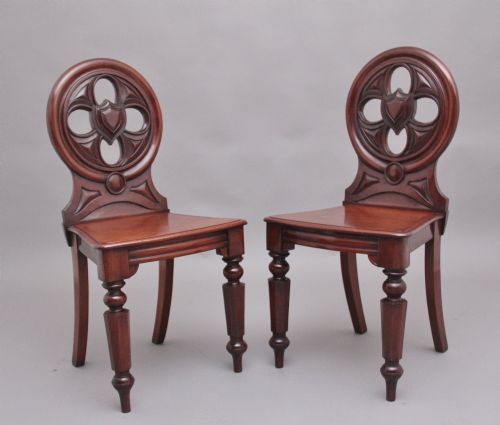
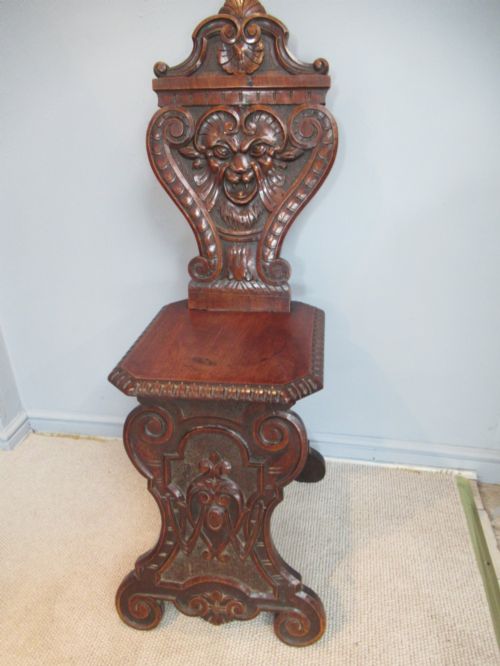
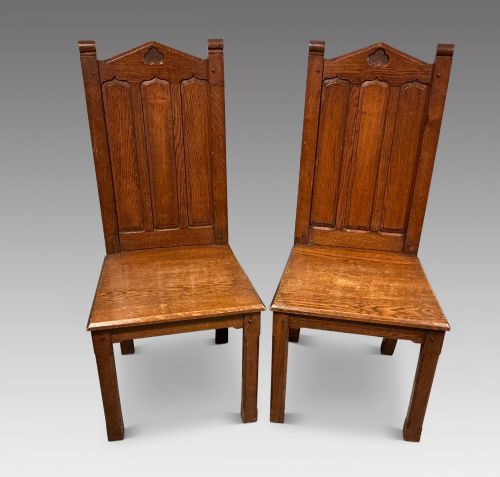
The selections span distinct historical iterations, including George III mahogany designs, Victorian Gothic Revival oak seats, and heavy elm box settles with storage compartments. Most examples rely on solid wood construction without upholstery, designed for short-term sitting rather than long lounging.
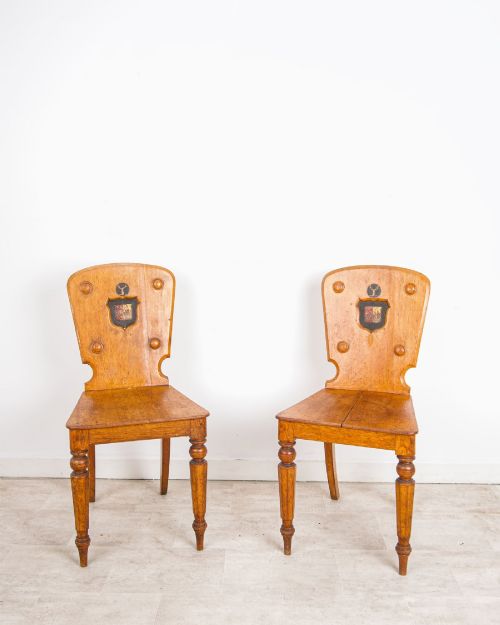
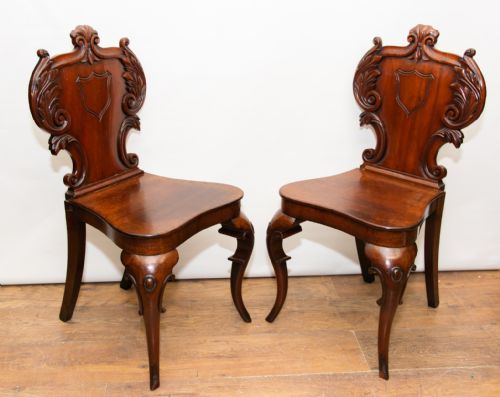
Makers shaped these items from native and imported timbers, carving heraldic shields, scallop shells, or plain panels directly into the wooden backrests. Such detailing reflects the status of the household upon first entry.
How they were made
Cabinet makers utilised dense hardwoods such as mahogany, oak, walnut, and elm to withstand heavy daily use in busy entranceways. Timber selection dictated the weight and colour of the final piece, ranging from deep reddish-brown mahogany to pale golden oak.
Workshops employed traditional joinery techniques, such as mortise and tenon joints, alongside hand-carving for shield backs and shell motifs. Solid timber boards formed the seats and backrests, often shaped with depressions for comfort despite the lack of padding.
Listings feature oak, mahogany, elm, and walnut across Victorian, Georgian, and Regency periods.
What varies in quality
The distinction between ordinary and superior pieces rests on the depth of carving and the selection of figured timber. Finely grained mahogany with rich natural figuring or crisply defined heraldic carvings indicates a higher standard of original commission.
Structural integrity and proportion also separate workshop tiers, where well-balanced legs and tight joinery ensure longevity. Subtle variations in turning, cabriole leg shaping, and symmetry distinguish standard utility seating from bespoke parlour or hall furnishings.
Holland & Sons·Gillows
The Antique Timber Hallway Chairs Glossary
- Hall chair
- A rigid wooden seat placed in an entranceway for visitors or servants, typically featuring a solid wooden back and no upholstery.
- Settle
- A wooden bench with high backrests, solid arms, and frequently a box compartment beneath the seat for storing items.
- Heraldic shield back
- A backrest shaped and carved to resemble a coat of arms or shield, often displaying family crests or decorative motifs.
- Shell back
- A decorative backrest carved in the fluted, fan-like shape of a seashell, common on Georgian and Regency seating.
- Gothic Revival
- A nineteenth-century design style incorporating medieval architectural elements like pointed arches and heavy tracery into wooden furniture.
Antique Timber Hallway Chairs: Frequently Asked Questions
Where were hallway chairs placed?
These seats stood near the front door in grand entrance halls, vestibules, or corridors. They offered a formal place for guests or waiting visitors to sit briefly.
Because entrance spaces were cooler and busier, the furniture required durable timber that needed no delicate fabric maintenance.
Why do most hall chairs lack upholstery?
Makers built these items for brief waiting periods rather than extended seating. Hard wooden surfaces resisted dust, moisture, and heavy outerwear brought in from outside.
This lack of padding placed the focus entirely on the quality of the timber grain and carved wooden decoration.
How do I tell oak from mahogany pieces?
Oak items display a prominent grain pattern with visible medullary rays, often carrying a golden or medium brown tone. They frequently appear in Gothic Revival or vernacular designs.
Mahogany items feature a tighter, smoother reddish-brown grain that takes a high polish, typically associated with Georgian, Regency, or refined Victorian examples.
What is the difference between a chair and a settle?
A hall chair provides an individual, portable seat with a decorative backrest designed for a single occupant. A settle functions as a longer bench, often incorporating solid wooden arms and a hinged seat lid.
Settles provided enclosed storage underneath for boots and garments, whereas chairs remained purely ornamental and structural.