
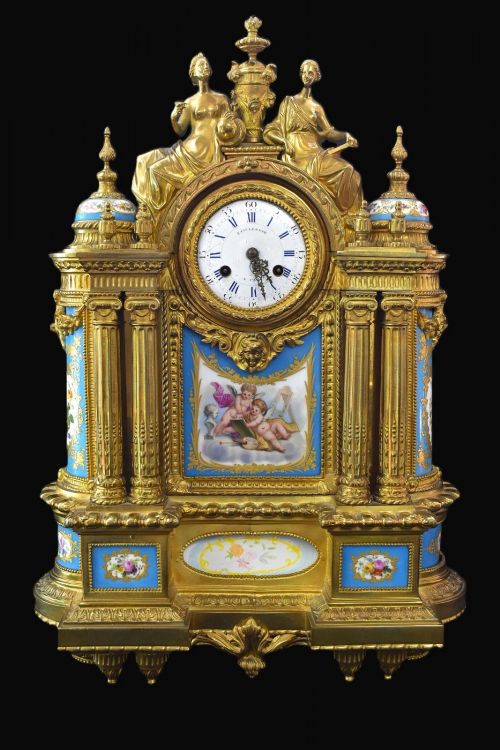


Nineteenth Century French Porcelain
Nineteenth century french porcelain brings together painted ceramic bodies, gilt bronze mounts and decorative ambition from a prolific era of continental craftsmanship.
Nineteenth Century French Porcelain
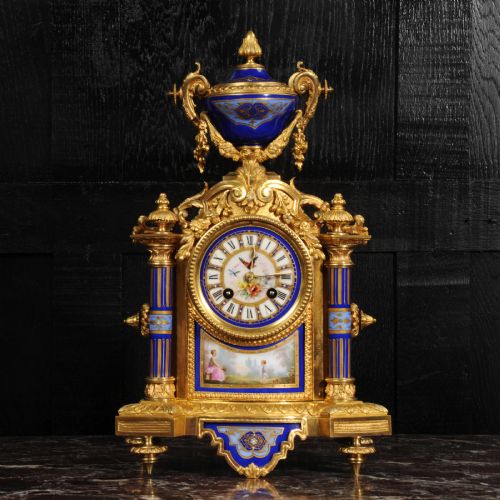
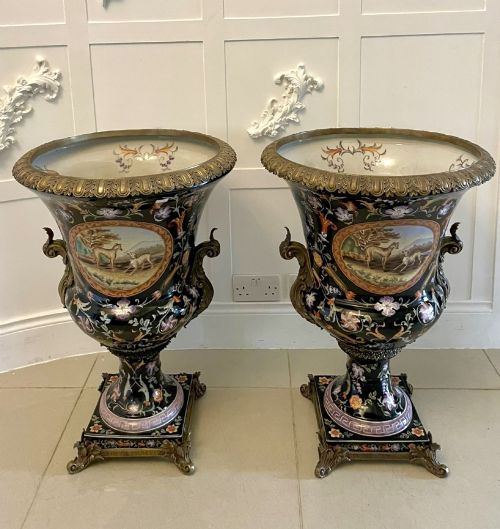
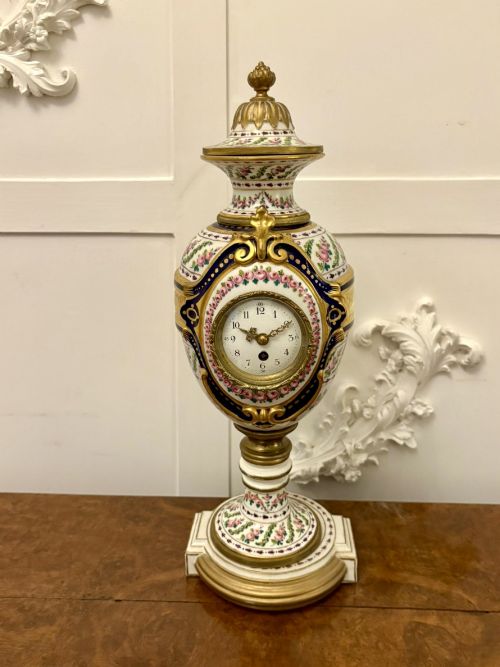
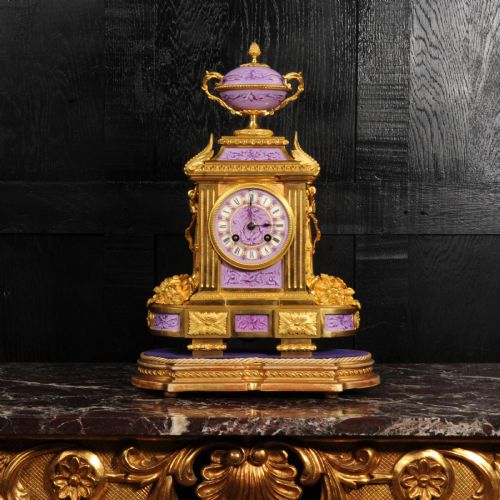
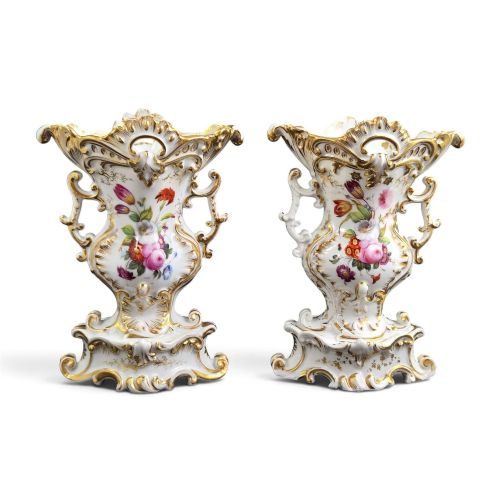
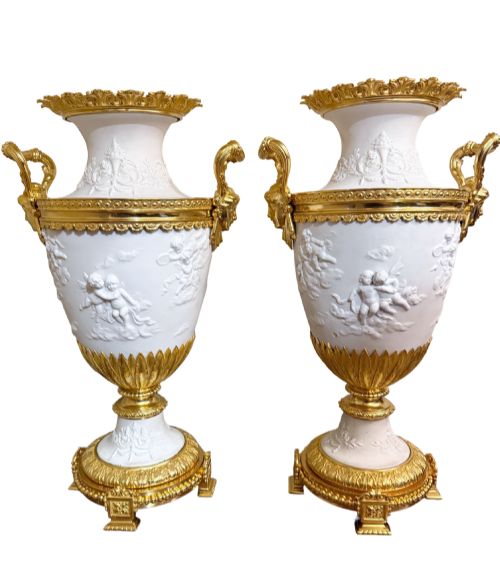
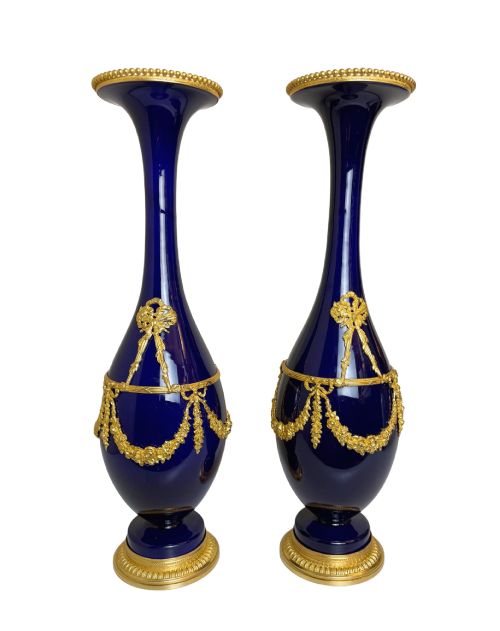
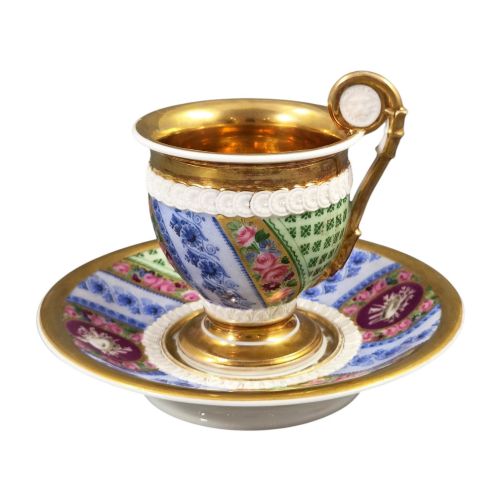
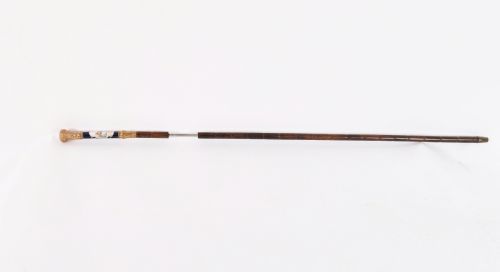
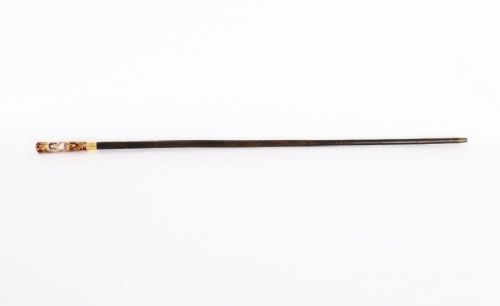
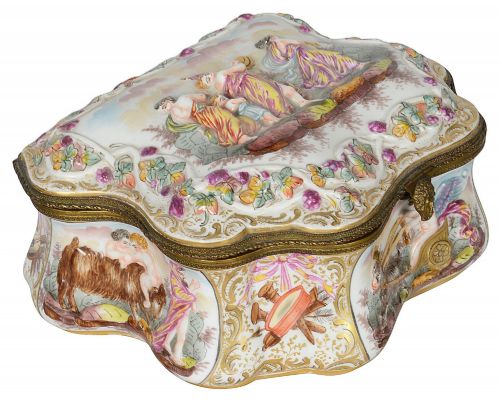
Nineteenth century french porcelain encompasses a wide variety of utilitarian and decorative objects, from mantel clocks mounted in ormolu to pairs of lidded vases and cabinet cups. These items originate from major production centres including Paris and workshops associated with Sevres style output, spanning the Georgian, Victorian, and later decades of the period.
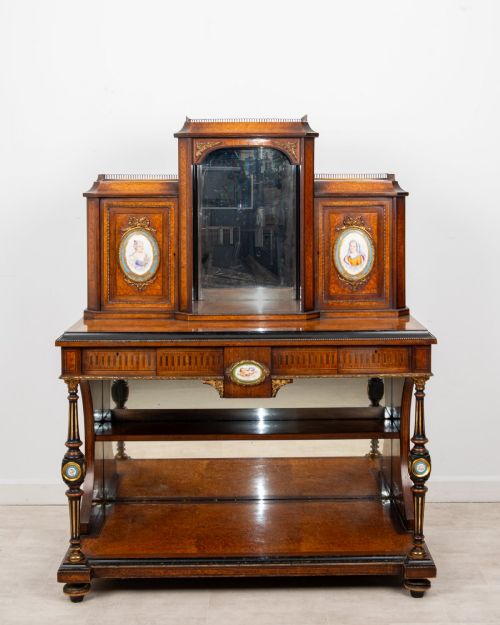
The forms commonly met on this page include garniture sets, jardiniere urns, biscuit figures, and occasional items of furniture inset with ceramic plaques. Stylistic influences shift from neoclassical restraint and Empire severity towards the elaborate curves of French rococo revival and Napoleon III excess.
Makers and marks range from established factories like Japy Freres and Achille Brocot to specialised decorators such as Jacob Petit and Samson of Paris. Buyers encounter both functional household objects and grand exhibition pieces designed to command attention within a room.
How they were made
The manufacturing process combined high-fired ceramic bodies with intricate metalwork mounts cast in brass, gilt bronze, or ormolu. Artisans applied hand-painted enamels, gilding with gold leaf, and cobalt blue grounds directly onto the porcelain before secondary firing.
Cabinet makers and bronzefinishers then united these ceramic components with exotic woods such as amboyna, tulipwood, and ebonised frames using precise joinery and mechanical fittings for clocks and caskets.
Materials appearing across these entries range from delicate biscuit porcelain and gold leaf to exotic woods including kingwood and amboyna.
What varies in quality
Quality reveals itself in the crispness of the bronze casting, the depth of the gilding, and the fidelity of the hand-painted details upon the ceramic surface. Superior pieces exhibit refined modelling in biscuit figures and careful alignment between metal mounts and porcelain bodies.
The provenance of the kiln and the skill of the enamel artist dictate the commercial standing of each item, distinguishing standard decorative wares from exhibition pieces bearing notable signatures.
Japy Freres·Achille Brocot·Jacob Petit·Letu and Mauger·Etienne Lenoir·Pucher Deroche·Delettrez·Vion et Baury·Samson Paris
The Nineteenth Century French Porcelain Glossary
- Ormolu
- Gilt bronze mounted onto decorative objects or furniture. This technique involves applying a finely ground gold-mercury amalgam to bronze before heating.
- Biscuit porcelain
- Unglazed ceramic fired to a hard, matte finish resembling fine marble. It is frequently utilised for sculptural figures and busts.
- Garniture
- A set of matching ornamental vases or figures designed to be displayed together on a mantelpiece or sideboard.
- Bureau plat
- A flat-topped freestanding writing desk, often decorated with porcelain plaques and metal mounts.
- Vieux Paris
- A term applied to porcelain produced by various independent Parisian factories between the revolution and the mid-nineteenth century.
Nineteenth Century French Porcelain: Frequently Asked Questions
How do I identify genuine Sevres style pieces?
Examine the underglaze marks and the quality of the hand-painted decoration, noting that many nineteenth-century pieces emulate earlier royal works.
Look closely at the precision of the gilding and the weight of the porcelain body to separate factory output from later decorative revivals.
Were these clocks designed to run daily?
Most antique movements function reliably when professionally serviced and handled with appropriate care for their age.
Ensure the pendulum is secured before moving any clock mounted with delicate porcelain panels and ormolu mounts.
How should I clean gilt bronze mounts?
Dust gently with a soft dry brush to prevent accumulation of grit within the chased details of the metal.
Avoid chemical polishes that strip the original gold leaf and damage adjacent porcelain surfaces.
What defines an Old Paris porcelain vase?
These pieces originate from numerous unrecorded workshops operating within Paris during the early decades of the century.
They are characterised by generous application of gold leaf, vibrant floral enamels, and robust sculptural handles.