
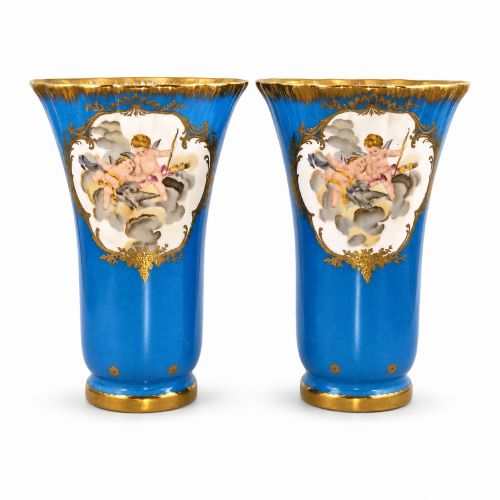


Blue Sevres Porcelain Vases
Blue sevres porcelain vases bring rich cobalt and sky blue hues together with ornate metal mounts.
Blue Sevres Porcelain Vases
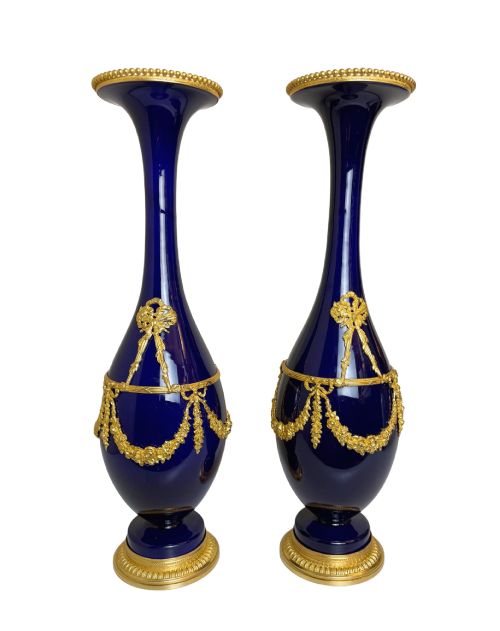
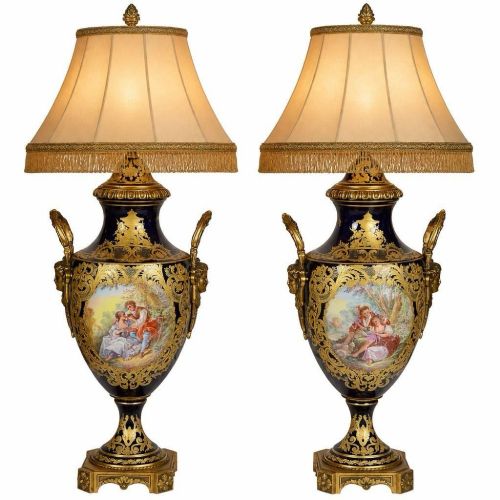
Blue sevres porcelain vases are decorative vessels produced in styles echoing the historic French factory, appearing frequently on this page as nineteenth-century pairs and garniture sets. These pieces often take the form of lidded vases or urns, frequently adapted into table lamps alongside their traditional display functions.
The objects span several decades of the nineteenth century and stretch into the early twentieth century, showing influences from French Rococo Revival, Louis XVI, and French Empire aesthetics. Makers outside France, including Samson Paris and Derby, also contributed to this tradition with pieces produced in the sevres taste.
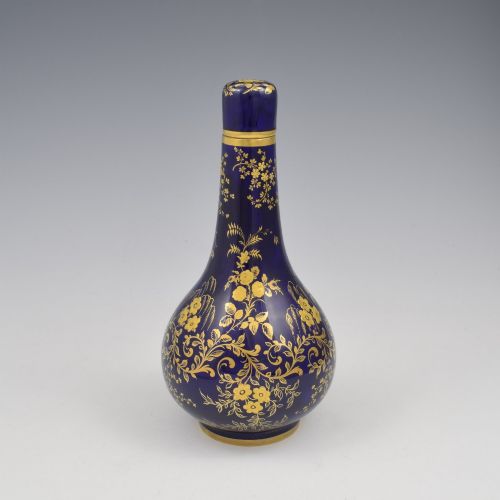
Buyers encounter distinct forms such as wide rim vases, bottle vases with covers, and monumental lidded urns. These items often incorporate hand-painted details and commemorative themes linked to figures like Napoleon Bonaparte.
How they were made
The physical build of blue sevres porcelain vases combines ceramic bodies with metal fittings such as ormolu, gilt bronze, gilt metal, and brass. Metal mounts are cast and chased to frame the porcelain rims, bases, and handles.
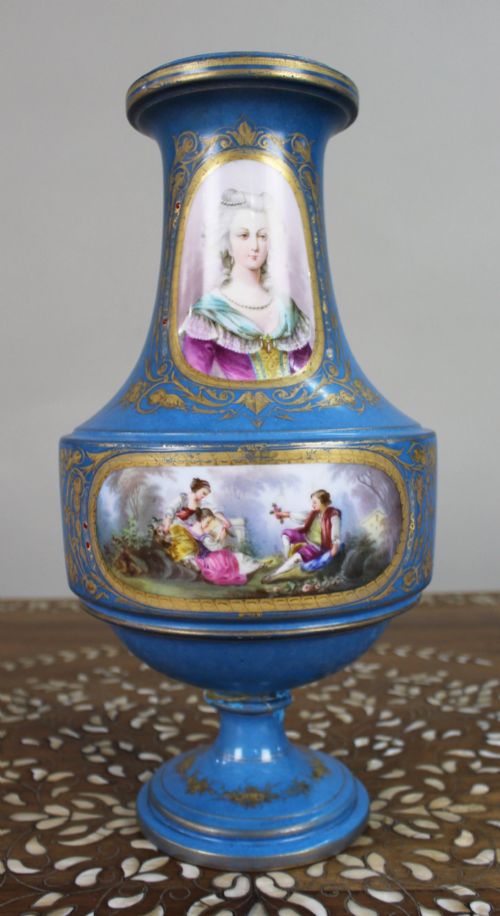
Decoration relies on rich blue glazes, notably bleu celeste, complemented by enamel work and gold leaf or gilt accents applied to the porcelain surface. Hand-painted motifs often decorate the panels framed within these gilded borders.
Listings feature porcelain, ormolu, and gilt bronze across the nineteenth century, extending from the William IV period into the 1920s.
What varies in quality
The standard of a piece rests heavily on the crispness of the ormolu or gilt bronze mounts and the finesse of the hand-painted porcelain decoration. Finer examples display deeply chased metalwork that fits the ceramic body precisely.
Proportion and scale distinguish monumental exhibition pieces from standard decorative table vases. The depth of the bleu celeste ground colour and the richness of the gold leaf application mark the distinction between ordinary and exceptional works.
Samson Paris·Derby Porcelain
The Blue Sevres Porcelain Vases Glossary
- Bleu celeste
- A bright sky blue ceramic ground colour popular on French porcelain. This specific shade defines many pieces produced in the sevres manner.
- Ormolu
- Gilt bronze mounts applied to furniture, clocks, and porcelain vases. The technique involves a mercury amalgam process used to bond gold to bronze.
- Garniture set
- A matching group of three or more vases or urns designed to sit together on a mantelpiece or sideboard. These sets usually feature a central lidded vase flanked by smaller matching vessels.
- Louis XVI style
- A classical French design period characterised by straight lines, symmetry, and restrained ornamentation derived from antiquity. Pieces in this taste incorporate neoclassical motifs and balanced proportions.
Blue Sevres Porcelain Vases: Frequently Asked Questions
How do I display blue sevres porcelain vases?
These vases suit prominent positions on mantelpieces, console tables, or large sideboards where their bright blue glaze and gilt mounts catch the light. Placing them as matched pairs or within a garniture set creates visual balance in a formal room.
Because many examples from this page have been converted into table lamps, they also function as functional lighting on side tables or desks while retaining their classical decorative presence.
Were these vases made outside France?
While the style originates from the French royal factory, nineteenth-century European potteries frequently produced ceramics in the same taste. English makers like Derby and French firms such as Samson Paris created comparable porcelain pieces.
These alternative makers adopted the distinctive bleu celeste ground colour, hand-painted panels, and gilt bronze mounts to satisfy international demand for French aesthetic forms.
How do I identify a nineteenth century piece?
Nineteenth-century items typically display the characteristic weight and manufacturing techniques of the Victorian era, alongside revival styles like French Rococo and Louis XVI. The integration of cast ormolu mounts with porcelain bodies points directly to this period of production.
Examining the base and interior of the vases often reveals the baseline age of the ceramic body and the method used to attach the metal hardware.
Can I use converted lamp vases safely?
Vases that have been adapted into table lamps can be utilised safely provided the electrical wiring is inspected and brought up to modern standards by a professional. The original ceramic and metal structure remains intact beneath the lamp fittings.
Care should be taken with the silk shades and gilded bronze surfaces during dusting to preserve the finish of the ormolu and the painted porcelain panels.