
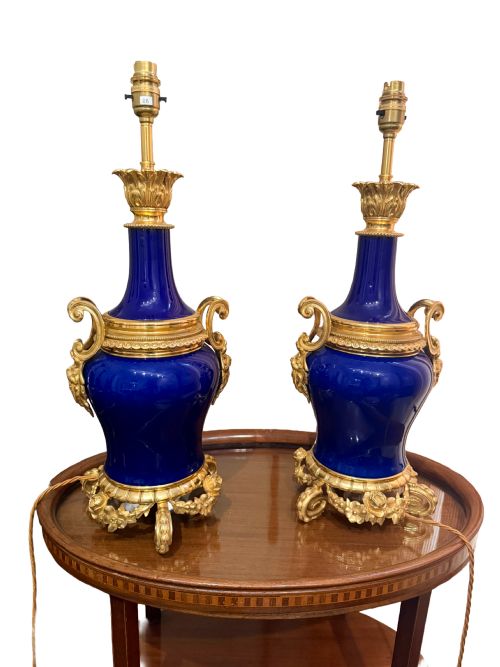


Sevres Cobalt Blue Urns
Sevres cobalt blue urns bring rich French porcelain and gilt metalwork together into striking decorative centrepieces for the home.
Sevres Cobalt Blue Urns
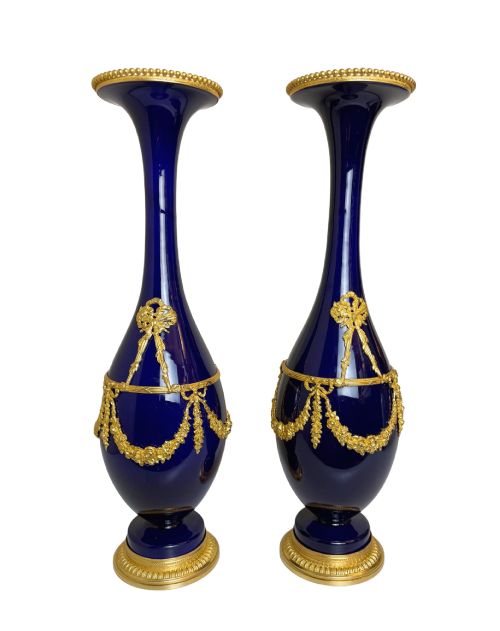
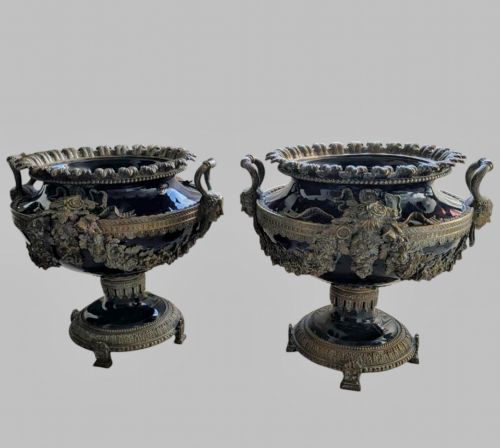
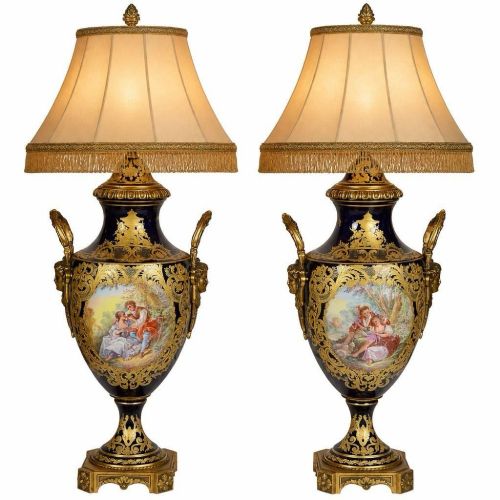
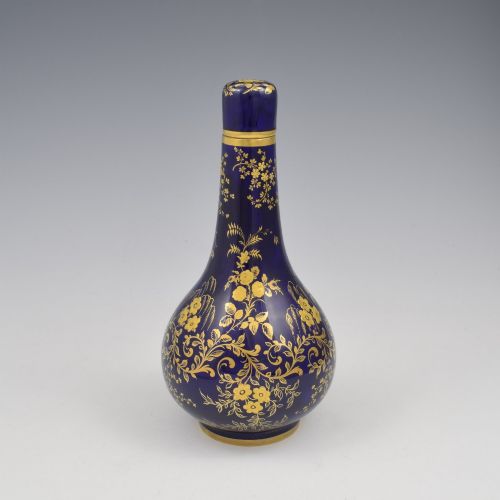
When you search for sevres cobalt blue urns, you encounter nineteenth-century French porcelain vessels, lidded vases, and garniture sets often mounted with ormolu or gilt bronze. These pieces range from decorative table lamps to monumental lidded vases designed in revivalist styles.
You are most likely to meet nineteenth-century examples on this page, spanning decades from eighteen sixty to nineteen twenty. They frequently appear as matched pairs or three-piece clock garniture sets intended for mantelpieces and side tables.
The aesthetic leans heavily into French Rococo, Louis XVI, and Neoclassical vocabularies. Rich blue ceramic bodies serve as the canvas for hand-painted details and elaborate metallic mounts.
Materials and construction
The makers formed these vessels from porcelain, employing deep blue glazes and hand-painted decoration. Artisans then integrated cast ormolu, gilt bronze, and brass mounts to frame the ceramic bodies and add structural handles, bases, and rims.
Gilding techniques, including gold leaf applications, highlight the moulded details of the porcelain and metalwork. Fabric and glass elements appear occasionally in related lamp adaptations.
The aesthetic spans French Rococo Revival, Louis XVI, Neoclassical, and Empire styles across urns, garnitures, and table lamps.
Assessing quality and execution
The distinction between standard decorative items and top-tier pieces lies in the crispness of the ormolu casting and the finesse of the hand-painted porcelain. Superior examples display deeply chiselled bronze mounts that fit the ceramic contours precisely.
Exhibition quality works show greater ambition in scale, complex figural or landscape painting, and substantial bronze garnitures. Lesser examples rely on simpler cast mounts and repetitive decorative motifs.
Derby Porcelain·Napoleon Bonaparte·Sevres
The Sevres Cobalt Blue Urns Glossary
- Ormolu
- Gilt bronze mounted onto furniture or porcelain. This technique involves applying a gold amalgam to cast bronze, creating a durable golden finish.
- Garniture
- A set of ornamental vases or jars designed to sit together on a mantelpiece. These sets typically consist of a central urn flanked by two matching smaller vessels.
- Jardiniere
- An ornamental pot or stand designed to hold growing plants or floral arrangements. They share the same cobalt porcelain and gilt metal vocabulary as the urns.
- Neoclassical
- A style inspired by classical antiquity that emphasises symmetry, restraint, and classical architectural motifs. It heavily influences nineteenth-century French porcelain design.
Sevres Cobalt Blue Urns: Frequently Asked Questions
What are sevres cobalt blue urns?
These pieces are nineteenth-century porcelain vessels featuring deep blue glazes and ornate metallic mounts. They were produced in France and designed primarily for decorative display.
Many incorporate styles from earlier French royal periods, reflecting a continued nineteenth-century interest in classical revivalism and luxury interior ornaments.
How were they used historically?
Historically, wealthy households displayed these urns on mantelpieces, consoles, and tables as symbols of taste and refinement. Lidded versions and garniture sets anchored formal room decor.
Some later examples were adapted into table lamps, combining traditional display functions with practical nineteenth-century lighting technology.
How do I style them at home?
Place a pair of urns on a sideboard or mantelpiece where their rich cobalt and gilt surfaces catch the light. They suit traditional interiors and provide strong focal points in eclectic spaces.
Ensure they sit on stable, level surfaces away from heavy traffic areas to protect the delicate ormolu mounts and porcelain edges.
How do I identify nineteenth-century pieces?
Look for the characteristic combination of rich cobalt porcelain, hand-painted details, and heavy cast ormolu mounts. The weight and patination of the bronze provide clues to the period.
Styles spanning French Rococo, Louis XVI, and Neoclassical revivals dominate this era, alongside nineteenth-century lamp conversions and garniture sets.