

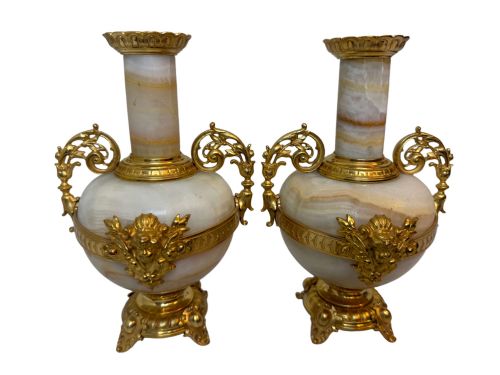
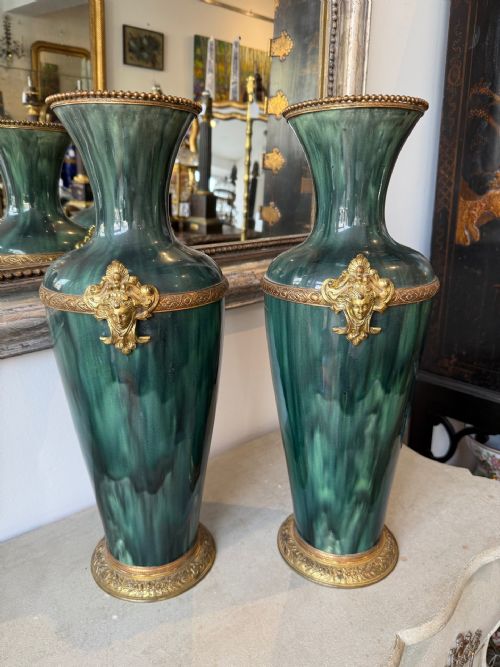


Gilt Ormolu Mounted Vases
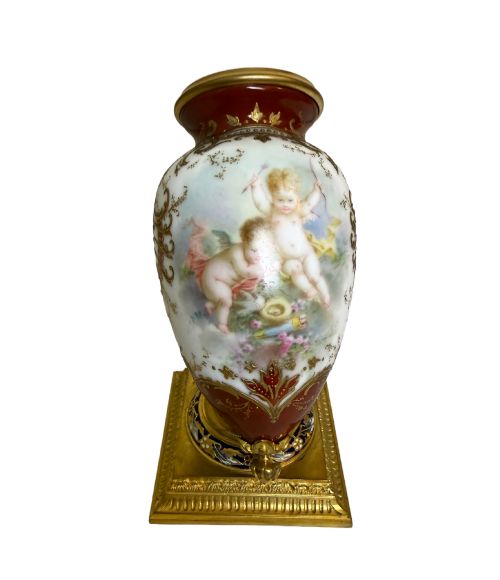
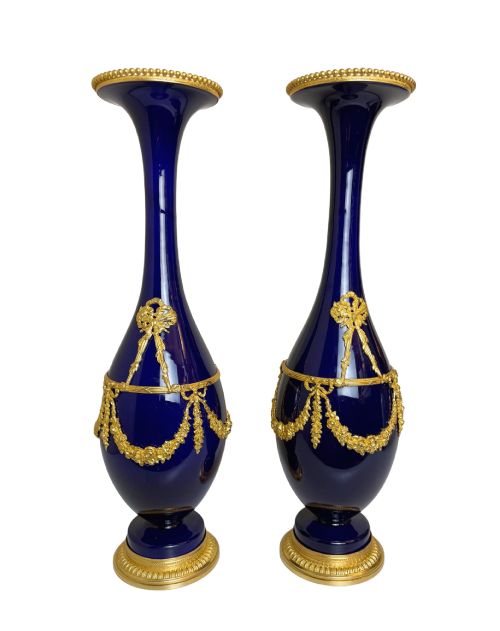
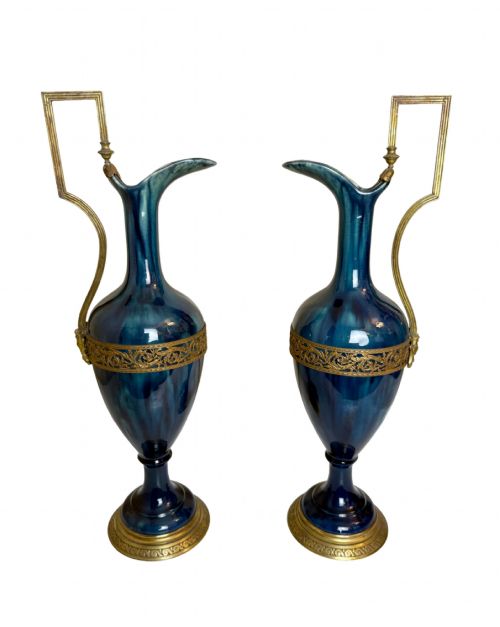
These gilt ormolu mounted vases bring grand interior display and architectural presence to a room through finely chased metalwork and rich ceramic bodies.
Gilt Ormolu Mounted Vases
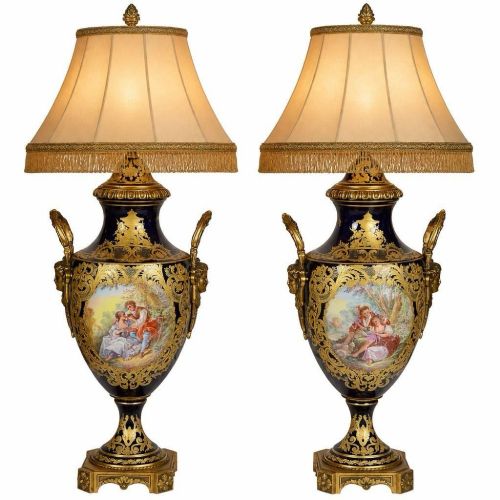
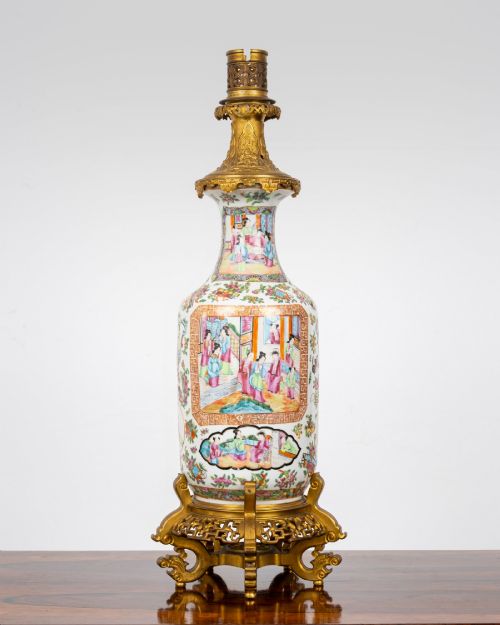
When buyers search for gilt ormolu mounted vases, they encounter ornamental vessels designed for display, often adapted as table lamps or combined with lids and covers. The selection spans the eighteenth and nineteenth centuries, drawing heavily upon French Rococo Revival, Louis XVI, and Empire aesthetics alongside imported Chinese porcelain bodies.
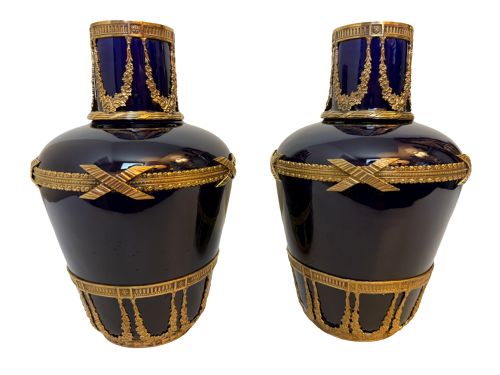
The dominant forms on this page include pairs of porcelain urns, cassolettes, and decorative garnitures fitted with cast and gilded bronze mounts. Makers across France and Britain took Asian export ceramics and European porcelain, equipping them with elaborate handles, bases, and rims of brass and gilt bronze.
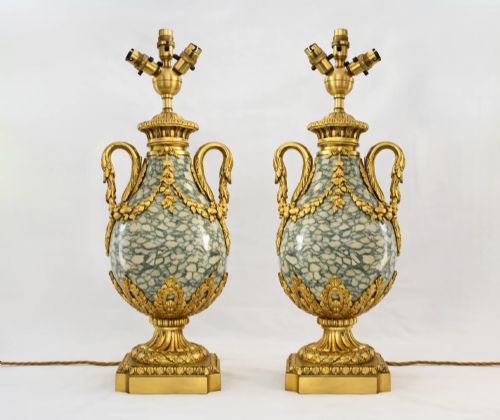
Buyers also find glass, crystal, onyx, and marble bodies framed by similar metallic mounts, creating substantial decorative centrepieces. These objects bridge the gap between classical antiquity and nineteenth-century interior decoration, functioning as standalone urns or wired lighting.
How They Were Made
The construction of these pieces relies on the combination of a ceramic, stone, or glass body with cast metal components. Porcelains such as Sevres-style pieces, Cantonese wares, and monochrome glazes were turned or moulded before receiving hand-painted decoration, enamelling, or pâte-sur-pâte relief work.
Mounts of ormolu, gilt bronze, and brass were produced through lost-wax casting, followed by meticulous chiselling to sharpen the surface details of foliage, scrolls, and classical motifs. These metal mounts were then secured to the vases using pins, screws, or collars designed to fit the contours of the stone or ceramic.
Some nineteenth-century decorators converted Chinese ginger jars into lamps simply by clamping heavy French ormolu foliage around the neck.
What Varies In Quality
Quality in these pieces rests upon the crispness of the metal chasing and the depth of the gilding on the bronze mounts. Superior mounts display sharp, deep relief work with distinct texturing, whereas lesser examples show softer, shallower casting details resulting from worn moulds.
The partnership between the mount and the vase body further distinguishes the range, as top-tier items feature custom-cast collars that follow every curve of the porcelain or marble precisely. Painted decoration on the ceramic bodies also diverges, ranging from standard factory output to finely detailed hand-painted scenes signed by the decorator or studio.
Sevres·Meissen·Samson
The Gilt Ormolu Mounted Vases Glossary
- Ormolu
- Gilded bronze produced through a mercury amalgamation technique, yielding a warm, durable metallic finish. This term describes the decorative mounts applied to porcelain and marble bodies.
- Cassolette
- A dual-purpose vessel featuring a reversible lid that transforms the piece from an urn into a burner or perfume jar. These stone and porcelain objects frequently carry gilt bronze handles and bases.
- Garniture
- A set of three or more matching vases or urns designed for symmetrical placement on a mantelpiece or cabinet top. They share unified decorative schemes and mounting styles.
- Pâte-sur-pâte
- A ceramic decoration technique where liquid white clay is built up in successive layers on a coloured body to create a low-relief cameo effect. This method appears on nineteenth-century French porcelain wares.
- Sang de boeuf
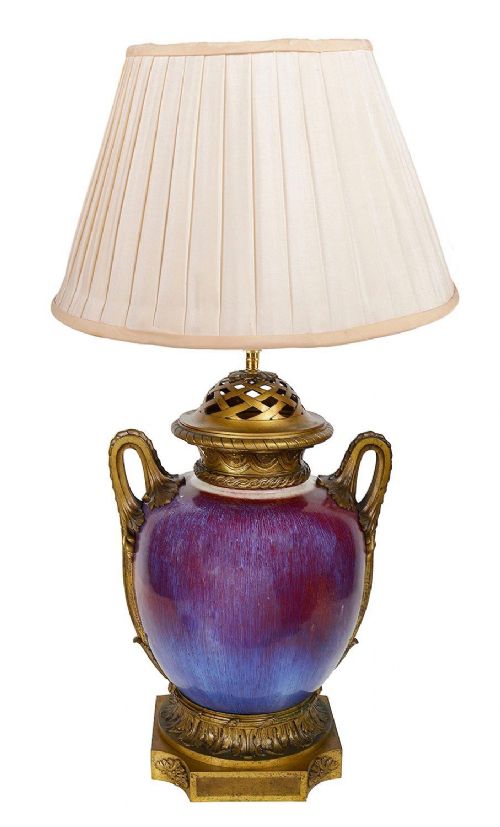
- A rich, deep red copper-glaze developed on Chinese ceramics and later emulated by European potteries. Vases in this glaze often received French ormolu mounts during the nineteenth century.
Gilt Ormolu Mounted Vases: Frequently Asked Questions
What are gilt ormolu mounted vases?
These decorative objects combine ceramic, glass, or stone bodies with cast and gilded bronze mounts. They were produced primarily in Europe during the nineteenth century, often utilising earlier porcelain bodies.
Craftsmen fitted the vases with handles, rims, and bases cast in classical or revival styles to enhance their architectural presence in grand interiors.
How were these vases used?
They served as decorative garnitures on mantelpieces, sideboards, and pedestals in nineteenth-century drawing rooms. Many pieces functioned as cassolettes for diffusing scents or as standalone display urns.
Over time, numerous examples were adapted into table lamps while retaining their original ceramic bodies and metal mounts.
How do you style them in a modern interior?
Pairs of these vases work effectively on large sideboards, mantels, or entrance consoles where symmetry creates a focal point. Their rich gilding and colourful porcelain bodies complement neutral walls and antique wood furniture.
When utilised as lamps, they provide ambient lighting while introducing nineteenth-century craftsmanship into a contemporary living space.
How do you distinguish Sevres style from period pieces?
Sevres style pieces replicate the decorative motifs, colour grounds, and pastoral scenes associated with the famous French royal factory. True nineteenth-century interpretations often bear factory marks or stylistic indicators typical of the period's revival movements.
Examining the weight of the porcelain, the precision of the hand-painted details, and the quality of the ormolu mounts helps identify the origin and era of manufacture.