


Nineteenth Century Drawing
Nineteenth century drawing works on paper capture character and study through ink, charcoal and pastel across Georgian, Regency and Victorian periods.
Nineteenth Century Drawing
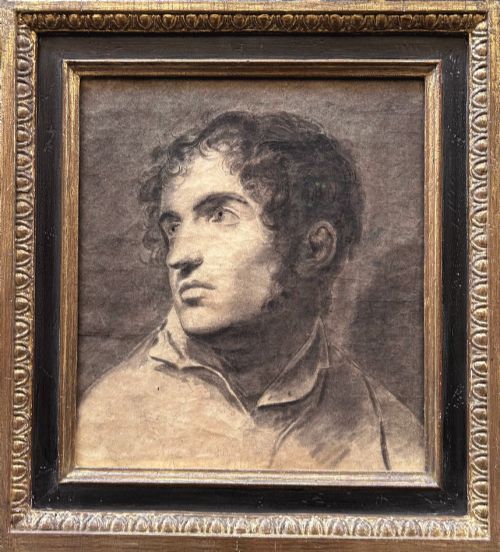
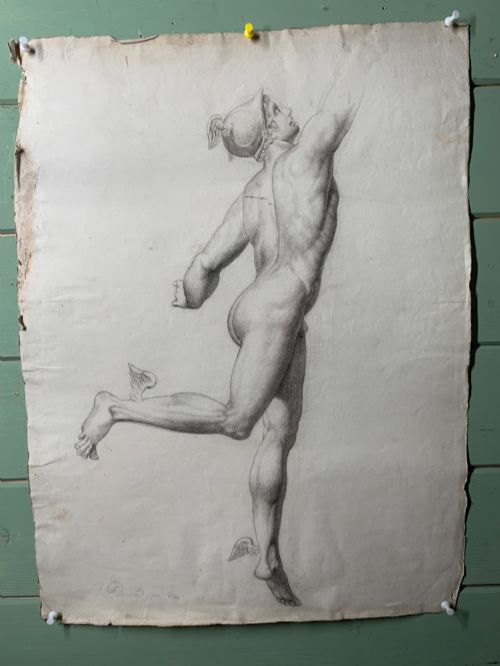
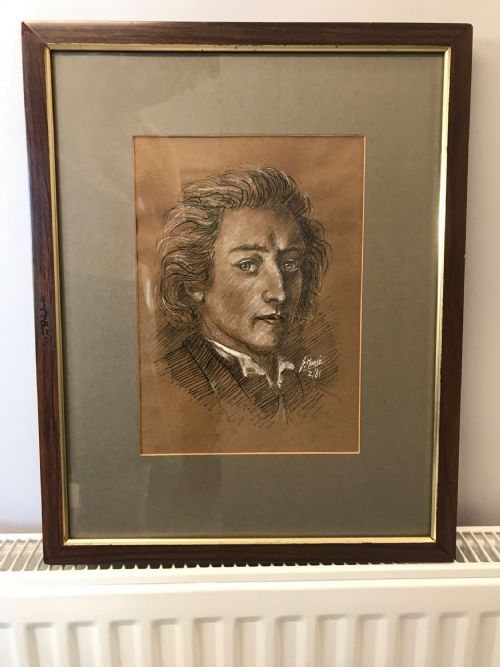
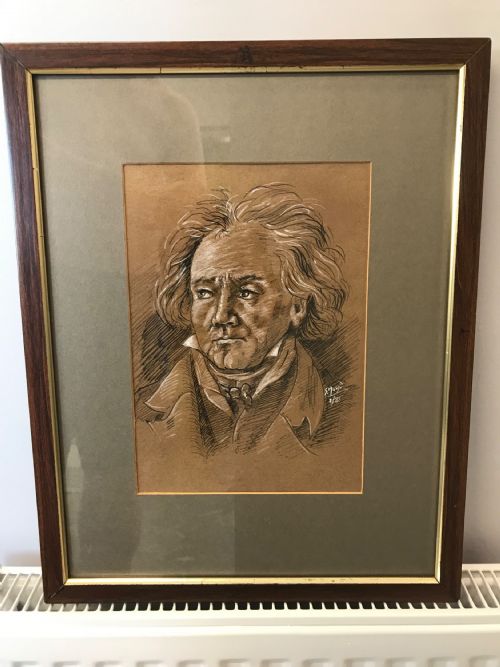
A nineteenth century drawing brings together portraiture, architectural study and narrative illustration executed on paper or canvas. These works span academic pencil exercises, expressive charcoal portraits and detailed pen and ink watercolours.
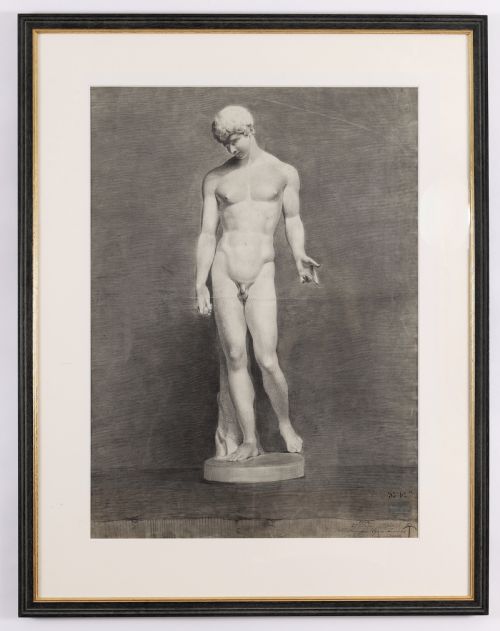
The selections available here range from intimate studies of classical figures to atmospheric landscapes and character portraits. French school pieces and Grand Tour watercolours sit alongside British domestic scenes from the Georgian and Victorian eras.
Materials and Technique
Artists relied primarily on paper supports treated with ink, charcoal, graphite, pastel and watercolour pigments. Gouache appears alongside pen and ink washes to build opacity and highlight fine details within portrait compositions.
Many works retain their period framing, utilising giltwood and carved wood surrounds to protect the delicate paper beneath glass. Pastels on canvas also occur, demanding careful mounting to preserve the friable pigment layers.
Listings feature paper, glass, wood, ink, charcoal, watercolour, giltwood and leather across nineteenth century works.
Judging Quality
Quality rests upon the sureness of the line and the fidelity of the tonal handling. Academic exercises demonstrate rigorous proportion, while rapid sketches reveal the direct observation of the hand.
The preservation of the paper support and the clarity of the medium dictate the strength of a piece. Strong works retain deep contrasts in charcoal and ink without heavy foxing or fading.
Pierre-Paul Prud'hon·Sir Edwin Landseer·William Manners·Frank Saltfleet
The Nineteenth Century Drawing Glossary
- Gouache
- An opaque water-based pigment used to add highlights and solid colour areas to drawings. It creates a matte finish that contrasts with translucent watercolour washes.
- Pastel
- A drawing medium consisting of powdered pigment combined with a binder. Applied directly to paper or canvas, it yields vibrant, powdery colour fields.
- Grand Tour
- A cultural journey undertaken by wealthy young Europeans through France and Italy. Resulting watercolours and drawings recorded classical antiquities and foreign architecture.
- Academic
- Art created under the influence of European academies of art. These pieces emphasise classical discipline, anatomical accuracy and careful proportion.
Nineteenth Century Drawing: Frequently Asked Questions
How should I frame an old drawing?
Protect works on paper behind glass with conservation-grade mounting to keep the sheet from touching the glazing. This prevents humidity damage and preserves the delicate charcoal or pastel pigments.
Keep framed drawings away from direct sunlight to stop the ink and watercolour washes from fading over time.
What is the difference between pencil and charcoal?
Pencil drawings offer fine, precise lines suited to academic studies and detailed architectural renderings. Charcoal provides broader, deeper tonal gradations ideal for expressive portraits and atmospheric shadows.
Both mediums appear frequently across nineteenth century works, sometimes combined on the same sheet.
Are these drawings signed by the artist?
Some pieces bear artist signatures or contemporary inscriptions, while others remain anonymous school or studio works. Academic studies and Grand Tour watercolours often record the subject or location rather than the draughtsman's name.
Attributions rely on style, technique and archival comparisons rather than explicit signatures.
How do I clean a historic frame?
Dust giltwood and wood frames gently with a dry, soft brush to remove surface particles. Avoid liquid cleaners or polishes that can strip the original gilding or nineteenth century finish.
Leave deeper restoration of antique frames to specialists who understand period gilding techniques.