




Academic Charcoal Portrait
An academic charcoal portrait captures careful draughtsmanship and human likeness, offering collectors an intimate window into historical studio training and portraiture.
Academic Charcoal Portrait
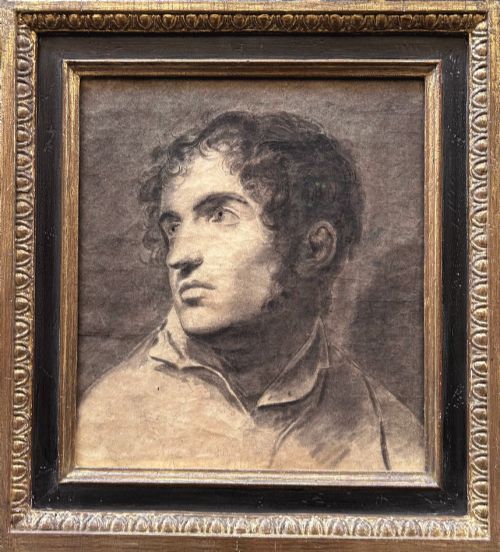
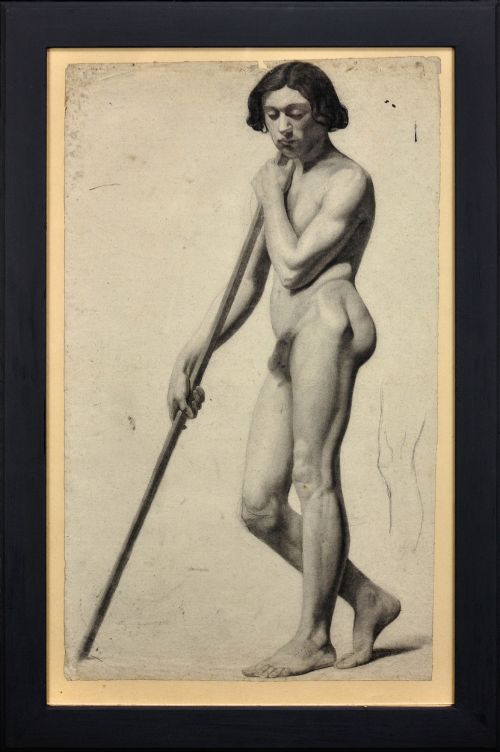
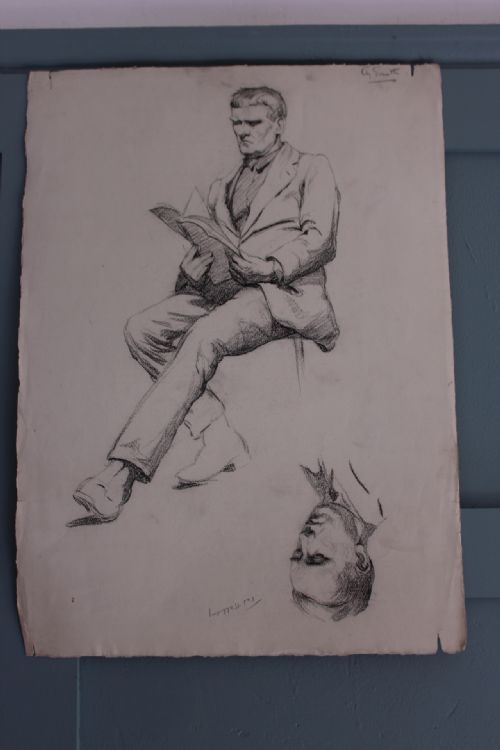
An academic charcoal portrait represents rigorous training traditions in European and British art, often taking the form of life studies, finished likenesses, or detailed studio drawings. These works range from full-size female and male nudes to specific sitters, capturing subjects with high precision.
Buyers exploring academic charcoal portrait examples will encounter works spanning the eighteenth, nineteenth, and early twentieth centuries. Pieces often arrive framed in wood, giltwood, or simple glassed enclosures suited to works on paper.
Materials and execution
These works rely primarily on charcoal, graphite, and chalk applied to paper or toned paper surfaces. Artists built up form through shading and line, sometimes combining mediums to highlight contours and facial expressions.
Framing materials commonly include traditional wood and carved frames, occasionally featuring giltwood. These housings protect delicate media from environmental damage.
Some sitters carried extraordinary lives outside the studio, including explorers noted as bio-pirates and prominent Victorian writers.
Assessing the artwork
Quality rests on the precision of the draughtsmanship, the anatomical accuracy of the life study, and the expressiveness of the sitter's likeness. Stronger pieces demonstrate confident control over shadow and light.
The condition of the paper and the stability of the charcoal or chalk media determine the preservation level. Intact framing and minimal foxing or fading distinguish finer examples.
Henry Arthur Roberts·Winifred Eugene Ballard·Reginald G. Eves·Robin Watt·Theobald Chartran·Ernest Borough Johnson·George Richmond·Cecil CP Lawson
The Academic Charcoal Portrait Glossary
- Academic Realism
- A style of painting and drawing produced under the influence of European academies of art. It emphasises precise anatomy and traditional techniques.
- Life Study
- A drawing or painting executed directly from a live nude or clothed model. These pieces formed the backbone of nineteenth-century art school training.
- Toned Paper
- Paper that possesses a light colour or neutral tint rather than pure white. Artists used it to deploy white chalk highlights effectively alongside dark charcoal.
- Giltwood
- Wood that has been covered with a thin layer of gold leaf or gold paint. It frequently appears on traditional nineteenth-century frames.
Academic Charcoal Portrait: Frequently Asked Questions
How should I hang these drawings?
Keep works on paper away from direct sunlight to prevent fading of the charcoal and yellowing of the paper. Use stable interior walls with controlled humidity.
Ensure the frame rests securely on suitable fixings, as antique wood and glass combinations carry notable weight.
What periods do these portraits cover?
The selection spans from the eighteenth century through the Victorian era and into the early twentieth century. Styles shift from classical academic studies to Edwardian portraiture.
Dates often reflect the active period of the artist or the specific year the drawing was executed.
Are these works always signed?
Some pieces bear artist signatures, monograms, or historical attribution notes on the front or reverse. Others remain unsigned studio works produced during training exercises.
Documentation and framing inscriptions often help identify the sitter or the origin school.
How do I care for charcoal drawings?
Charcoal and chalk remain friable media that can detach if the drawing experiences heavy vibration or impact. Keep the protective glass sealed and undisturbed.
Professional framing specialists can ensure proper spacers prevent the paper from touching the glass surface.