

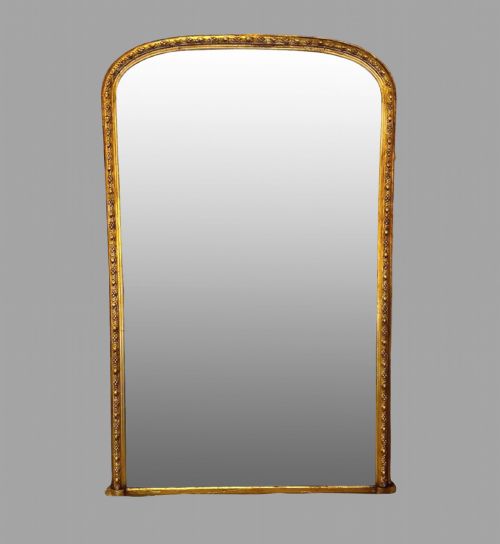
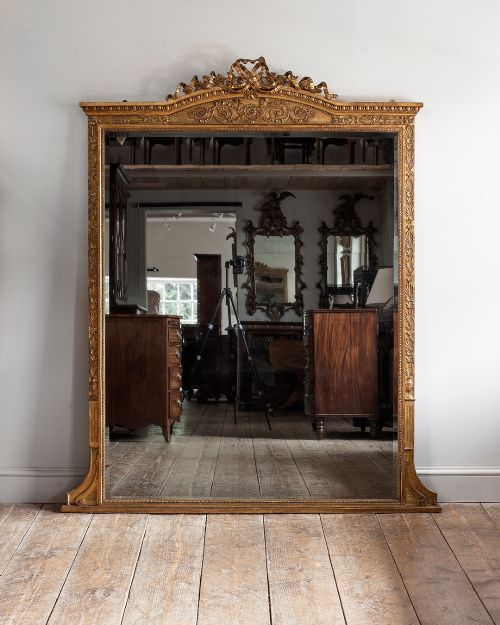
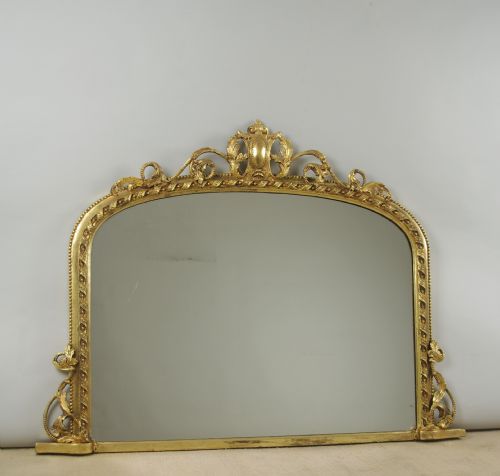
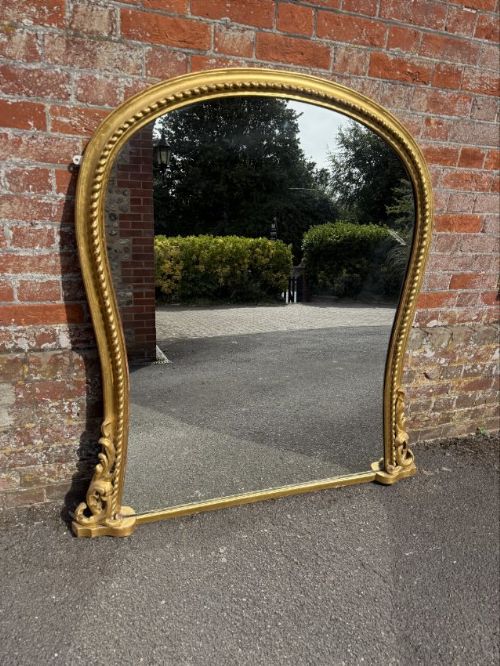



Nineteenth Century Arched Mirror
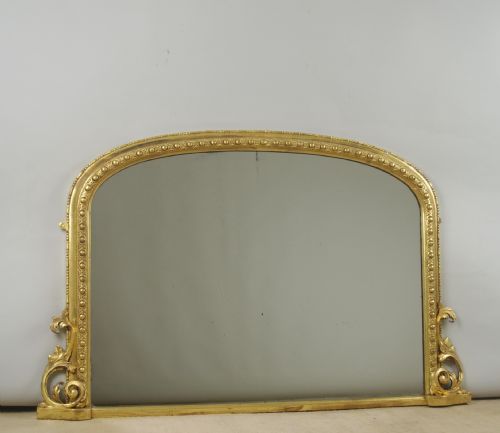
A nineteenth century arched mirror brings a grand vertical sweep and reflective light to a room, most often found in large overmantel formats.
Nineteenth Century Arched Mirror
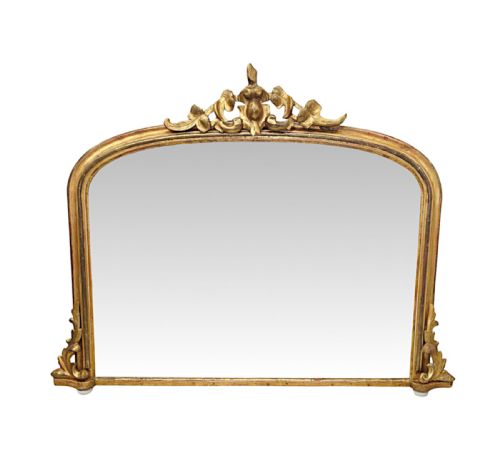
A nineteenth century arched mirror typically takes the form of an overmantel mirror designed to sit above a fireplace, alongside wall-hanging pier mirrors and dressing table variants. These pieces span periods from the Georgian era through the Victorian period, originating from English and French workshops.
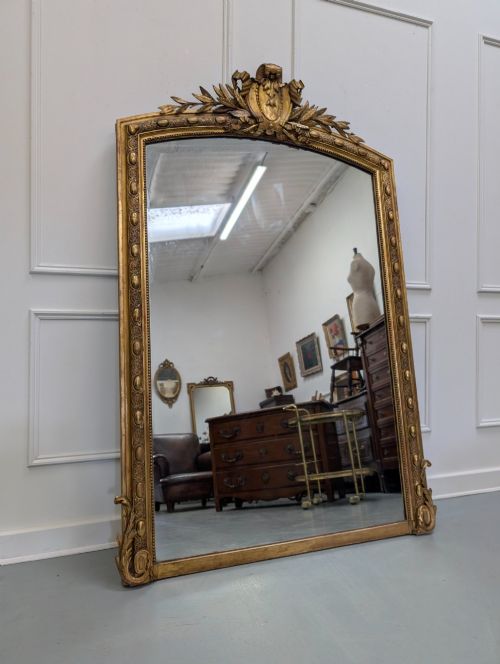
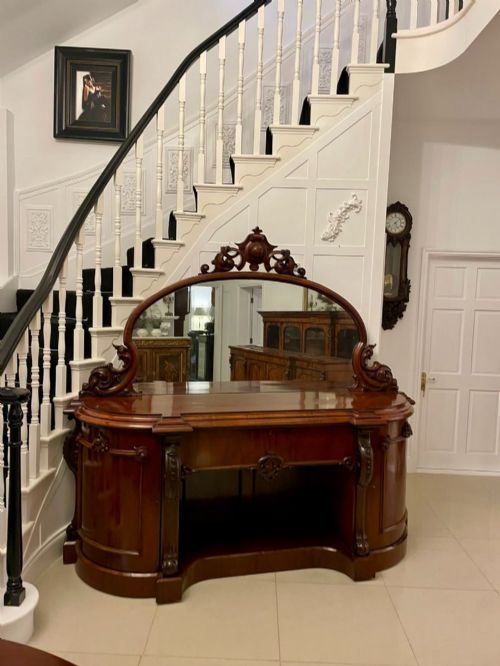
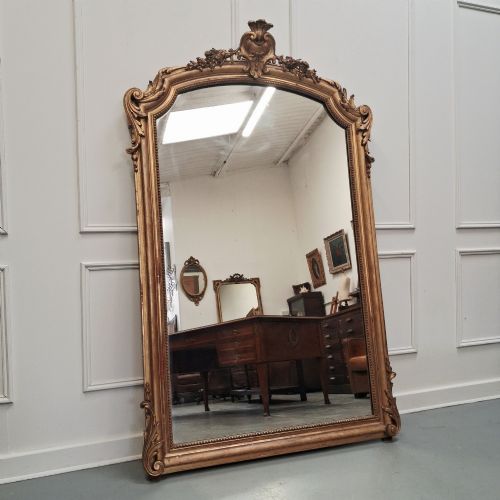
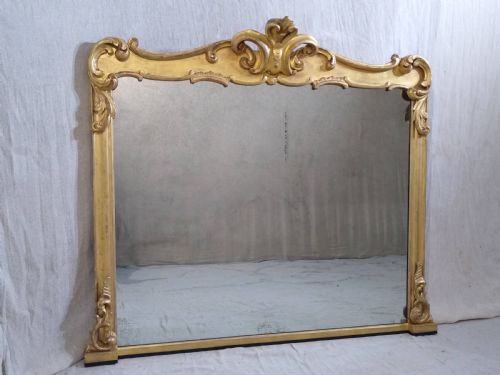
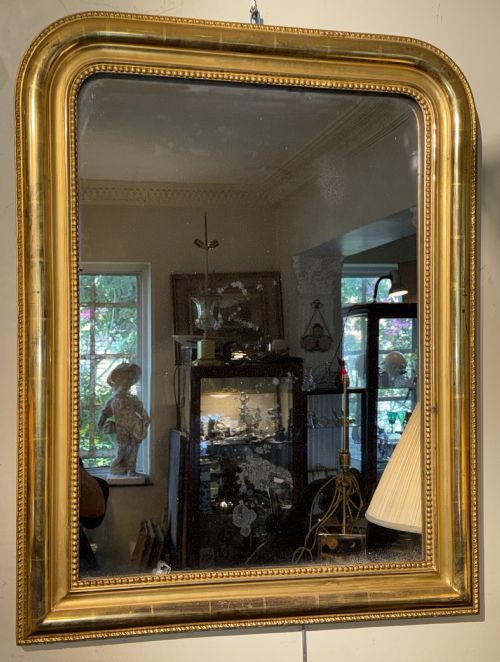
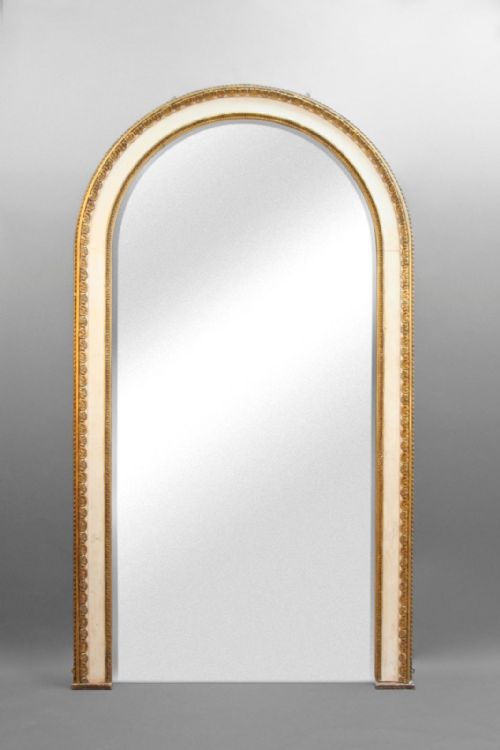
The most common version met here is the large gilt overmantel mirror with an arched or domed top, built to dominate a chimney breast. Examples also emerge in carved mahogany, burr yew-wood, and painted finishes, often reflecting French Louis Philippe or Rococo Revival tastes.
How they were made
Makers constructed the structural frames of a nineteenth century arched mirror using timber such as mahogany, walnut, or carved wood, providing a rigid base for the glass. Over this timber, artisans applied layers of gesso, which they carved into ornate floral motifs, rope twists, or hour glass ribbing before applying gold leaf or paint.
Gilding techniques involved laying thin sheets of gold leaf onto the prepared gesso surface, sometimes combined with black paint or parcel gilt details. Glass plates were set into the frames, occasionally featuring etched designs or displaying the heavier bevels characteristic of the period.
Current listings feature nineteenth century arched mirrors in Victorian, Regency, and French Louis Philippe styles, utilising giltwood, mahogany, walnut, and burr yew-wood.
What varies in quality
The distinction between tiers of a nineteenth century arched mirror lies in the depth and hand-carving precision of the gesso and wood ornamentation. Heavy, deeply modelled decorative elements and crisp rope twists or lily of the valley motifs indicate superior workshop output compared to simpler, flatter mouldings.
Materials also divide the standard, with solid mahogany and intricate ormolu mounts or burr yew-wood sitting at the higher end of the craft. The crispness of the original gilding and the preservation of the glass plate further separate ordinary utility items from exceptional decorative pieces.
The Nineteenth Century Arched Mirror Glossary
- Overmantel Mirror
- A large mirror specifically proportioned to hang above a mantelpiece or fireplace. These pieces often feature arched or domed tops to follow the architectural lines of chimney breasts.
- Gesso
- A plaster-based mixture applied to wooden frame foundations and carved into intricate decorative reliefs. It serves as the smooth base for subsequent gilding or paint.
- Giltwood
- Timber that has been coated with gold leaf or gold paint. It forms the lustrous finish seen on many Victorian and French pieces.
- Pier Mirror
- A tall, narrow mirror designed to be hung on the wall space between two windows, often placed above a pier table or console.
- Louis Philippe
- A French style spanning the mid-nineteenth century characterised by simpler, elegant curved arches and restrained ornamentation compared to earlier extravagant revivals.
Nineteenth Century Arched Mirror: Frequently Asked Questions
How do I hang a heavy overmantel mirror?
These heavy nineteenth century mirrors require secure wall fixings anchored directly into structural masonry or heavy studwork rather than standard plasterboard hooks. Professional mirror hangers utilise substantial mirror plates or hanging brackets attached to the sturdy wooden frame backing.
Due to the combined weight of the timber, gesso, and thick glass plate, weight distribution across multiple fixing points ensures safety and stability on the wall.
Were these mirrors made for fireplaces?
Many large nineteenth century arched mirrors were specifically commissioned to stand on mantelpieces or be fixed directly to the wall above a fireplace. Their proportions were calculated to reflect firelight and visually balance the hearth below.
Other formats, such as pier mirrors and dressing table mirrors, served different domestic functions in hallways and bedrooms.
How do I distinguish French from English styles?
French nineteenth century mirrors often display simpler Louis Philippe arched profiles with clean lines and subtle patination on painted or gilded surfaces. English examples from the Victorian period frequently feature heavier carved wood and gesso ornamentation, including rope twists and ornate crestings.
Examining the underlying timber species and the specific style of gesso relief helps clarify the origin of the piece.
Can I clean the original glass and gilding?
Original giltwood and gesso surfaces require delicate dusting with a soft, dry brush to avoid damaging the thin layers of gold leaf or flaking the historic plaster. Moisture should be kept away from antique gesso as it dissolves the historic base.
Glass plates can be cleaned sparingly with a mild glass cleaner applied to a cloth rather than sprayed directly onto the mirror, preventing liquid from seeping behind the silvering.