
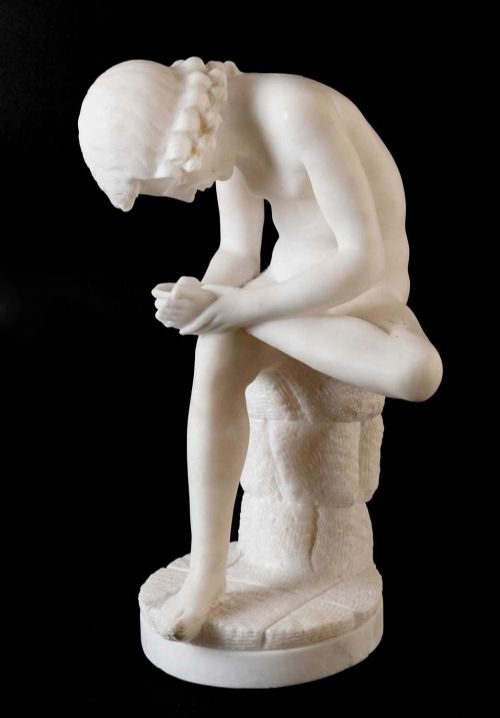


Nineteenth Century Alabaster
Nineteenth century alabaster brings carved figures, clocks and busts to a room, offering tactile warmth and classical weight.
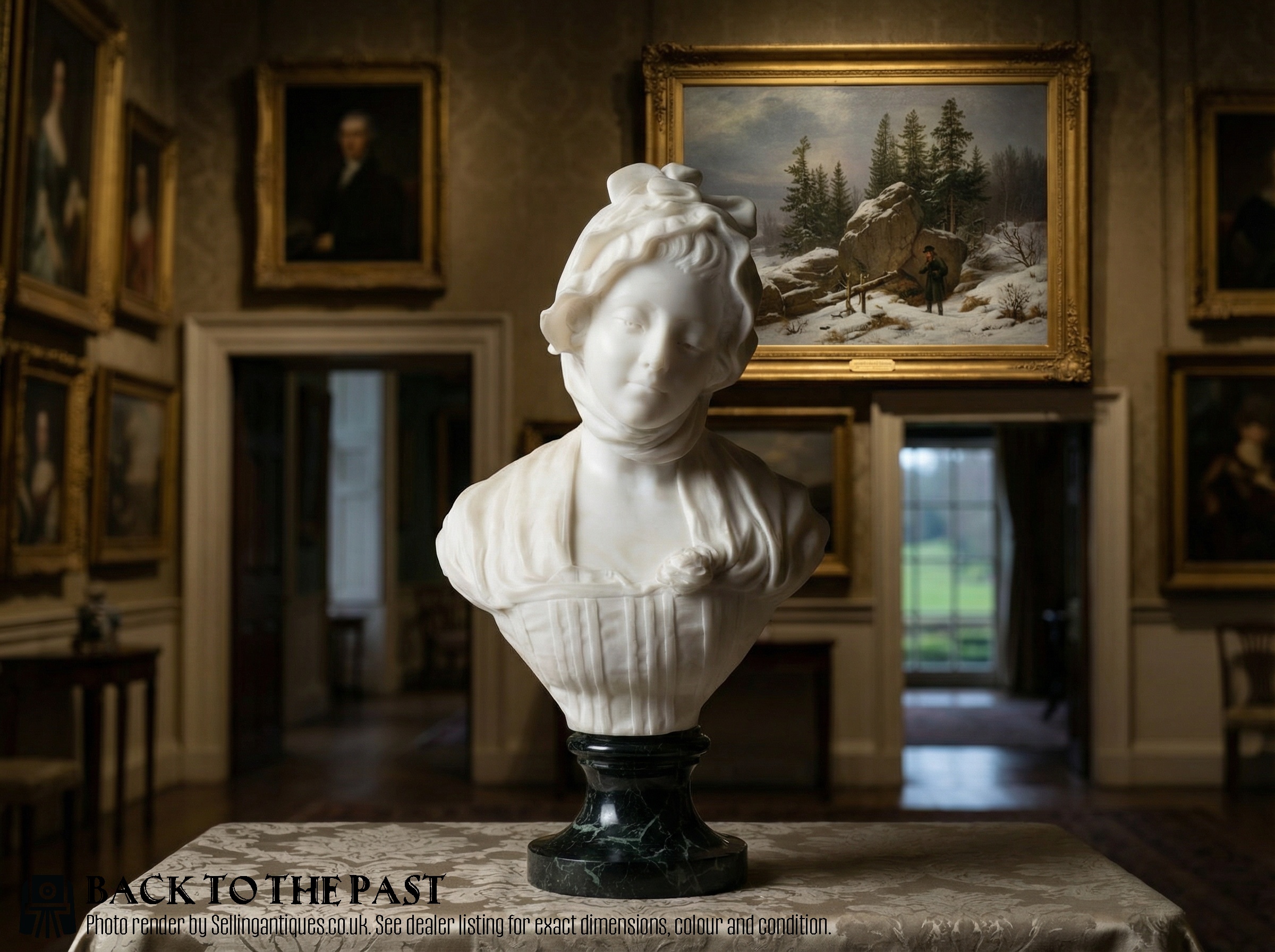
Nineteenth Century Alabaster
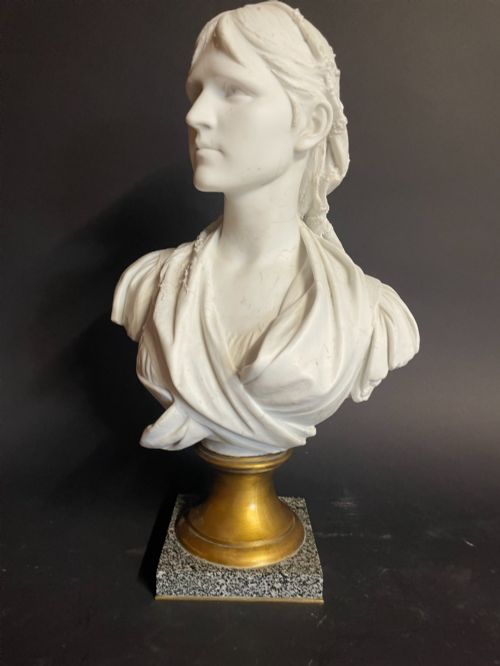
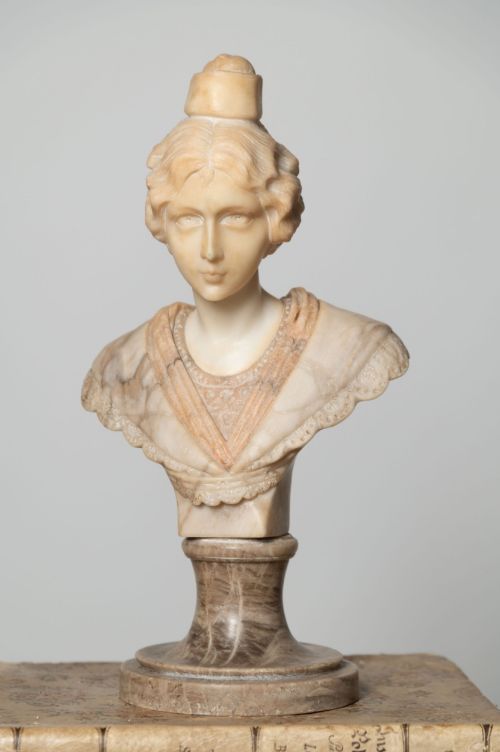
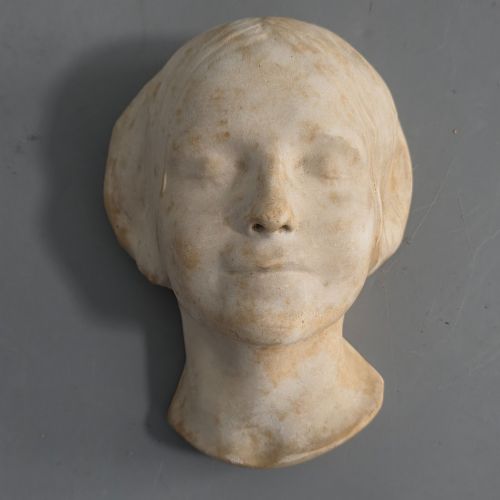
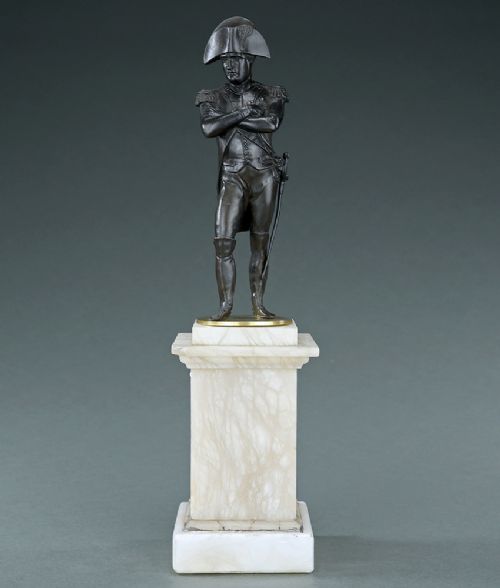
Nineteenth century alabaster spans carved figurative sculptures, decorative busts and mantel clocks set across domestic interiors. The examples met on this page range from classical female figures and death masks to dogs and architectural sarcophagi.
Origins stretch across Italy, France and Britain, capturing styles from Neoclassical and French Empire to Art Nouveau and Egyptian Revival. These works translate historic sculpture traditions into smaller cabinet and mantel pieces.
Materials and construction
Carvers shaped soft stone and alabaster alongside marble, working with bronze and gilt bronze mounts for clock housings and figurative details. Glass domes occasionally protect delicate Italian carved alabaster mantel clocks fitted with French movements.
Materials recorded across the page include alabaster, marble, brass, stone, bronze, gilt bronze and glass.
Quality variations
Quality rests in the subtlety of the carving and the fidelity of the form, particularly in facial expressions and rendered drapery. Softer stone demands careful handling, and sharper anatomical definition distinguishes superior work.
The integration of secondary materials, such as gilt bronze mounts or fitted French clock movements, elevates the construction standard. Proportion and balance in figurative subjects govern the visual success of each piece.
Emile Guillemin·Bright And Sons·George Van Der Straeten·Joseph Gott·Pugi·Greuze
The Nineteenth Century Alabaster Glossary
- Alabaster
- A fine-grained stone used for carving statues, busts and decorative objects. It takes a smooth finish and shows soft translucency.
- Grand Tour
- Souvenirs and classical antiquities collected by travellers in Europe during the nineteenth century. These objects often reference Egyptian or classical forms.
- Mantel clock
- A domestic clock designed to sit on a fireplace mantel, frequently housed in stone, marble or bronze cases. Many incorporate French movements under glass domes.
- Neoclassical
- A style drawing inspiration from the classical art and culture of ancient Greece and Rome. It appears across nineteenth century sculpture and decorative arts.
- Death mask
- A cast taken of a person's face after death, sometimes carved in stone. Examples include representations of historic subjects.
Nineteenth Century Alabaster: Frequently Asked Questions
What is nineteenth century alabaster?
Nineteenth century alabaster encompasses carved sculptures, decorative busts and mantel clocks produced across Europe during the 1800s. These pieces utilise soft stone to render classical figures, animals and architectural forms.
They reflect aesthetic movements from Neoclassical to Art Nouveau. Many integrate with bronze mounts or glass domes.
How do you clean alabaster?
Alabaster is a soft and water-soluble stone that requires careful dry dusting with a soft brush. Moisture can damage the porous surface and dissolve fine carved details.
Avoid chemical cleaners and water entirely. Gentle maintenance preserves the original stone finish.
Where were these pieces made?
Production centres were concentrated in Italy, France and Britain during the nineteenth century. Italian workshops specialised in carved figures and mantel clocks.
French makers combined alabaster with gilt bronze and complex clock movements. British makers produced decorative animal figures in regional stone.
Are mantel clocks mechanical?
Mantel clocks from this period rely on mechanical movements, often French in origin. They require manual winding to operate the clockwork mechanisms.
Some incorporate swinging figures or decorative gilt bronze cases. Glass domes frequently protect the delicate stone and metal components.