
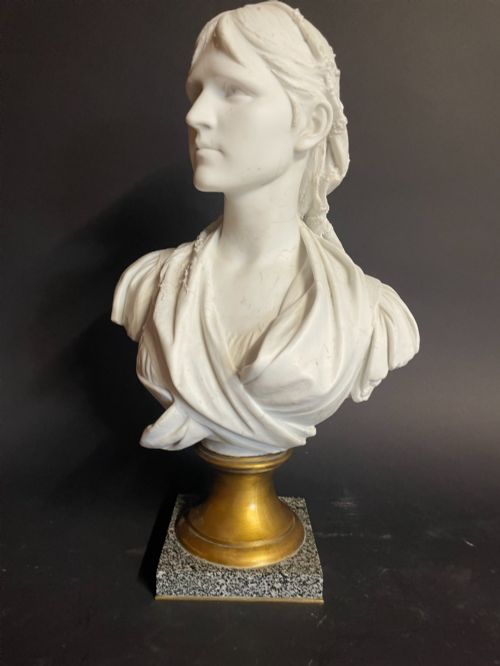
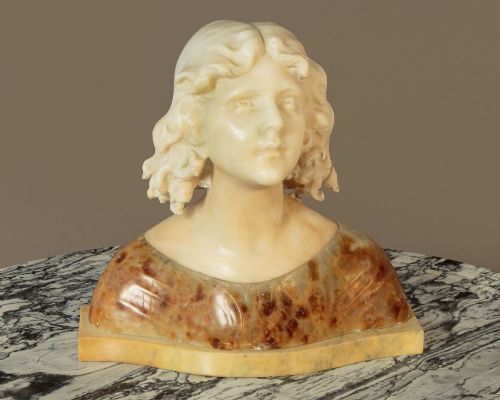


Carved Alabaster Woman
A carved alabaster woman brings classical elegance and tactile warmth into a room, capturing the human form in soft, translucent stone.
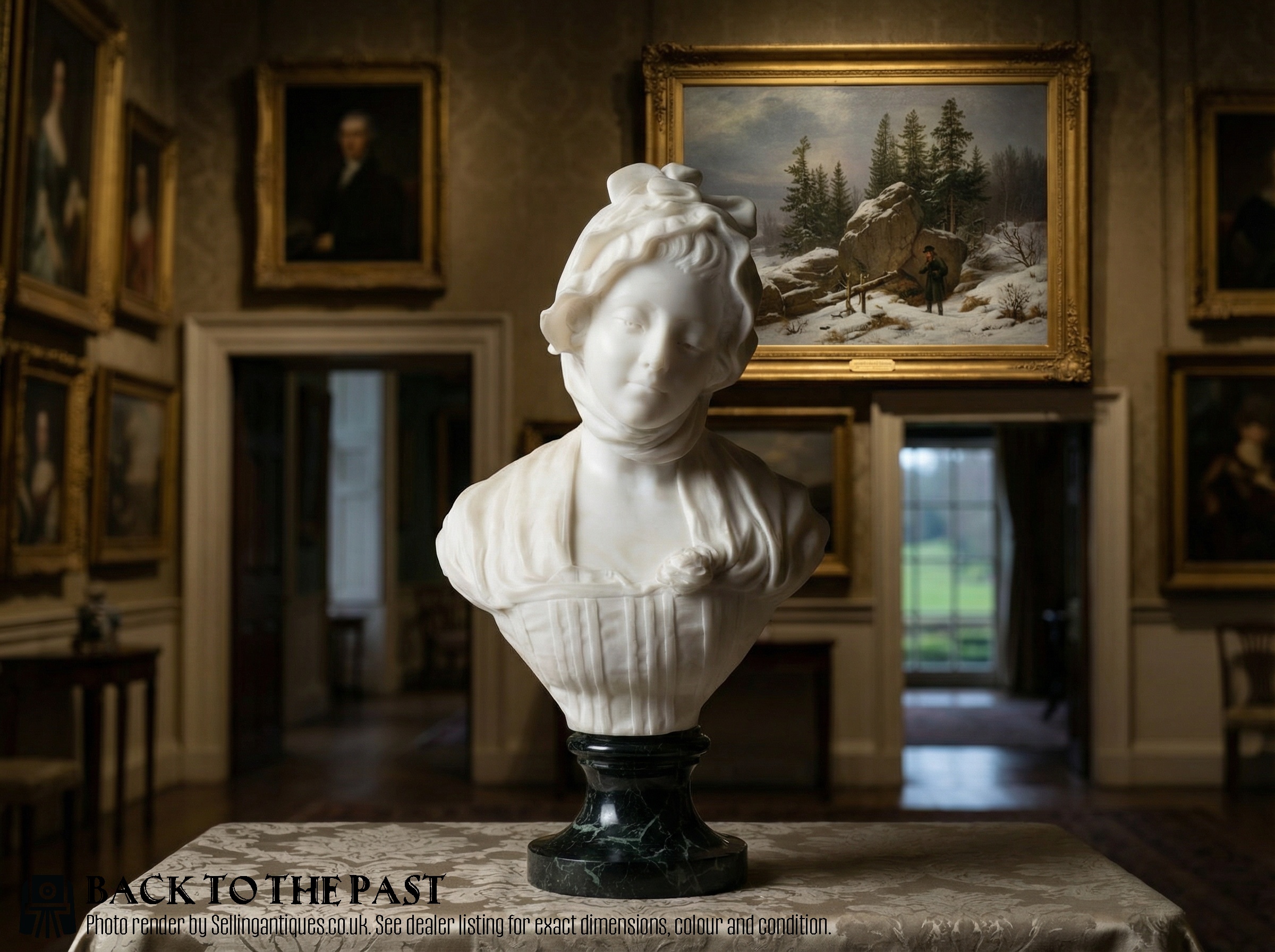
Carved Alabaster Woman
When you search for a carved alabaster woman, you encounter nineteenth-century and early twentieth-century sculptural works ranging from portrait busts to full figures. These pieces reflect historic European tastes, spanning the Victorian, Neoclassical, and Art Nouveau periods.
The versions you are most likely to meet on this page include Italian and French busts and reclining figures, often dating around nineteen hundred. They depict young women, bathers, and allegorical subjects carved with detailed drapery and expression.
Makers and sculptors utilised these soft stones to create lifelike portrayals that mimic the texture of skin. The selection reflects diverse European traditions, from French classical revival works to Italian studio pieces.
How they were made
Craftsmen shaped these sculptures primarily from alabaster and marble, sometimes combining them with brass, granite, and parcel-gilt metal details. The stone is worked with chisels and rasps to achieve smooth contours and fine textural contrasts.
Artisans took advantage of the natural translucency of alabaster to give garments and skin a convincing softness. Surface finishing often involves polishing to bring out the subtle veining and warm tone inherent in the material.
Several ladies hold unexpected companions, including a wheatsheaf and a harp, proving that stone women appreciate a practical hobby.
What varies in quality
The refinement of the carving separates standard commercial studio output from superior artistic achievements. Subtle detailing in the hair, hands, and drapery reveals the hand of a more skilled sculptor.
The choice of stone also defines the piece, as pure, evenly grained alabaster without heavy flaws commands greater visual appeal. Preservation of delicate extremities and fine surfaces dictates the overall integrity of the sculpture.
Pugi·Greuze
The Carved Alabaster Woman Glossary
- Alabaster
- A soft, fine-grained stone valued for its translucency and ease of carving. It allows light to penetrate slightly beneath the surface, giving figurative sculpture a lifelike warmth.
- Art Nouveau
- A stylistic movement prominent around nineteen hundred characterised by flowing, organic lines. Sculptures from this period often incorporate naturalistic poses and botanical motifs.
- Neoclassical
- A revival of classical Greek and Roman aesthetics focused on proportion, restraint, and dignified subjects. Figures from this tradition often wear classical drapery and adopt serene expressions.
- Parcel-gilt
- Partially gilded with gold leaf or powder applied to specific highlights on a sculpture or its mount. This technique adds contrast to the surrounding stone or metal.
- Bust
- A sculpted representation of a person from the chest up. It allows focus on facial expression, hairstyle, and upper garment details.
Carved Alabaster Woman: Frequently Asked Questions
How should I clean carved alabaster?
Alabaster is a soft and water-soluble stone, meaning it requires careful maintenance to preserve its surface. Dust the sculpture gently with a dry, soft brush rather than using any moisture or liquid cleaners.
Avoid placing these figures in areas with high humidity or direct sunlight, which can alter the stone over time. Professional restoration is recommended if the piece sustains any structural damage.
Where should I display a marble or alabaster bust?
These sculptures need a stable, sturdy surface such as a heavy wooden console table or a dedicated pedestal. Because alabaster is relatively soft compared to granite, place the figure away from heavy traffic where it might be knocked.
Good ambient lighting enhances the translucent quality of the stone, particularly when placed near a light source that highlights the facial contours and drapery.
How do I tell alabaster from marble?
Alabaster has a noticeable translucency when held near a light source, whereas marble tends to be much more opaque and dense. Alabaster is also softer and can be scratched with a metal implement more easily than marble.
Both materials were utilised during the nineteenth century, but sculptors often selected alabaster specifically for smaller, highly detailed figures that required a softer visual texture.
What periods do these sculptures date from?
The pieces seen here primarily date from the nineteenth century up to the early twentieth century. This span includes Victorian Neoclassical works, Belle Epoque pieces, and turn-of-the-century Art Nouveau creations.
French and Italian workshops produced the majority of these sculptures, reflecting the dominant sculptural tastes of those eras.