



Neoclassical Window Stool
A neoclassical window stool brings architectural symmetry and formal seating to a room, drawing on classical forms from the eighteenth and nineteenth centuries.

Neoclassical Window Stool
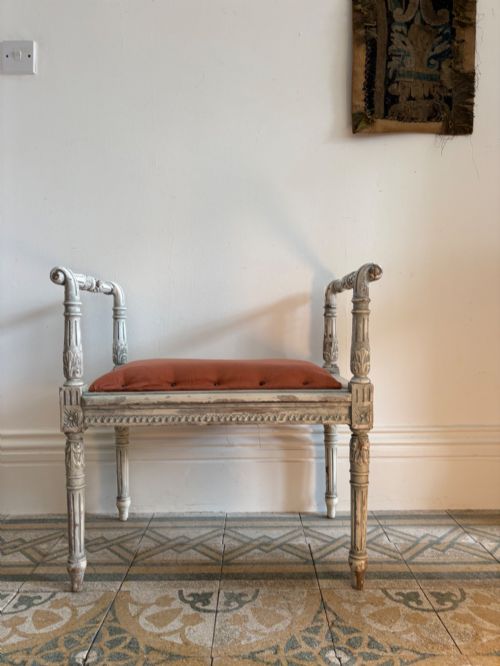
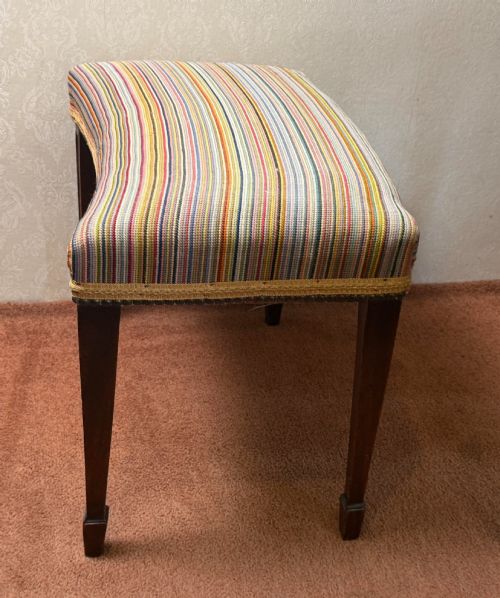
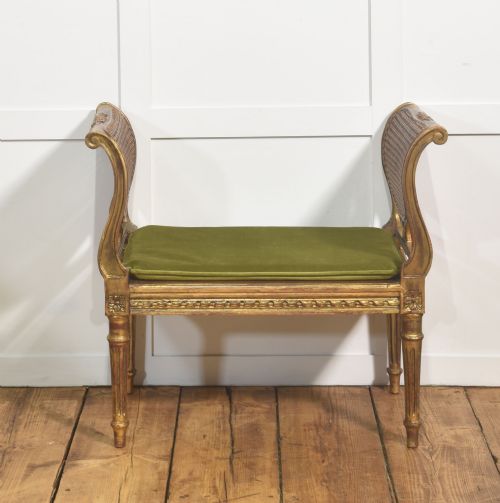
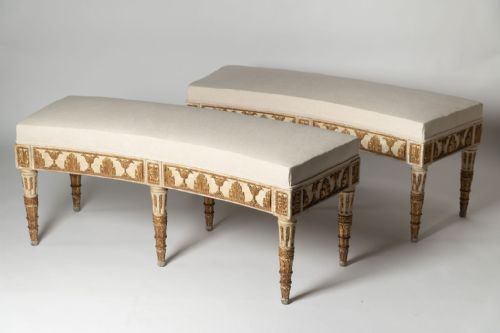
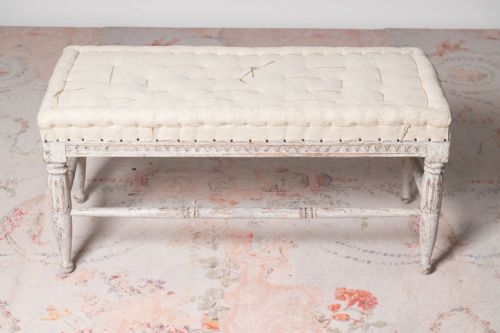
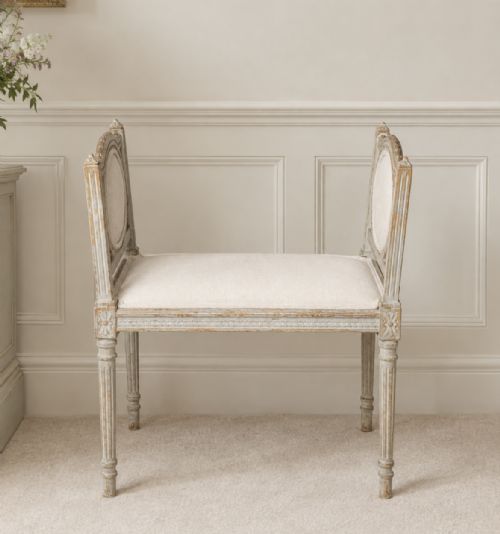
A neoclassical window stool is typically found in forms ranging from long bedroom benches to gilded window seats and square stools. These pieces draw upon George III, Regency, Louis XVI, and Gustavian designs.
The selection includes examples from the eighteenth century through to the early twentieth century, spanning Georgian periods and later revivals. Buyers frequently encounter painted wood, giltwood, and mahogany frames in these forms.
Construction and materials
Frames are constructed from hardwoods such as mahogany, birch, and oak, alongside softwoods prepared for painted finishes or gilding with gesso. Joinery relies on traditional framing techniques suited to supporting upholstered or cane seating surfaces.
Upholstery materials include silk, velvet, damask, and standard fabric over webbing or cane panels. Giltwood and painted surfaces often feature carved classical details like fluting and square tapering legs.
Charles Nosotti managed to seat half of Victorian London while keeping his giltwood mirrors shining.
Judging the execution
Quality rests in the precision of the carving and the elegance of the proportions, distinguishing well-drawn frames from heavier commercial output. The crispness of gesso work and the retention of original gilding or paint layers dictate desirability.
Structural integrity of the joints and the authenticity of the secondary woods provide further distinction between period pieces and later revivals.
Charles Nosotti
The Neoclassical Window Stool Glossary
- Giltwood
- Wood that has been coated with a thin layer of gold leaf over a prepared gesso ground. This finish is typical of formal French and Italian seating.
- Gustavian
- The Swedish interpretation of French neoclassical style, characterised by lighter painted finishes and restrained classical carving. Pieces often utilise pale palettes.
- Damask
- A reversible figured fabric traditionally woven on a jacquard loom, frequently utilised for period upholstery. It provides a patterned textile surface.
Neoclassical Window Stool: Frequently Asked Questions
Where should I place a window stool?
These pieces fit naturally at the foot of a bed, beneath a bay window, or along a hallway wall where low seating is required.
Their narrow profile ensures they occupy minimal floor space while maintaining a formal presence.
How do I identify a Gustavian piece?
Gustavian pieces typically display pale painted finishes, often white or soft grey, combined with restrained Swedish neoclassical carving.
The aesthetic prioritises light and simplicity over the heavier gilding found in continental furniture.
Are these stools suitable for daily seating?
Period frames are sturdily built from hardwoods like mahogany and oak, making them capable of withstanding regular use.
Upholstery condition should be assessed if the piece is intended for frequent sitting rather than display.
What defines the Adams style?
Adams style furniture incorporates classical motifs derived from ancient architecture, popularised in late eighteenth-century Britain.
Expect symmetrical decoration, tapered legs, and refined proportions.