




Neoclassical Wall Medallion
A neoclassical wall medallion brings classical antiquity straight into the room, offering framed plaster casts, carved marble, and bronze plaques.
Neoclassical Wall Medallion
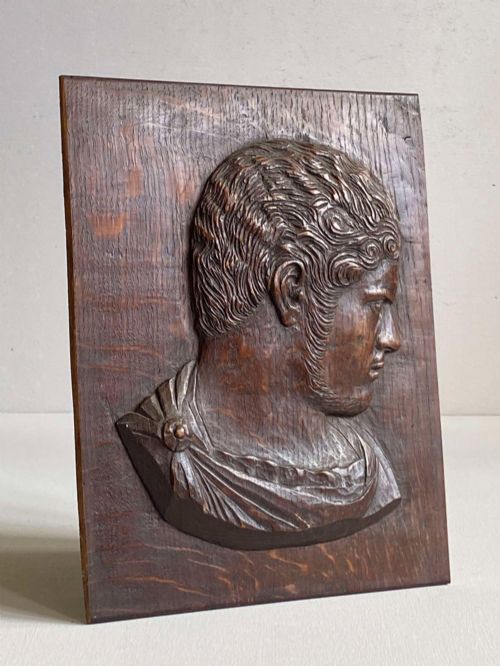
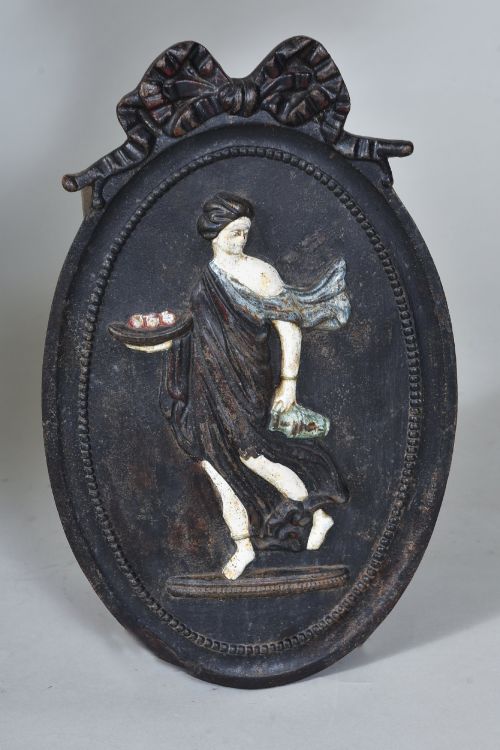
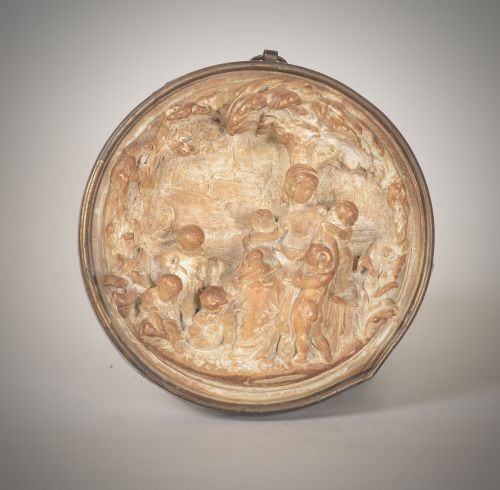
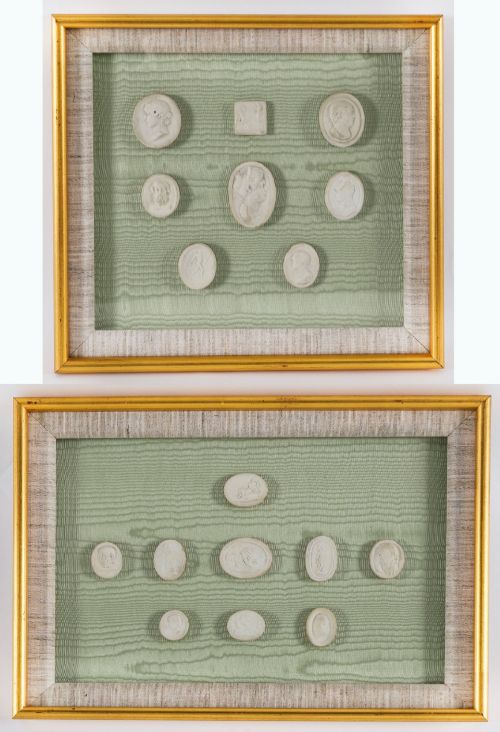
A neoclassical wall medallion encompasses framed classical cameo intaglios, gypsum and plaster relief panels, and carved marble plaques depicting Roman emperors and mythological figures. These pieces originate primarily from nineteenth-century Grand Tour collections alongside eighteenth-century souvenir portraits.
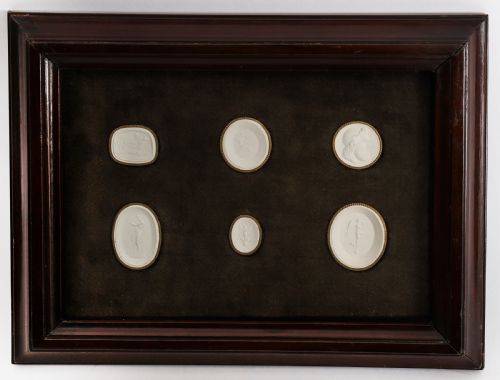
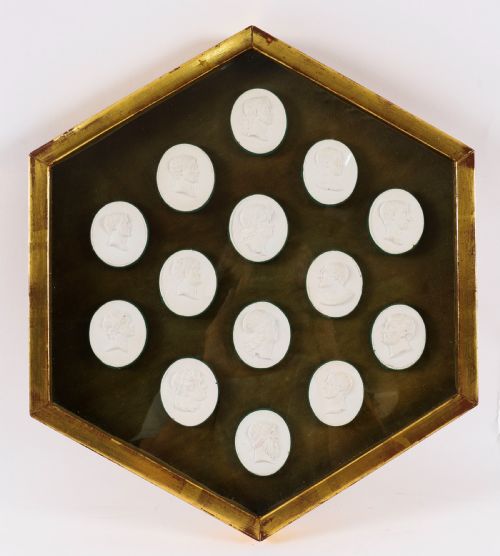
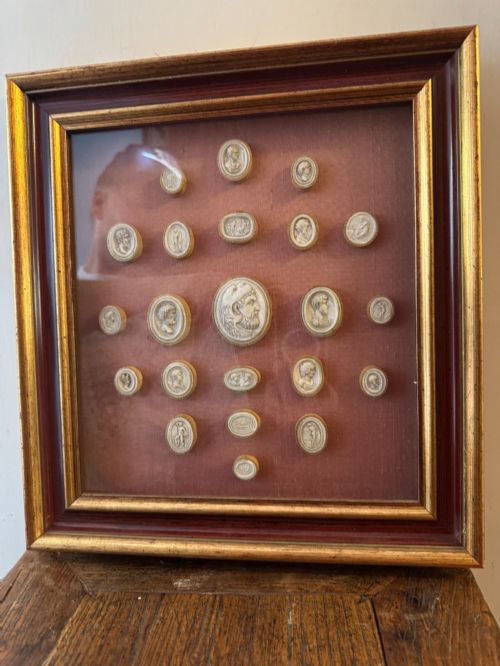
The version most commonly met on this page is the framed Grand Tour collection, where sets of plaster or gypsum intaglios are arranged neatly behind glass against a velvet or fabric backing. Visitors will also encounter single bronze plaques and carved marble bas-relief profiles from the eighteenth and nineteenth centuries.
How they were made
Plaster, gypsum, and terracotta casts were meticulously taken from ancient carved gems during travel through Italy, then mounted inside wooden frames lined with fabric or velvet. Larger relief portraits utilised hand-carved marble or cast bronze, sometimes finished with gold leaf or giltwood surrounds.
Makers such as Giovanni Liberotti produced extensive sets of intaglios for travellers, securing them within custom frames. Wedgwood contributed specialised jasperware cameos, while foundries like Coalbrookdale cast detailed bronze plaques depicting classical scenes.
Neoclassical Wall Medallion Retail Price Guide 2026
Typical asking prices for neoclassical wall medallion among the pieces listed under this phrase on Sellingantiques today, from the lower quarter to the upper quarter. They describe what is for sale here now, not the wider market.
Listings feature plaster, marble, bronze, and giltwood materials across eighteenth and nineteenth-century periods.
What varies in quality
The distinction between tiers rests upon the crispness of the casting and the depth of the carved detail within the plaster, marble, or bronze. Intaglio sets that retain sharp facial profiles and clean lettering demonstrate superior craftsmanship compared to worn or softened impressions.
Material presentation and framing elevate certain pieces above standard examples. Original giltwood frames, neat fabric linings, and documented signatures from makers like Giovanni Liberotti separate exceptional historical souvenirs from ordinary decorative wall art.
Giovanni Liberotti·Wedgwood·Coalbrookdale
The Neoclassical Wall Medallion Glossary
- Intaglio
- A gem or medallion carved with a design depressed below the surface so that an impression can be made in relief. These were collected in sets during the Grand Tour.
- Cameo
- A method of carving an object such as a gemstone or plaster piece where the relief image stands out distinctly from a background of a different colour.
- Grand Tour
- A traditional trip of Europe undertaken by upper-class European young men of sufficient means, resulting in the collection of souvenirs like plaster intaglios and marble plaques.
- Jasperware
- A type of pottery developed by Wedgwood featuring a fine-grained, unglazed stoneware body typically decorated in contrasting relief.
- Bas-relief
- A sculptural technique where the figures project only slightly from the background plane, commonly seen in marble and bronze profile portraits.
Neoclassical Wall Medallion: Frequently Asked Questions
What is a neoclassical wall medallion?
A neoclassical wall medallion is a framed artwork featuring classical motifs, typically comprising plaster intaglios, carved marble profiles, or bronze plaques.
These pieces reflect eighteenth and nineteenth-century interests in ancient Roman and Greek art, often acquired as souvenirs during European travels.
How were Grand Tour intaglios displayed?
Grand Tour intaglios were usually arranged in sets inside custom wooden frames lined with velvet, silk, or fabric.
Collectors mounted these plaster or gypsum casts behind glass to protect the delicate relief work while displaying them on domestic walls.
How do I care for framed plaster plaques?
Framed plaster and gypsum pieces require protection from direct sunlight and excessive moisture to preserve the material integrity.
Keep the glass clean using standard methods without removing the frame seals, and dust the giltwood or wooden surrounds gently.
How can I tell the period of a plaque?
Dating relies on examining the framing materials, backing fabrics, and the specific method used to cast or carve the subject.
Eighteenth and nineteenth-century pieces often exhibit hand-carved details, period woods like giltwood, and maker stamps or handwritten labels.