


Neoclassical Wall Brackets
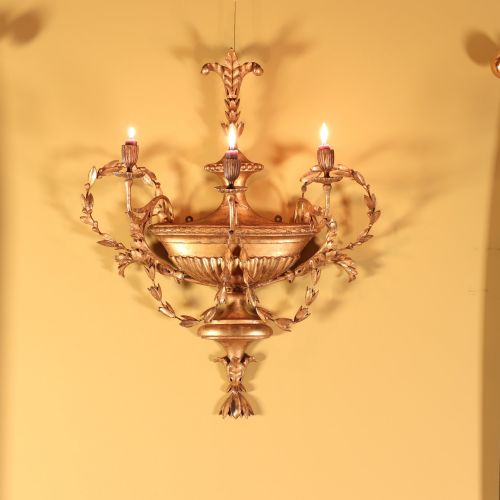
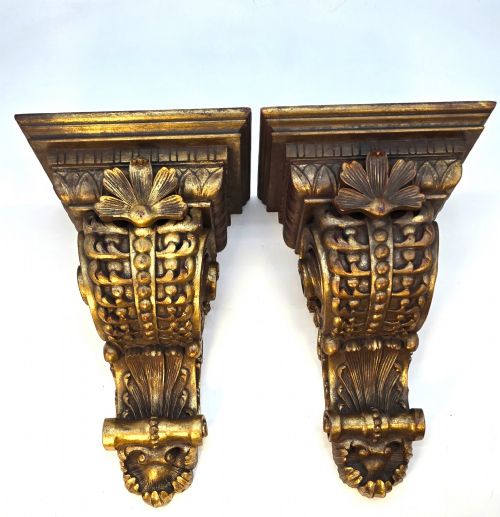
Neoclassical wall brackets bring classical proportion and refined ornamentation to interior walls, ranging from single candle sconces to elaborate gilded console supports.
Neoclassical Wall Brackets
Neoclassical wall brackets span the eighteenth century through the early twentieth century, appearing as wall lights, sconces, and carved wooden supports. These pieces draw on historical vocabularies including Louis XVI, George III style, and Adam revival designs.
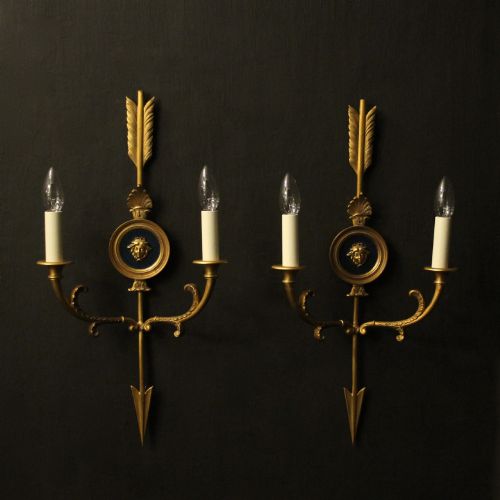
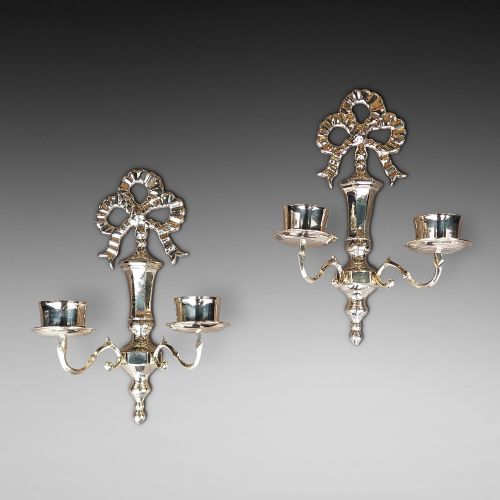
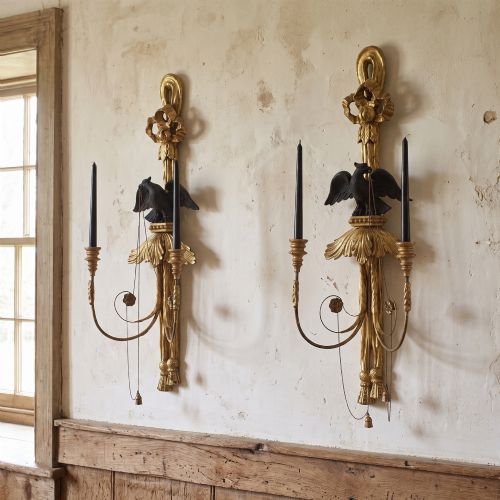
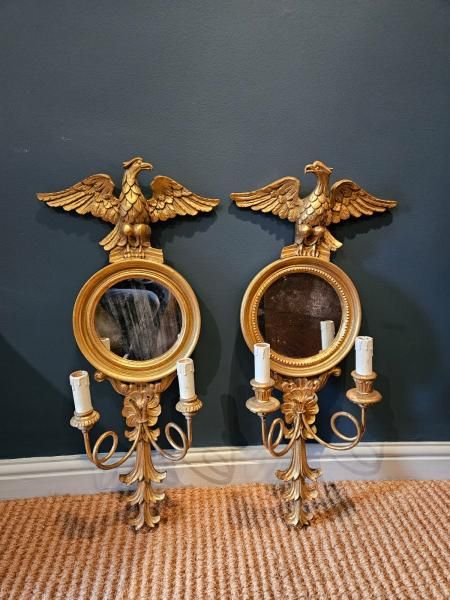
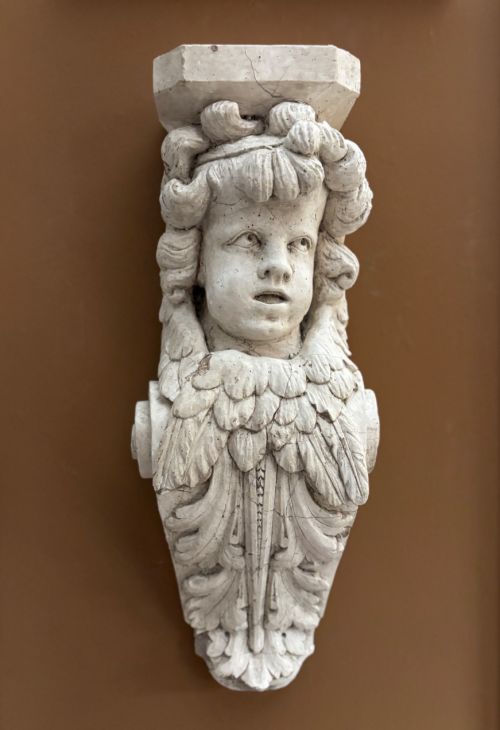
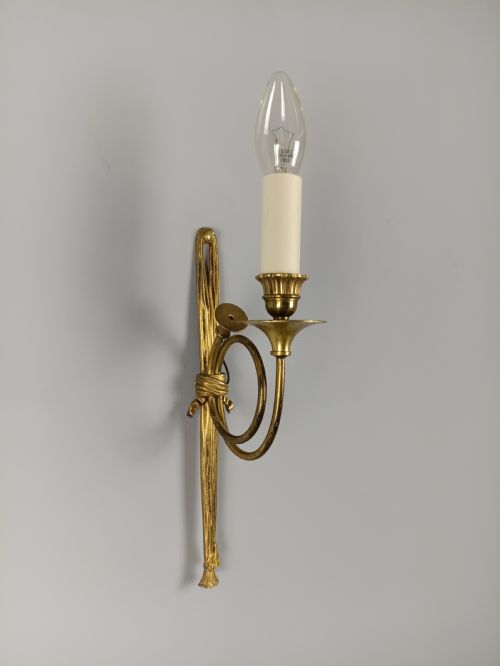
The inventory on this page demonstrates forms such as twin arm lights, lire shaped sconces, and carved wooden corbels, often produced in symmetrical pairs. English and French workshops dominate the available examples, utilising traditional classical motifs.
Dated items extend from the late eighteenth century into the 1930s, incorporating Victorian and Edwardian interpretations of classical ornament alongside earlier pieces.
Materials and Technique
Maker construction relies heavily on carved timber, gesso, and cast metals finished with gold leaf, giltwood, or ormolu. Artisans combined carved wooden elements with applied gesso to build up crisp architectural details before gilding.
Metal components utilise brass, bronze, and silvered brass, often cast in multiple branches for candle or electric lighting. Painted finishes in white and polychrome schemes also appear alongside exposed metallic surfaces.
Materials across the listings include giltwood, brass, gesso, ormolu, and bronze, spanning the eighteenth century to the 1930s.
Execution and Detail
Quality rests upon the crispness of the carving and the depth of the metal casting, where sharper detailing on acanthus leaves and classical figures separates finer items from simpler production. The application of gold leaf or ormolu finish affects the textural richness of the surface.
Matched pairs command greater design coherence than assembled groups, while structural integrity in the wooden or metal arms determines daily durability.
The Neoclassical Wall Brackets Glossary
- Giltwood
- Timber coated with gold leaf or a gold-coloured finish. This technique provides a bright reflective surface commonly used on eighteenth and nineteenth-century wall fixtures.
- Ormolu
- Finely chased gilt bronze used for decorative mounts and lighting fixtures. The process involves applying a gold amalgam to bronze before heating.
- Sconce
- A wall-mounted lighting fixture designed to hold candles or electric bulbs. These pieces project outward from the wall panel to distribute illumination.
- Corbel
- A structural or decorative bracket projecting from a wall to support a weight. In decorative interiors, these often take carved figural forms such as putti.
- Gesso
- A plaster-like mixture applied to wood surfaces and carved before gilding. It allows for intricate relief ornamentation on frames and brackets.
Neoclassical Wall Brackets: Frequently Asked Questions
How do I light these wall brackets?
Many historical wall brackets were originally designed for candles and have since been adapted for electricity by modern workshops. It is advisable to consult a qualified electrician regarding safe wiring options.
Retaining original socket fittings or selecting appropriate candle tubes helps preserve the visual balance of antique fixtures.
What periods do these pieces represent?
The selection includes eighteenth-century origins, nineteenth-century Victorian interpretations, and twentieth-century revivals up to the 1930s. Styles frequently reference Adam, Louis XVI, and George III aesthetics.
Later revival pieces replicate earlier neoclassical motifs while utilising early twentieth-century manufacturing methods.
Where should I mount wall brackets?
Wall brackets function effectively in entrance halls, living rooms, and dining spaces, often positioned above console tables or beside pier mirrors. Proper installation requires securing fixtures to wall studs or utilising appropriate masonry anchors.
Consider the projection and weight of metal or giltwood pieces when selecting a wall location.