

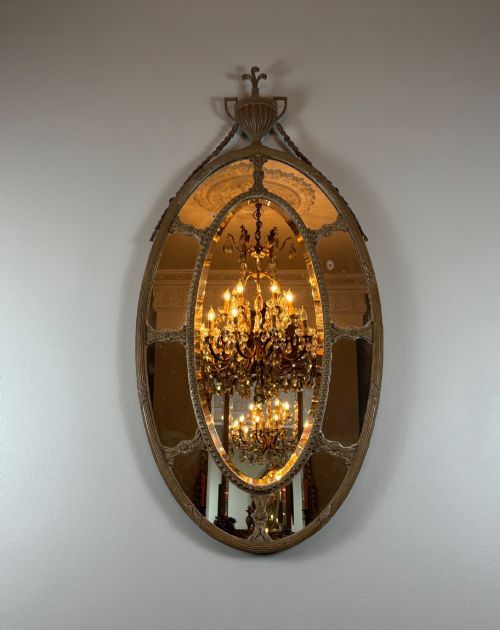
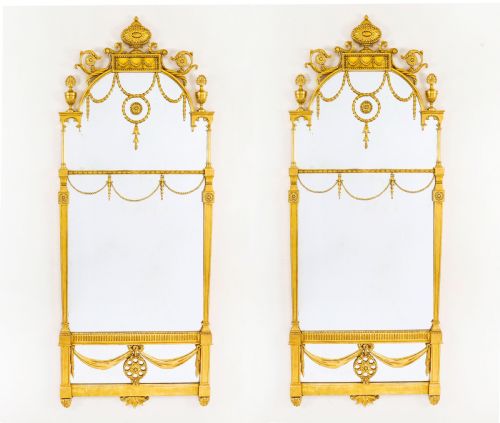


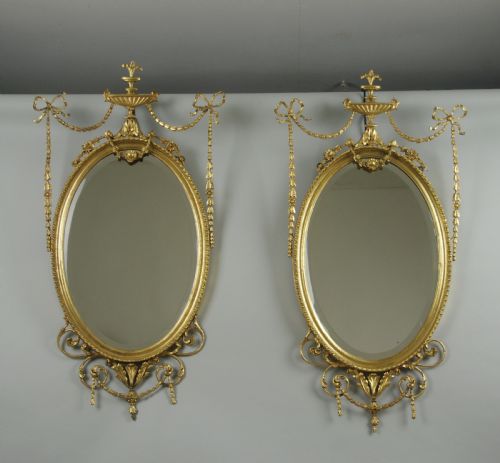


Neoclassical Urn Wall Mirror
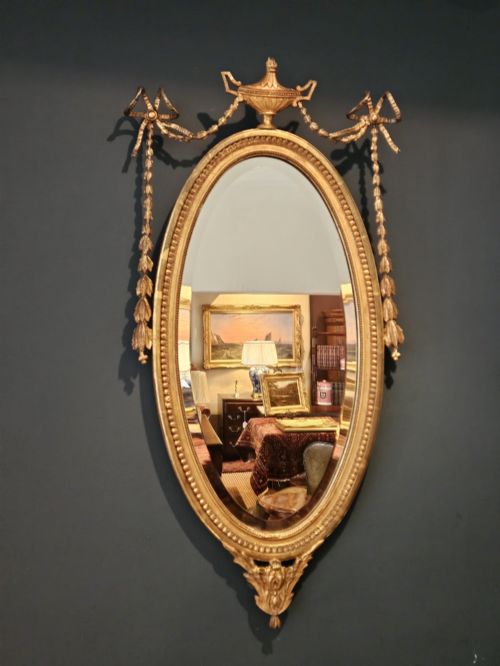
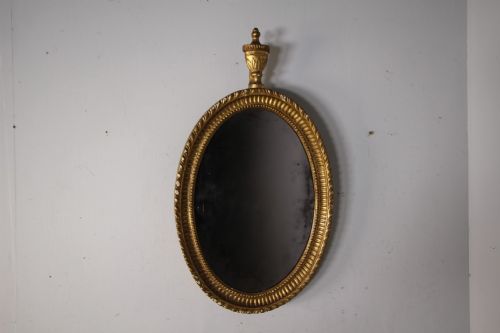
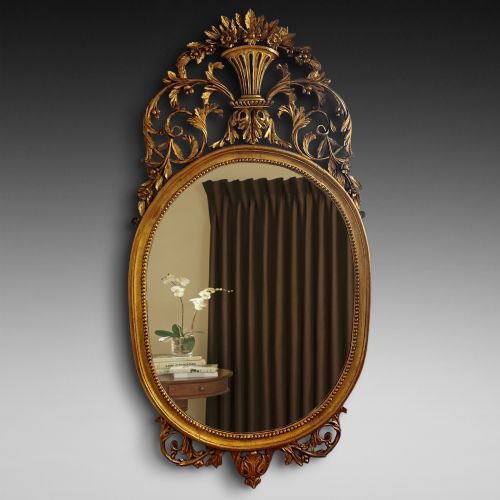
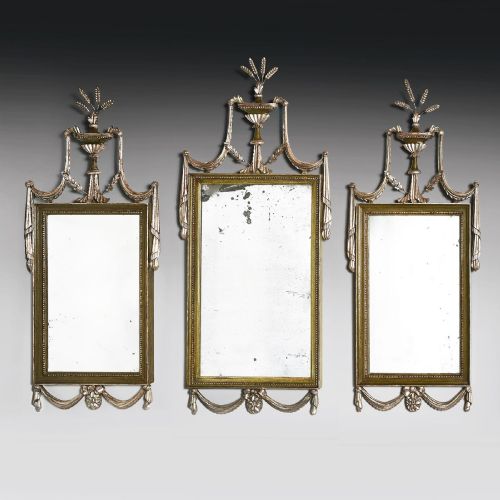
These neoclassical urn wall mirrors combine classical motifs and gilded frames, offering a striking focal point for any period interior.
Neoclassical Urn Wall Mirror
A neoclassical urn wall mirror presents classic symmetrical forms, typically incorporating an urn motif flanked by swags and classical ornament. When you search for a neoclassical urn wall mirror, you encounter pieces spanning the Georgian, Victorian, and Edwardian eras, alongside revivals from the nineteenth century.
The selections on this page range from oval wall mirrors to large overmantel mirrors and pier glasses. Many examples draw directly on Adam revival designs, featuring carved wooden or gesso frames finished in gold leaf or paint.
Origin points vary across English, French, and Swedish workshops, demonstrating regional interpretations of classical decoration. Oval formats and vertical pier configurations dominate the current selection, frequently paired with border glasses.
Materials and construction methods
Craftsmen built the structural frames of these mirrors using timber such as mahogany, ebonised wood, or pine. Carvers shaped the intricate details directly into the wood or applied moulded composition and gesso to achieve crisp classical motifs.
Gilding was applied using gold leaf or metal leaf over a prepared base, creating the reflective metallic surfaces characteristic of these pieces. Mirrored glass sheets, sometimes bevelled or arranged as border glasses, were then fitted into the finished frames.
Assessing craftsmanship and condition
Quality in these mirrors rests upon the depth and sharpness of the carving on the urns, swags, and frames. Finer examples display hand-carved wooden ornament with clean undercut details, whereas simpler pieces rely on moulded gesso or composition reliefs.
The integrity of the original gilding and the preservation of the mirror glass heavily influence the character of each piece. Original silvered glass panels with natural foxing sit at the authentic end of the scale, contrasting with modern replacements.
Gillows Of Lancaster
The Neoclassical Urn Wall Mirror Glossary
- Giltwood
- Wood that has been coated with gold leaf or metal leaf. This finish provides the bright metallic sheen seen on many period frames.
- Gesso
- A plaster-like mixture applied to wood frames and carved or moulded into decorative details. It forms the base for subsequent gilding or painting.
- Pier glass
- A tall, narrow mirror designed to hang on the wall between windows. These pieces often feature classical motifs at the top.
- Overmantel mirror
- A wide mirror designed specifically to hang above a fireplace mantel. They frequently incorporate extended horizontal proportions and elaborate frames.
- Swag
- A decorative drapery or garland motif carved or moulded in relief. It is commonly draped from the sides of an urn on neoclassical frames.
Neoclassical Urn Wall Mirror: Frequently Asked Questions
Where should I hang a wall mirror?
These mirrors work effectively above mantelpieces, in hallways, or as focal points between windows. Their vertical or oval proportions help bounce natural light around smaller rooms.
Ensure the wall construction supports the weight of the timber and glass frame before mounting securely with appropriate hardware.
How do I date a giltwood mirror?
Dating relies on examining the construction techniques of the wooden frame, the composition of the gesso, and the style of the classical motifs. Adam revival pieces from the nineteenth century often reinterpret eighteenth-century proportions.
Backboards, fixings, and the characteristics of the mirror glass itself provide additional clues regarding age and authenticity.
What is an Adam style mirror?
An Adam style mirror reflects the neoclassical design vocabulary popularized by the Adam brothers in the eighteenth century. These pieces feature symmetrical urns, bellflowers, ribbons, and delicate urn finials.
Revival versions produced during the Victorian and Edwardian periods continued to utilise these exact classical ornaments.
Are the mirror plates original?
Many period mirrors retain their original glass plates, which often display subtle distortions, foxing, or age spots. These natural imperfections indicate considerable age and add character to the piece.
Some pieces may have received replacement mirror plates during their history to maintain a clearer reflection.