

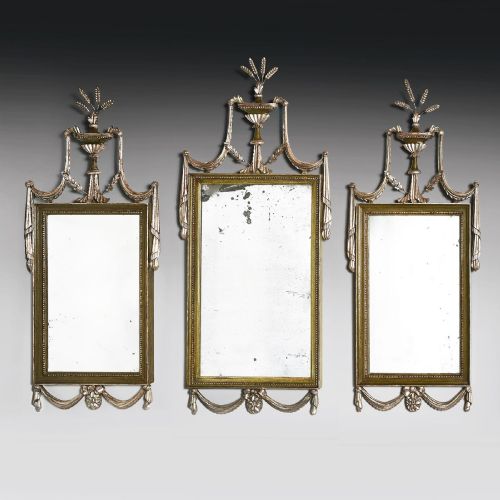
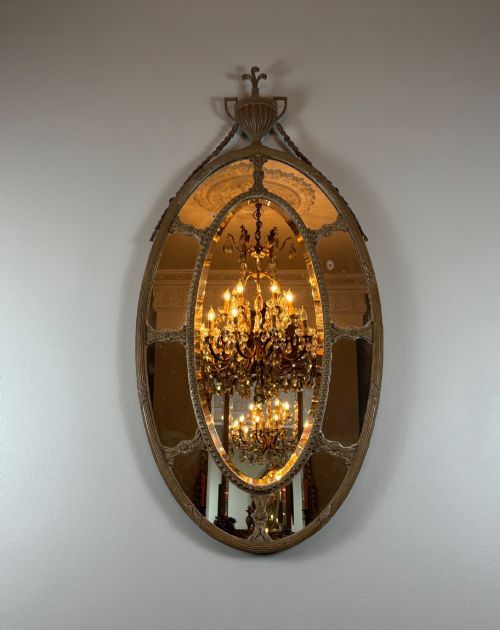
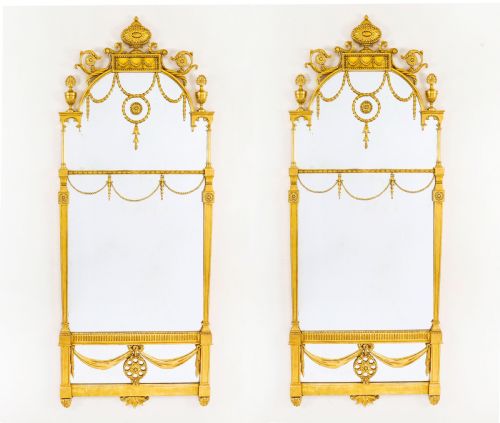


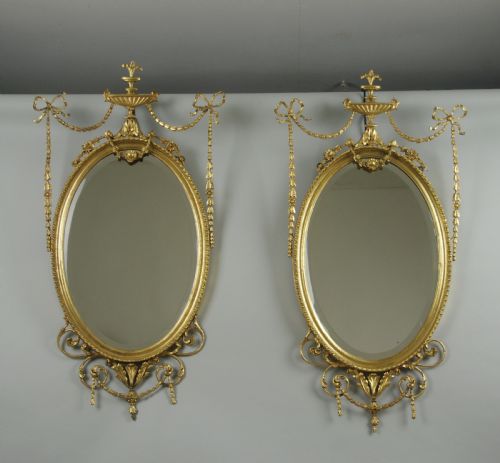


Neoclassical Urn Crest Mirror
These neoclassical urn crest mirrors bring classical symmetry and refined architectural motifs directly into the room, offering a focal point that anchors any interior.
Neoclassical Urn Crest Mirror
A neoclassical urn crest mirror combines classical architectural proportions with the distinctive decorative presence of an urn finial at the top. These pieces appear frequently across the nineteenth century, drawing heavily on Adam revival and Regency revival designs.
The selections span wall mirrors and larger overmantel mirrors shaped in oval and rectangular formats. Makers of the Victorian and Edwardian eras utilised these classical vocabulary elements extensively to create formal decorative statements.
Origin points range from British workshops to French ateliers, with Swedish examples also appearing in mahogany and gilded wood. Most pieces encountered on this page date from the nineteenth century, including specific periods around eighteen eighty and eighteen ninety.
Materials and Construction Techniques
Carved giltwood and composition gesso form the primary surface treatments for these mirrors, providing a rich metallic sheen through applied gold leaf. Craftsmen built the structural foundations from timber such as wood and ebonised wood, shaping complex relief ornament along the frames.
Mirror glass plates are set within rebated frames, often accompanied by border glass sections or delicate swags. Artisans combined traditional wood carving with moulded composition details to achieve the crisp classical swags, urns, and foliate scrolls characteristic of the style.
Some nineteenth-century makers packed their mirror frames with old newspaper clippings for padding, leaving tiny historical time capsules behind the glass.
Distinguishing Quality and Craftsmanship
The finest examples display crisp, hand-carved relief work where the gesso and giltwood details retain sharp definition and depth. Lesser pieces rely more heavily on heavy composition mouldings that can appear soft or lack the sculptural precision seen in master workshops.
Proportion and structural integrity separate standard production from superior craftsmanship, particularly in the delicate balance of the urn crest and surrounding swags. Original mercury or silvered mirror plates with genuine age patination also elevate the overall integrity of a piece.
Gillows Of Lancaster
The Neoclassical Urn Crest Mirror Glossary
- Urn crest
- A decorative finial shaped like a classical urn positioned at the apex of the mirror frame. This motif anchors the vertical symmetry of neoclassical design.
- Giltwood
- Timber that has been coated with a thin layer of gold leaf or gold paint. It provides a luminous surface that reflects interior candlelight and daylight alike.
- Composition
- A moulded mixture of whiting, resin, glue, and linseed oil pressed into decorative ornaments. It allowed makers to produce intricate swags and scrolls efficiently.
- Overmantel mirror
- A large horizontal or vertical mirror designed specifically to hang above a fireplace mantelpiece. These pieces often feature expanded dimensions to dominate the chimney breast.
- Parcel-gilt
- Woodwork that is partially gilded while other areas remain painted or stained in contrasting tones such as ebonised black. This technique highlights specific architectural details.
Neoclassical Urn Crest Mirror: Frequently Asked Questions
Where should I hang a neoclassical urn crest mirror?
These mirrors look best positioned above a fireplace mantel, a console table, or a principal sideboard where their vertical symmetry can be fully appreciated. Their architectural proportions draw the eye upward and help to reflect light across the room.
Ensure the wall fixings are robust enough to support the weight of a giltwood and gesso frame. Placing them opposite a window will maximise the natural light they bring into the space.
How do I identify an Adam revival mirror?
Adam revival pieces typically feature crisp neoclassical motifs such as urns, swags, paterae, and ribbon ties rendered in giltwood and gesso. The frames often exhibit oval or rectangular geometries influenced by eighteenth-century classical design.
Look closely at the surface finish and the sharpness of the moulded details to distinguish genuine nineteenth-century revival work from later reproductions. The presence of period timber behind the gilding further confirms the age.
Are these mirrors suitable for modern interiors?
The clean lines and classical symmetry of neoclassical mirrors allow them to sit comfortably alongside contemporary furniture and minimalist decor. They add a layer of historical texture and reflective depth without overwhelming a modern room.
Pairing an ebonised or giltwood mirror with neutral walls creates a striking visual contrast. Their traditional urn crests serve as sculptural art pieces in their own right.
What maintenance do giltwood frames require?
Giltwood and gesso surfaces require gentle dusting with a soft, dry brush to prevent the accumulation of dirt within the intricate carved crevices. Avoid using liquid cleaners, polishes, or damp cloths, as moisture can damage the delicate gold leaf and composition ornament.
Keep the mirrors away from direct sources of extreme heat or humidity to protect the underlying timber and prevent the gesso from cracking over time.