

Neoclassical Upholstered Armchairs
Neoclassical upholstered armchairs bring balanced proportions and classical restraint to a room, offering structured seating shaped by centuries of European design.
Neoclassical Upholstered Armchairs
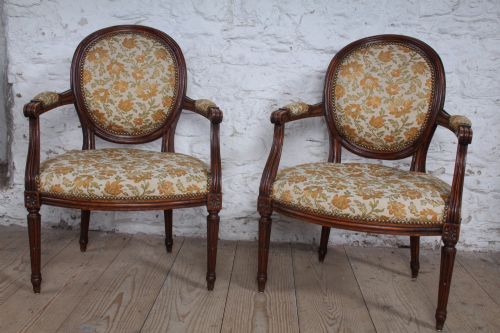
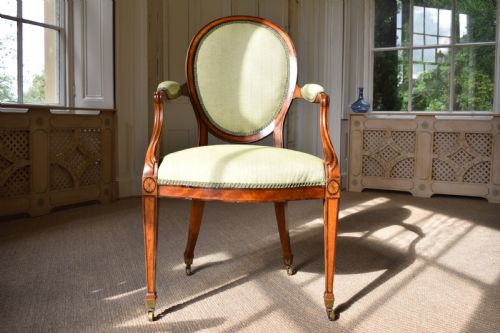
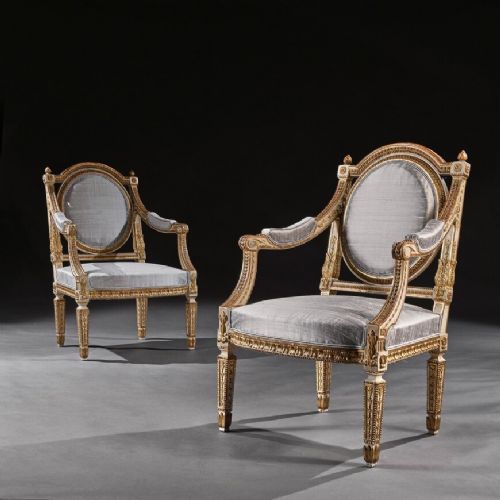
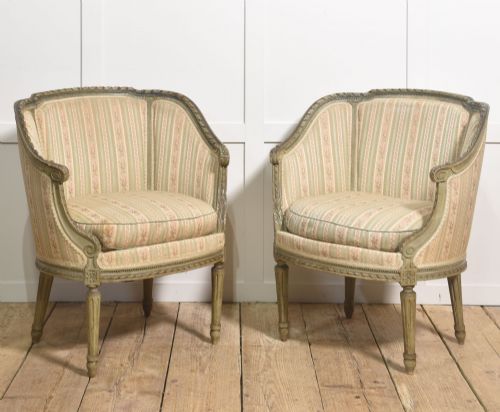
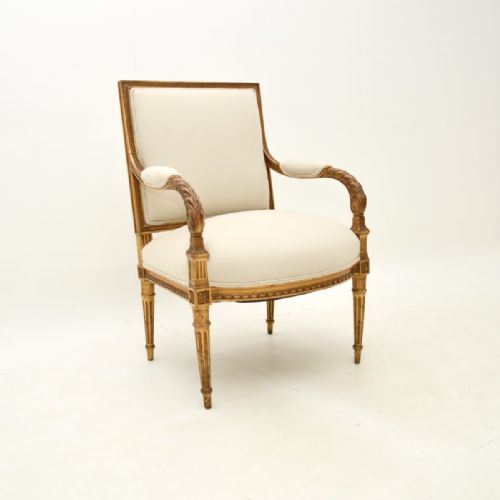
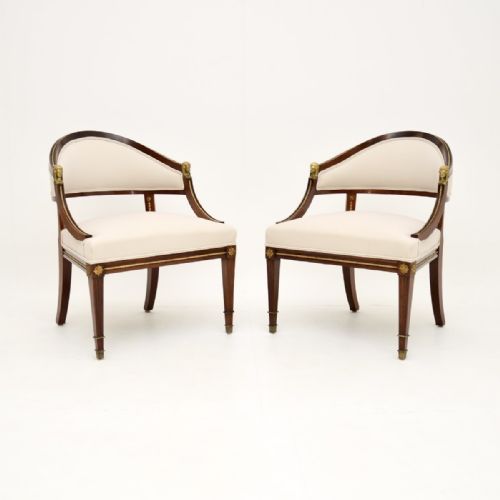
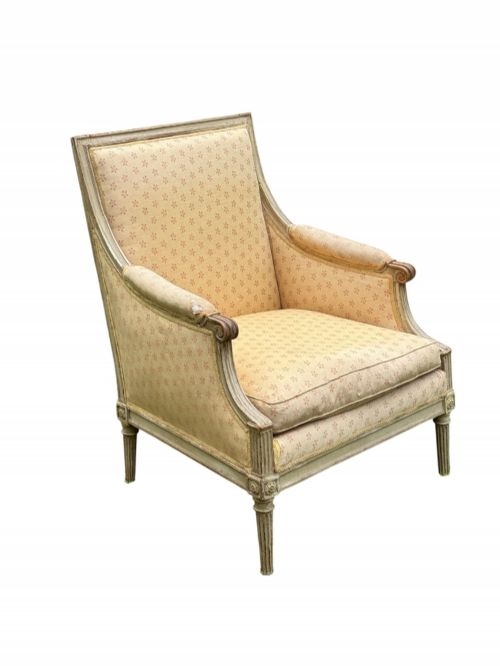
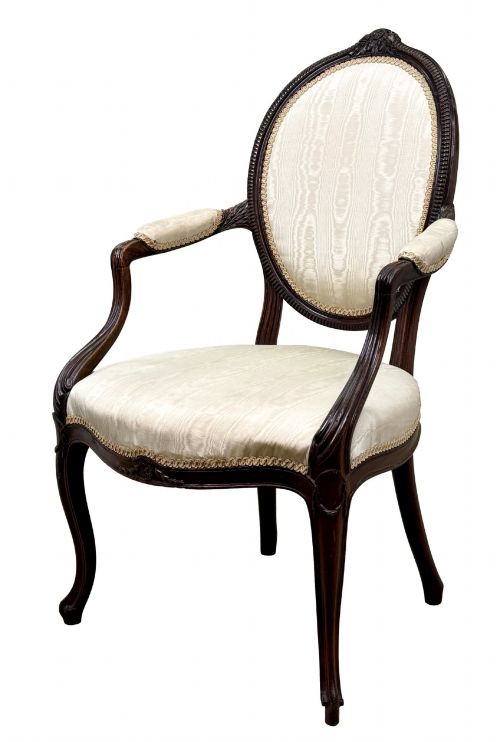
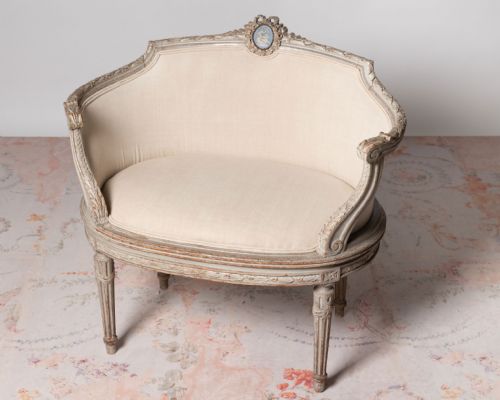
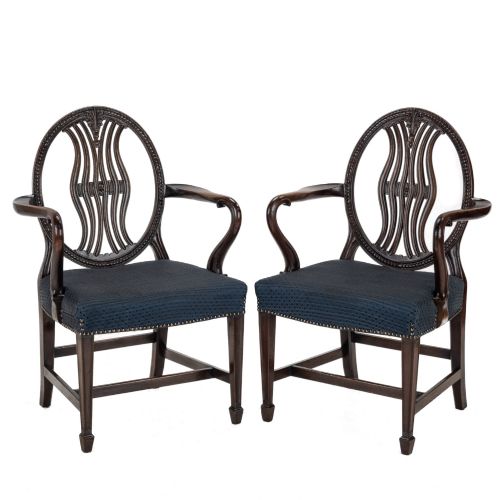
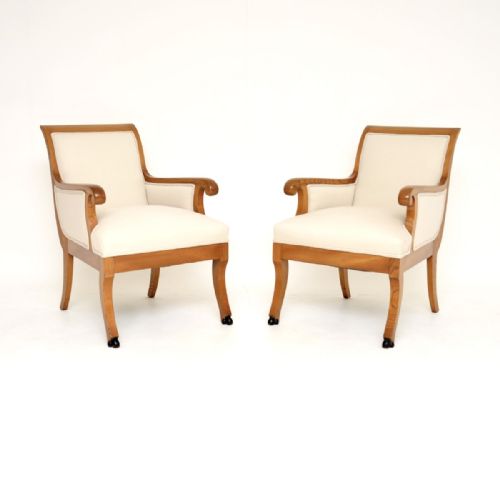
When searching for neoclassical upholstered armchairs, you encounter formal seating reflecting the revival of classical antiquity across European furniture design. These pieces span the eighteenth century through to early twentieth-century interpretations, drawing upon French, English, Swedish, and Italian traditions.
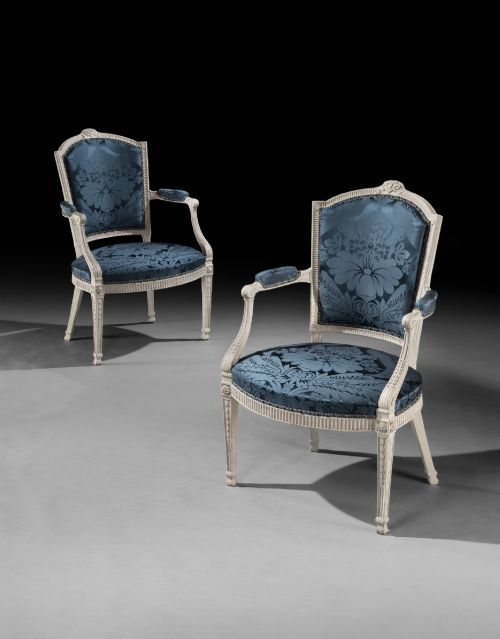
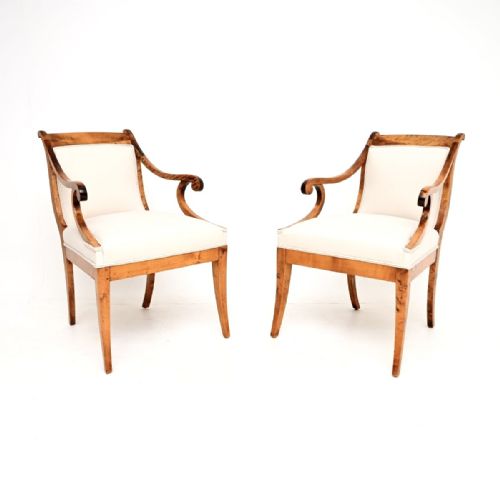
The inventory on this page contains numerous pairs and suites alongside individual chairs, showing forms such as open armchairs, tub chairs, and wing armchairs. You will find them constructed in varied regional idioms, from Swedish mahogany and birch to English satinwood and carved continental giltwood.
Origin periods extend from the eighteenth century through the nineteenth century and into the early twentieth century, incorporating George III, Louis XVI, Directoire, and Biedermeier stylistic influences. Many examples demonstrate the enduring popularity of classical revival movements in domestic interiors.
Construction and Materials
Framewoks rely on solid hardwoods such as mahogany, walnut, satinwood, elm, and birch, selected for stability and grain figure. Carved elements receive surface treatments including paint, parcel gilding, or polished clear finishes to accentuate the carved architectural details.
Upholstery techniques secure textiles directly to the frame, utilising traditional stuffing materials beneath outer coverings of fabric, silk damask, velvet, and tapestry needlepoint panels. Brass hardware frequently fastens or accents structural joints and decorative mounts.
Several Swedish pieces showcase solid elm and birch, proving that northern forests contributed handsomely to classical revival curves.
Quality and Craftsmanship
Quality rests upon the crispness of hand-carved detail in the wooden frames, where fluted legs, rosettes, and paterae show the hand of a skilled maker. Finer examples maintain structural integrity in the joinery of the arms and legs without relying on excessive secondary reinforcement.
The selection of primary timbers and the precision of applied finishes, such as layered gesso under gilding or hand-mixed paint, distinguish exceptional pieces. Originality of the frame construction relative to its period remains a primary factor in distinguishing workshop standards.
Henri Jacob
The Neoclassical Upholstered Armchairs Glossary
- Giltwood
- Wood that has been coated with fine gold leaf over a prepared gesso ground. This finish appears frequently on formal French and Italian seating.
- Parcel Gilt
- A decorative technique where selected carved details are gilded while the remaining timber surface shows paint or polished wood. It highlights specific architectural motifs.
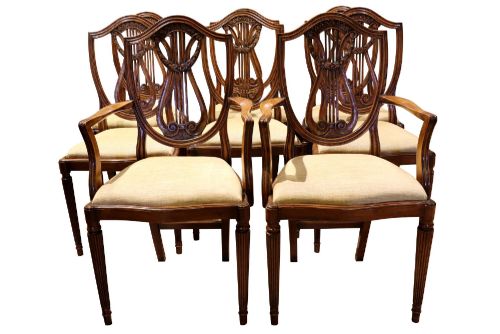
- Lyre Back
- A chair backrest shaped in the outline of a classical lyre instrument. This motif is characteristic of late eighteenth-century and Regency dining and parlour seating.
- Biedermeier
- A Central European style spanning the nineteenth century prioritising clean lines, domestic comfort, and the natural grain of timbers like birch and mahogany over ostentatious ornamentation.
Neoclassical Upholstered Armchairs: Frequently Asked Questions
How do I identify a Swedish neoclassical armchair?
Swedish neoclassical pieces typically feature lighter native timbers such as birch and elm, combined with restrained geometric carving and pale painted finishes. They reflect a distinct Scandinavian interpretation of continental classical styles.
These chairs often display simpler lines than their French or Italian counterparts, prioritising functional elegance and bright tonal qualities suited to northern interiors.
What is the difference between Louis XVI and George III styles?
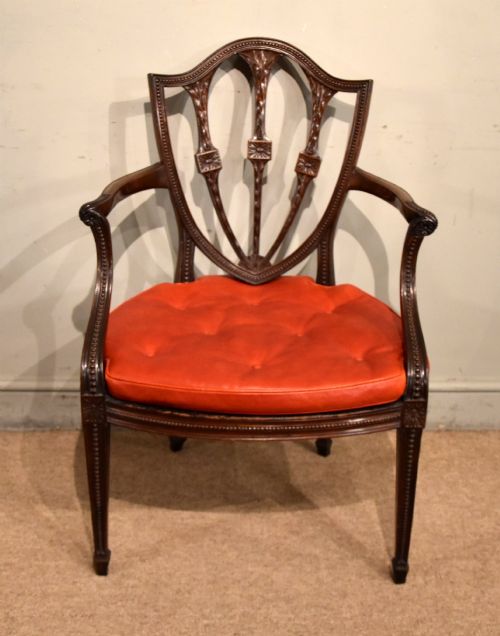
Louis XVI seating originates in France and generally exhibits rectilinear geometry, fluted cylindrical legs, and classical motifs like acanthus leaves and ribbons. English George III furniture draws on parallel classical inspirations but often incorporates mahogany timber, shield backs, or spade feet.
Both styles share an archaeological interest in ancient Rome and Greece, yet they express these classical ideals through the distinct craftsmanship traditions of their respective countries.
How should I care for antique upholstered chairs?
Protect antique frames and textiles by placing chairs away from direct sunlight and maintaining stable indoor humidity levels. Dust carved wooden surfaces gently with a dry, soft cloth.
Consult a specialist restorer before undertaking any intervention on historic upholstery or frame finishes to preserve the original materials and structural integrity.
Are these chairs suitable for daily seating?
Many of these chairs were designed for formal reception rooms or parlours rather than heavy lounging, though sturdy hardwood frames provide reliable daily support. Assessing the internal webbing and padding helps determine their current functional capacity.
Lighter open armchairs function well at desks or in secondary seating areas where their upright proportions can be fully appreciated.