

Antique Gold Open Armchairs
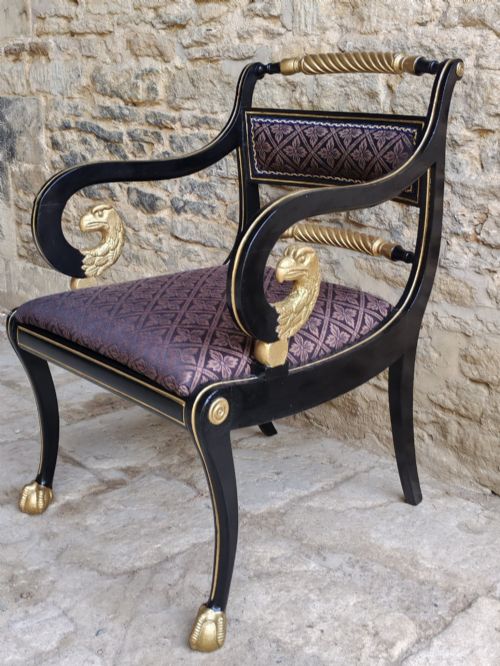
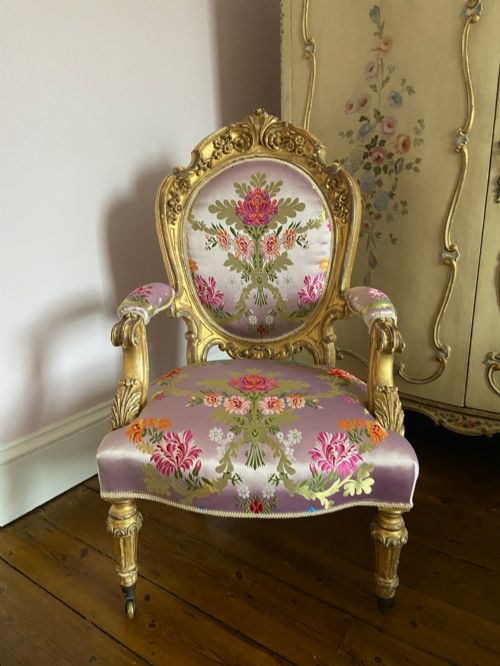
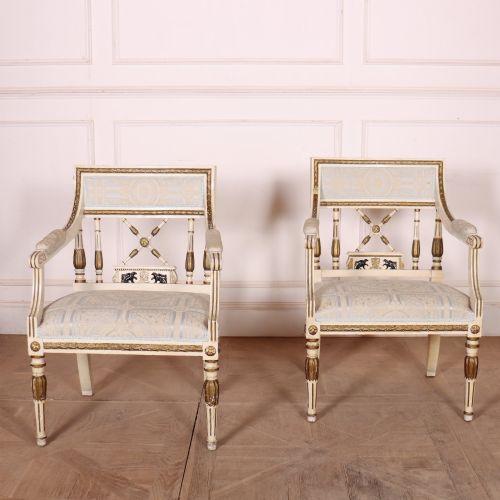
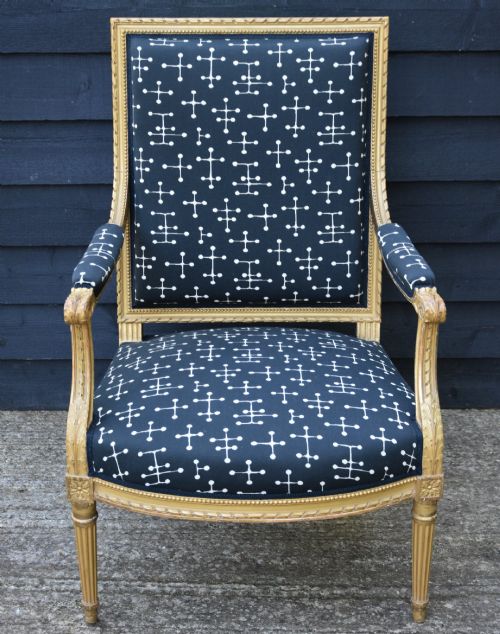
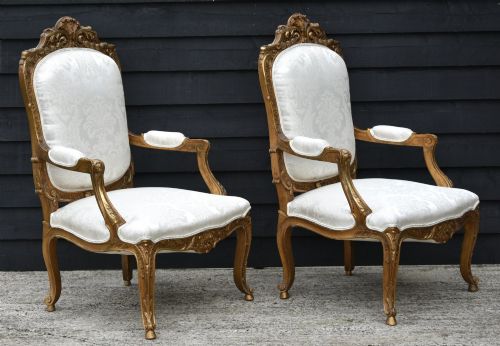
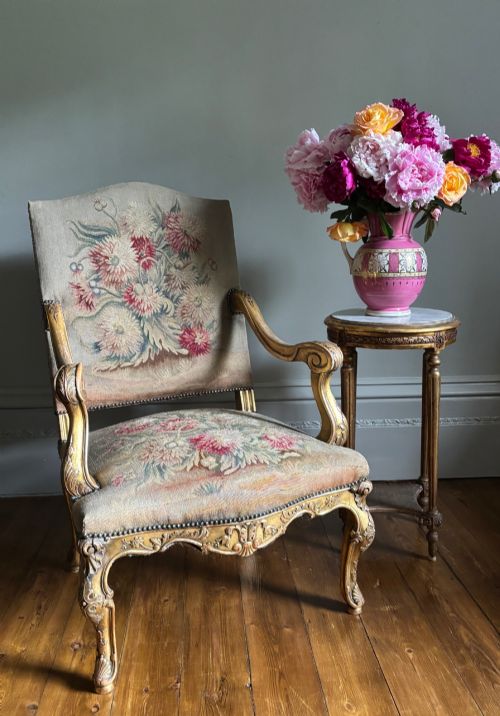
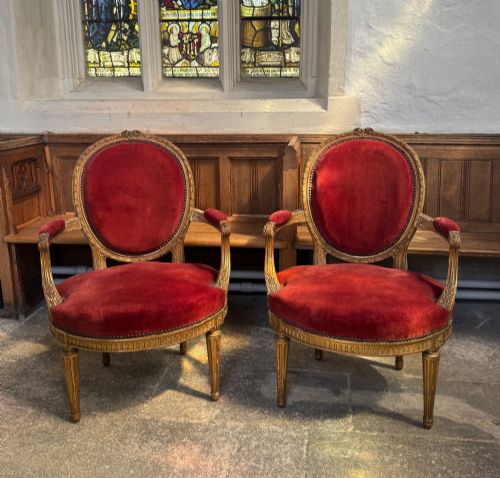
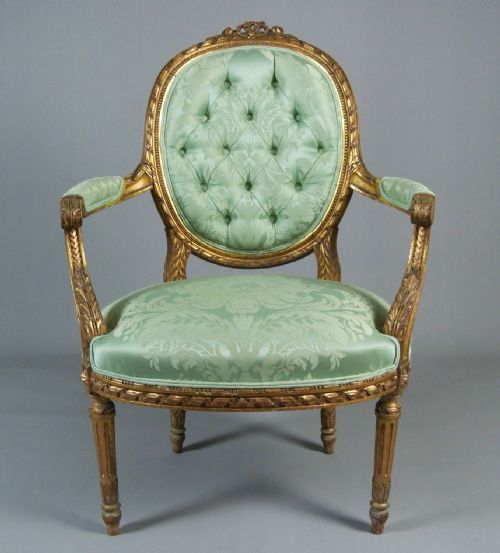
These antique gold open armchairs bring giltwood frames and upholstered seats directly into drawing rooms and libraries with period presence.
Antique Gold Open Armchairs
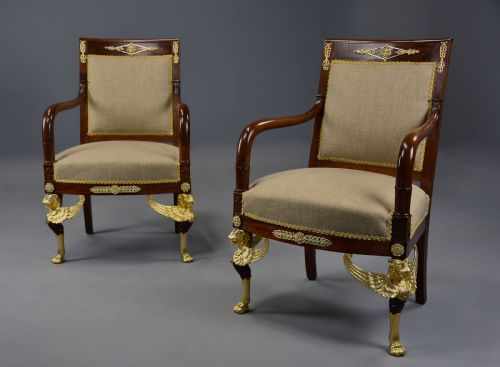
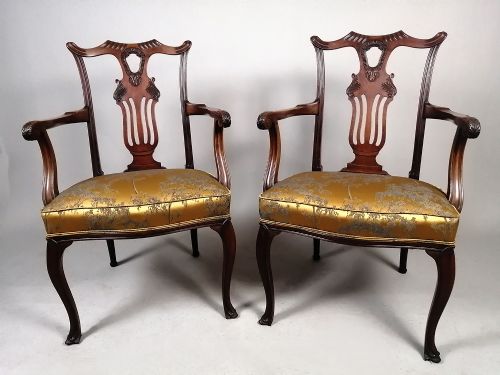
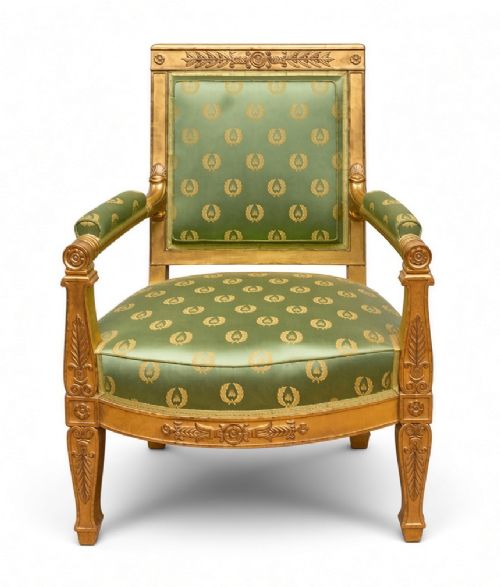
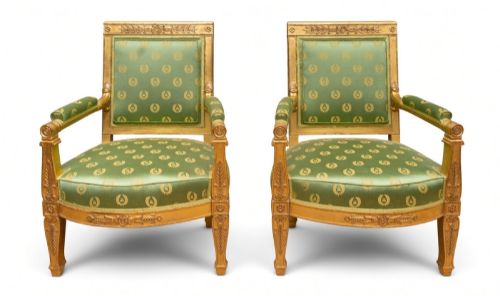
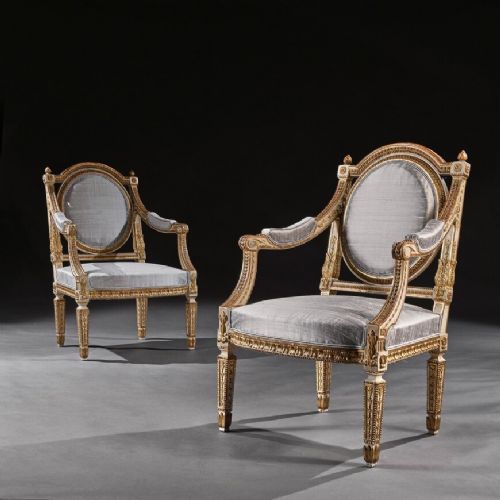
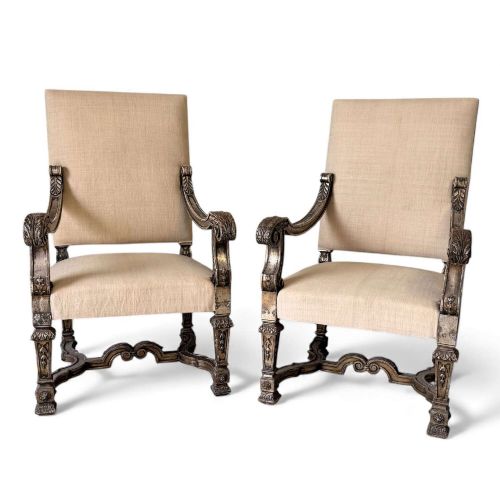
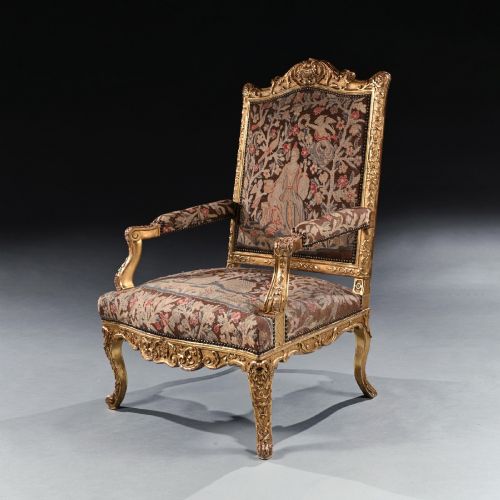
When buyers search for antique gold open armchairs, they look at seating built with exposed wooden frames finished in giltwood or gilt paint, featuring open sides rather than upholstered arms. The selection here spans the eighteenth, nineteenth, and early twentieth centuries, drawing heavily on French stylistic influences such as Louis XVI, Régence, and Empire alongside English Georgian and Regency designs.
The most common form met on this page is the French fauteuil or salon chair from the nineteenth century, often produced in revival styles that mimic earlier royal courts. Alongside these sit English library chairs and occasional throne or fireside seats, constructed from materials like beech, mahogany, and walnut beneath the characteristic gold leaf or gilded finish.
These chairs served primarily as drawing room furniture, positioned for conversation rather than heavy lounging, which accounts for their relatively upright posture and decorative carving. Upholstery varies across the pieces, with many examples featuring silk fabric, velvet, or traditional textile coverings suited to formal interiors.
What varies in quality
The depth and crispness of the wood carving distinguish finer frames from simpler production pieces, particularly where acanthus leaves, scrollwork, or floral motifs adorn the crest rails and arm supports. Hand-carved detailing executed by skilled hands retains sharp edges and natural movement, whereas mass-produced or later revival examples can appear softer and more uniform.
The integrity of the underlying gilding and timber construction determines the longevity of each chair, with original gold leaf patinating differently over centuries compared to modern metallic paints. Frames that remain rigid at the joints without structural wobble demonstrate superior preservation of the original joinery.
Jacob-Desmalter·Thomas Chippendale·Blaise Maucuy·Holland & Sons
The Antique Gold Open Armchairs Glossary
- Giltwood
- Wood that has been coated with gold leaf or gold dust over a prepared ground. This finish provides the characteristic metallic gleam seen on formal period seating.
- Fauteuil
- A French open-arm armchair with upholstered back and seat and exposed wooden armrests. These chairs were designed for formal reception rooms.
- Bergère
- An enclosed upholstered armchair with padded sides set into the wooden frame. It offers a more substantial seat than an open armchair.
- Gesso
- A plaster mixture applied to wood surfaces as a smooth base for gilding. It allows carvers to achieve fine detail before laying gold leaf.
- Régence
- A French transitional style spanning the early eighteenth century characterised by asymmetrical curves and lively carving. It bridges the heavy Louis XIV style and the later Rococo.
Antique Gold Open Armchairs: Frequently Asked Questions
How do I identify French revival styles?
French revival styles from the nineteenth century replicate eighteenth-century royal aesthetics, incorporating neoclassical straight tapered legs or sweeping Rococo curves. Makers during this period drew inspiration from earlier reigns to satisfy Victorian tastes for ornate seating.
Examining the construction methods and wear on the gilt surface helps distinguish original eighteenth-century pieces from later nineteenth-century interpretations.
Where were these chairs placed?
These chairs were traditionally arranged around the perimeter of formal salons, drawing rooms, and libraries where guests gathered for conversation. Their decorative backs and gilded frames made them visual elements of the room's overall interior scheme.
In modern spaces, they function well as occasional seating in living areas or as accent pieces in bedrooms.
What woods lie beneath the gilding?
Makers utilised dense hardwoods such as beech, mahogany, and walnut to construct the structural frames of these chairs. Beech was particularly favored for giltwood furniture because it accepts the gesso and gold leaf preparation evenly.
Mahogany and walnut were often left exposed in non-gilded sections or utilised for structural strength in load-bearing components.