
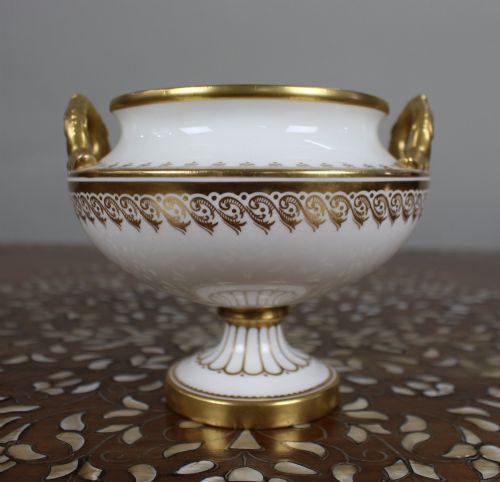

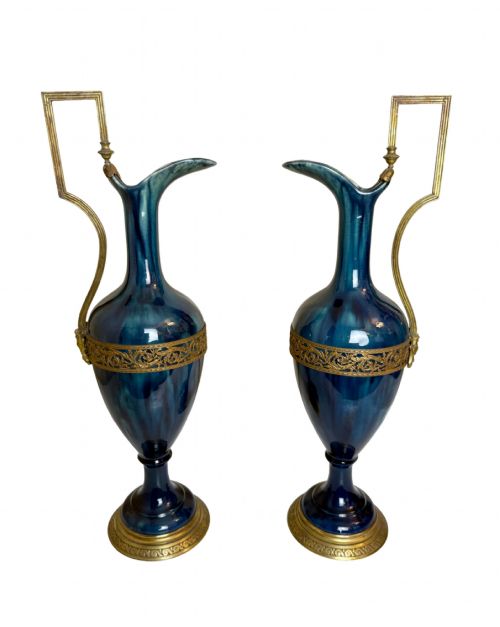
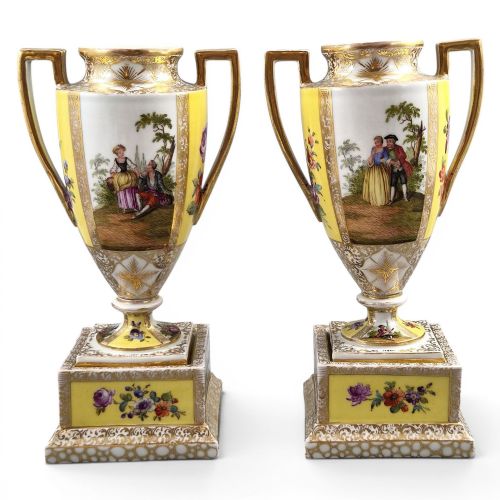


Neoclassical Porcelain Vase
A neoclassical porcelain vase brings solemn symmetry and classical restraint to a room, drawing on ancient forms translated through Georgian, Victorian, and continental hands.
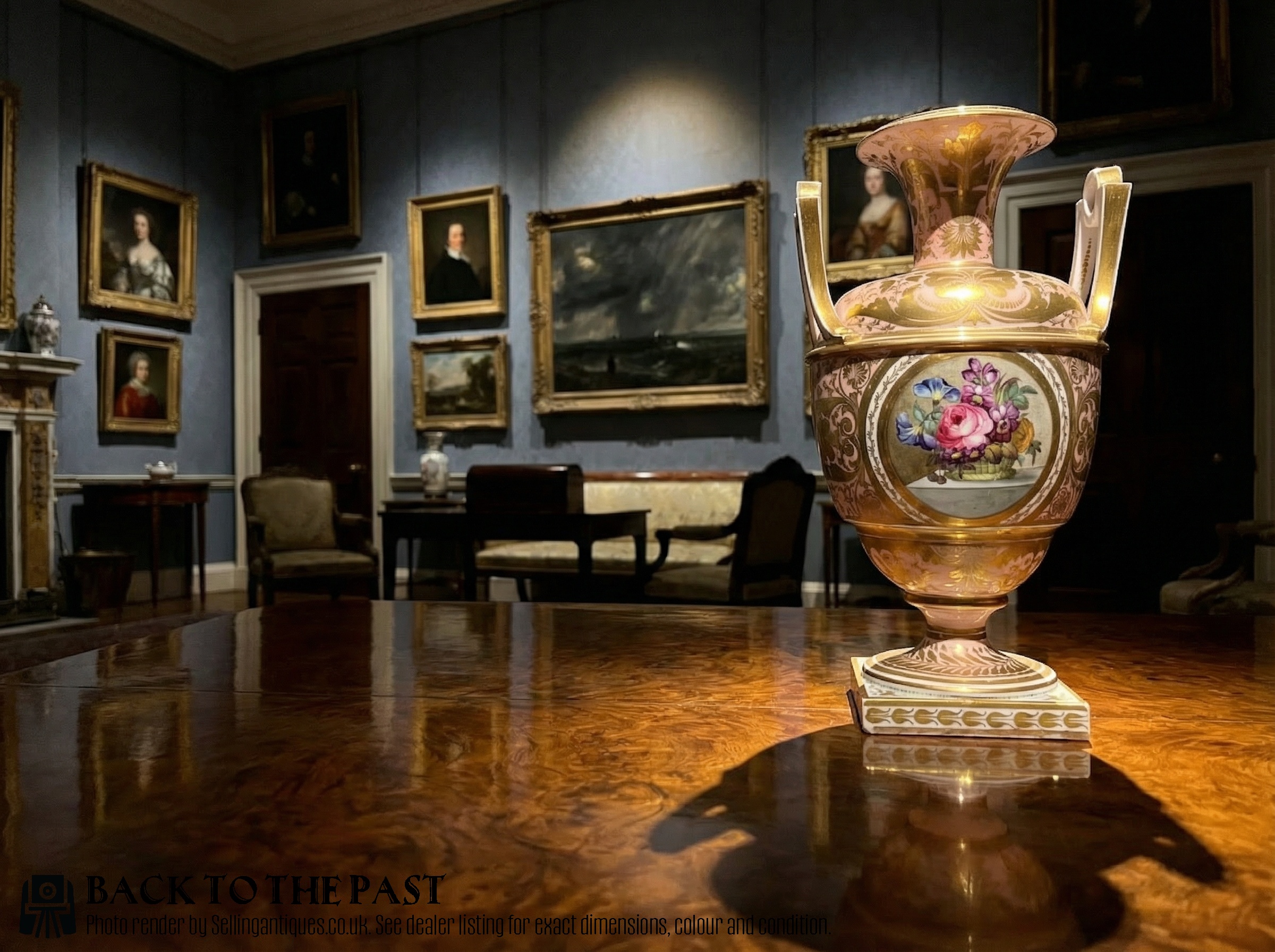
Neoclassical Porcelain Vase
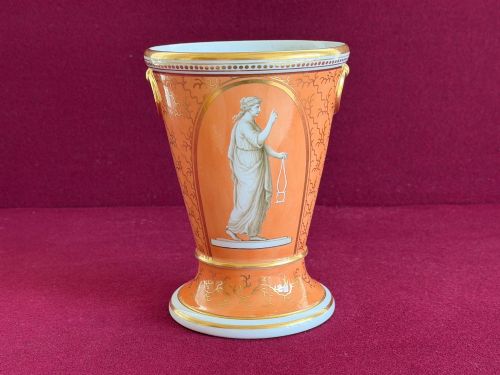
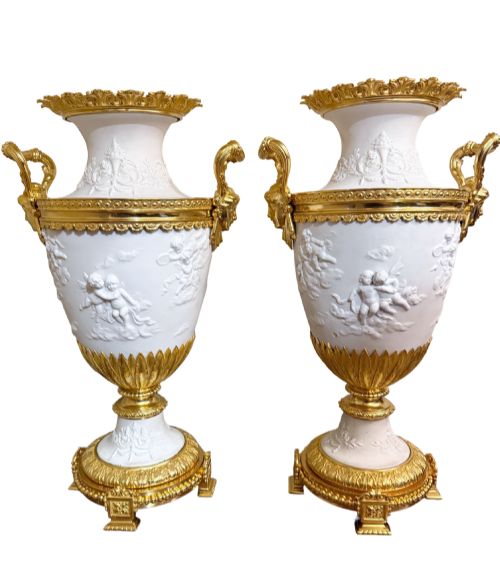
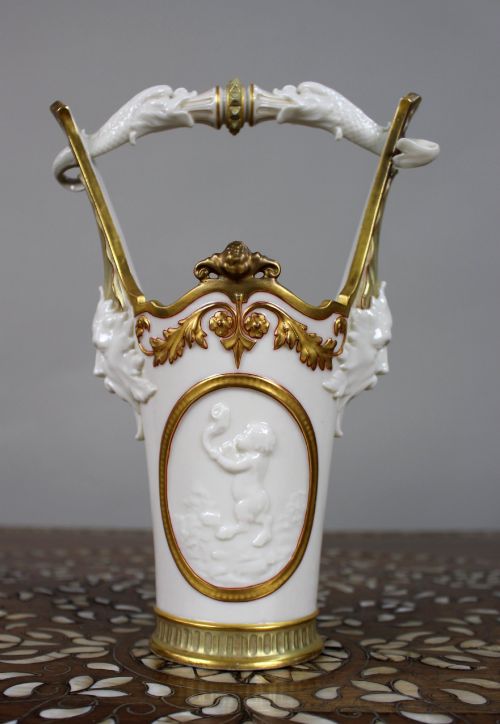
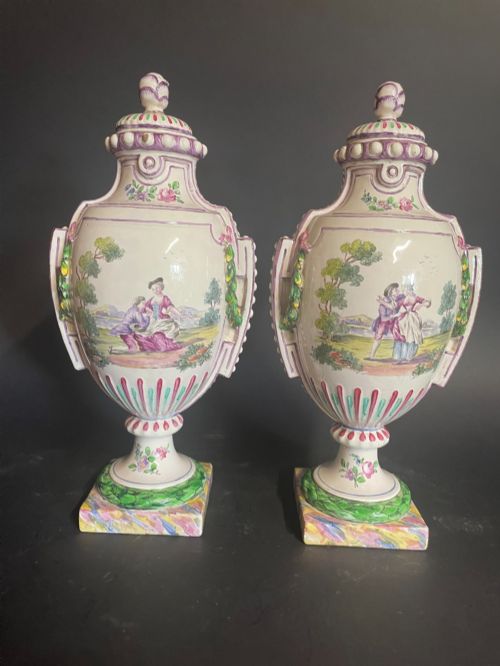
A neoclassical porcelain vase takes the austere geometry and classical ornament of antiquity and renders it in fired clay. These pieces appear in varied forms, ranging from towering lidded urns and campana shapes to delicate jardinieres, ewers, and converted table lamps.
The objects span from the Georgian period through the nineteenth century, encompassing English works from Worcester and Derby alongside continental productions from Vienna, Sevres, Sceaux, and Dresden. Buyers frequently encounter symmetrical pairs designed as mantel ornaments or centrepieces.
Makers adapted classical motifs such as bas-reliefs, painted figurative scenes, and foliate scrolls onto white, blue, or royal yellow grounds. The resulting vessels balance monumental architectural presence with the refined touch of hand-painted decoration.
How they were made
Makers shaped the body from fine porcelain or faience, often building up surfaces with enamel paints and delicate gilding. Some pieces incorporate applied white bas-reliefs on contrasting blue grounds to achieve a sculptural, cameo-like effect.
Metal mounts in gilt bronze and ormolu frequently frame the porcelain bodies, adding handles, bases, and rims that reinforce the classical silhouette. Skilled artisans combined high-temperature ceramic firing with precise metalwork and hand painting.
Some nineteenth-century makers faithfully copied ancient Roman bronze shapes in porcelain, ensuring households could display antiquity without excavating Pompeii.
What varies in quality
Quality rests in the crispness of the porcelain modelling and the depth of the hand-painted scenes. Superior pieces exhibit fine brushwork in figures and florals, alongside securely fitted ormolu or gilt bronze mounts that complement rather than crowd the ceramic.
The handling of the glaze and gilding distinguishes standard production from exceptional work. Rich gold leaf application and subtle enamel shading elevate an urn from a simple decorative vessel to a masterclass in nineteenth-century ceramic art.
Flight and Barr·Royal Worcester·Sceaux Faience·Helena Wolfsohn Dresden·Capodimonte·Wedgwood·Royal Vienna·Sevres·Derby
The Neoclassical Porcelain Vase Glossary
- Campana urn
- A vessel shaped like an inverted bell, featuring a flaring rim and a stepped foot derived from ancient Roman bronze models. This silhouette is common in nineteenth-century decorative urns.
- Gilt bronze
- An alloy of copper and zinc finished with a layer of gold amalgam, also known as ormolu. It provides structural mounts and decorative trim for porcelain bodies.
- Jardiniere
- An ornamental pot or container designed to hold plants or floral arrangements. In porcelain, these pieces often match the decorative scheme of companion urns.
- Bas-relief
- A sculptural technique where figures and ornaments project slightly from a flat background. This method appears on blue jasperware vessels to create stark white classical friezes.
- Garniture
- A set of three or more matching vases or urns designed to be displayed together on a mantelpiece or sideboard. These matched groups create a balanced decorative arrangement.
Neoclassical Porcelain Vase: Frequently Asked Questions
What is a neoclassical porcelain vase?
A neoclassical porcelain vase is a decorative vessel inspired by ancient Greek and Roman art, featuring symmetrical forms, classical motifs, and hand-painted scenes.
These pieces were produced by major European and English potteries during the Georgian and Victorian eras to bring formal elegance to domestic interiors.
How were these urns used historically?
Historically, large lidded urns and garnitures served as prominent decorative centerpieces on mantelpieces, sideboards, and pier tables.
Smaller examples functioned as jardinieres for holding plants or were later adapted into table lamps during the nineteenth century.
How do I care for a porcelain and ormolu vase?
Clean the porcelain surface gently with a dry or very slightly damp soft cloth to protect delicate enamel work and hand painting.
Avoid using chemical polishes on the gilt bronze or ormolu mounts, as abrasive cleaners can strip the historical gilding.
How do I tell Vienna porcelain from Sevres?
Vienna pieces from the nineteenth century often feature rich cobalt grounds, classical figures, and distinctive beehive or shield marks underneath.
Sevres porcelain typically displays refined soft-paste bodies, intricate jewelled or gilded details, and royal interlaced mark ciphers.