


Neoclassical Pedestal Bowl
A neoclassical pedestal bowl brings ancient architectural balance and classical form directly to a table, combining antique dignity with functional display.
Neoclassical Pedestal Bowl
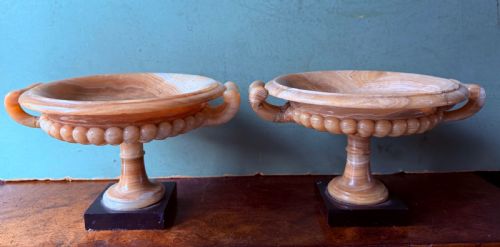
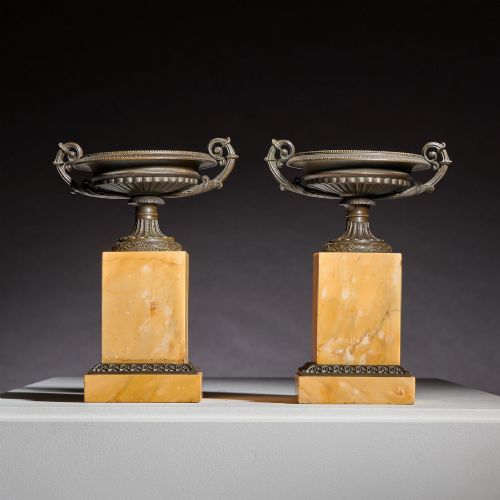
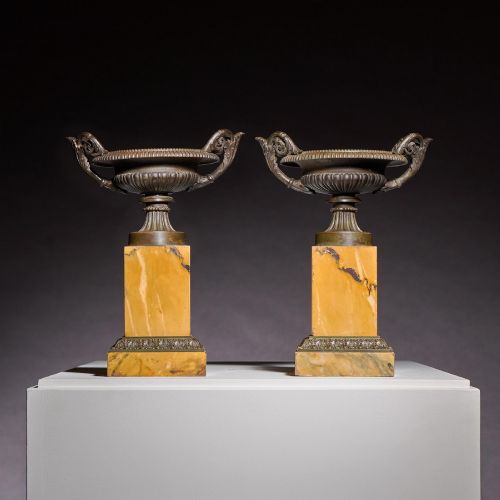
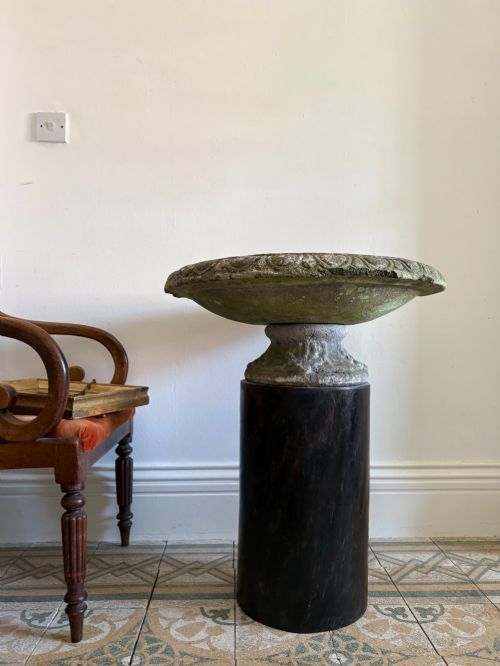
A neoclassical pedestal bowl draws upon ancient Greek and Roman design, presenting a shallow or deep vessel elevated on a stem and foot. You will frequently encounter nineteenth-century interpretations, particularly French Empire and Italian Grand Tour souvenirs designed for travellers.
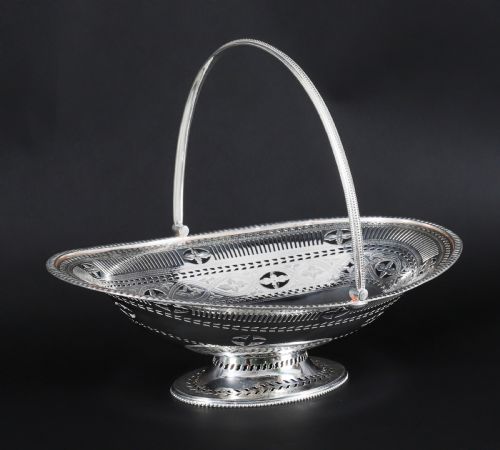
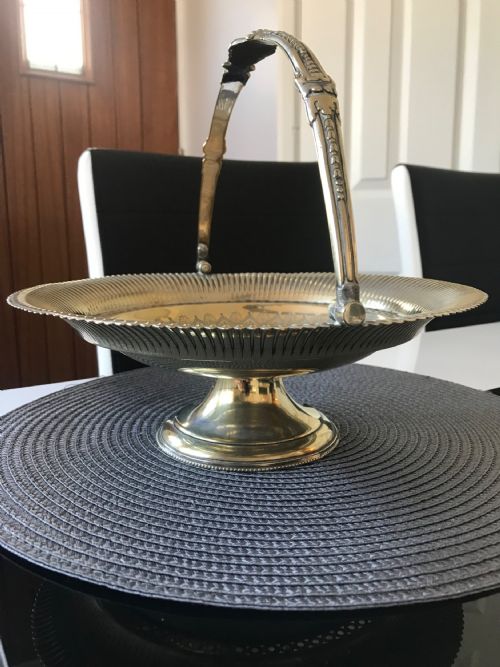
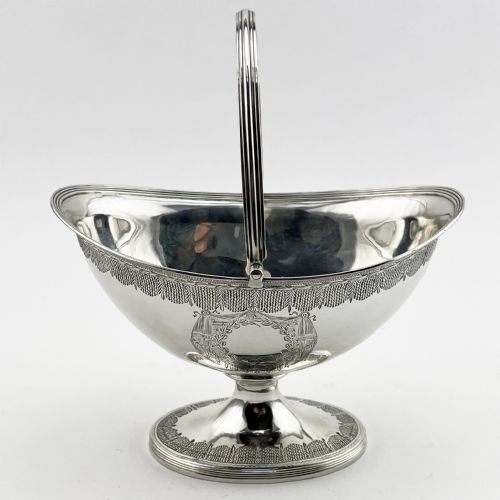
The form encompasses decorative tazze, fruit baskets, and comports executed in enduring materials. These pieces range from intimate library tazze to monumental carved stone vessels meant for grand interiors.
Makers adapted classical motifs such as acanthus leaves, egg-and-dart borders, and classical figures to suit nineteenth-century tastes. The resulting objects serve equally as centrepieces, fruit dishes, and sculptural decorative accents.
Materials and Manufacture
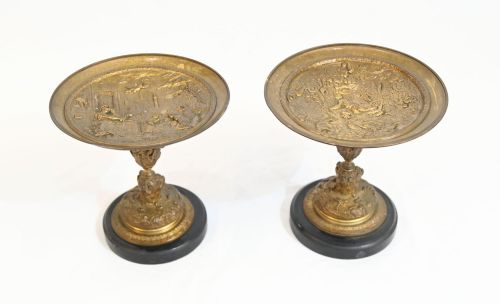
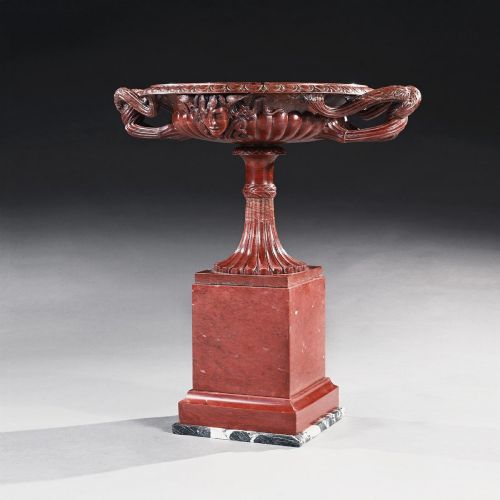
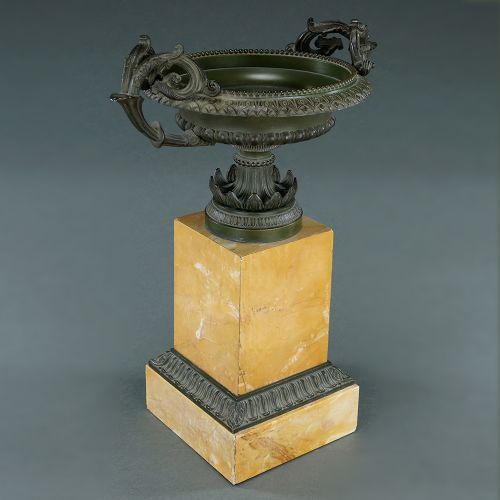
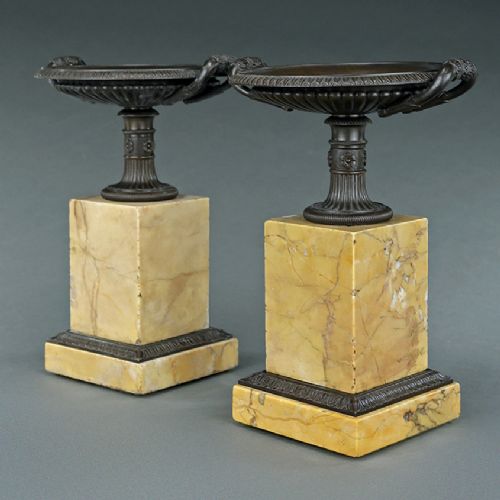
Foundry workers cast bronze, brass, and gilt bronze, often combining metals with contrasting stones such as Sienna marble, black marble, and rosso antico. Ormolu elements provide bright metallic highlights against patinated surfaces.
Lapidaries carved marbles and alabaster by hand, turning dense stone on lathes before applying fine surface polish. Silversmiths utilised sterling silver and silver plate over copper, employing piercing and chasing techniques to create delicate fruit baskets and sweetmeat dishes.
The selection includes Grand Tour souvenirs from Italy alongside French Empire and Victorian domestic serving forms.
Assessing Quality
Quality rests upon the crispness of the chasing in metalwork and the depth of carving in stone components. Superior examples display sharply defined classical ornament without softening or excessive smoothing from later polishing.
Henry Chawner·Benedetto Boschetti
The Neoclassical Pedestal Bowl Glossary
- Tazza
- A shallow bowl or vase mounted on a stem and foot, frequently used in classical antiquity and revival periods for display. Pluralised as tazze.
- Ormolu
- Gilt bronze produced by applying a finely ground high-carat gold-mercury amalgam to a bronze object and heating it to drive off the mercury. This technique creates a rich, durable golden finish characteristic of French Empire metalwork.
- Rosso Antico
- A deep red antique marble prized by Italian sculptors and lapidaries for its striking colour and dense structure. It appears frequently in Grand Tour table ornaments.
- Old Sheffield Plate
- A composite material formed by fusing a sheet of silver to a thicker copper base, common in eighteenth-century and early nineteenth-century baskets and dishes. Edges often reveal thin lines of exposed copper beneath the silver layer.
Neoclassical Pedestal Bowl: Frequently Asked Questions
What is a tazza?
A tazza is a shallow decorative vessel raised on a central pedestal and foot, resembling a wide cup or shallow dish. Originating from ancient drinking vessels, revival examples served as centrepieces, fruit dishes, or purely ornamental objects.
Craftsmen produced them in bronze, marble, silver, and plated metals, frequently decorating the rims with classical friezes and leaf motifs. Their elevated profile adds vertical interest to table settings and mantelpieces.
How do I style a pedestal bowl?
A pedestal bowl functions naturally as a focal point on a dining table, console, or sideboard, whether left empty to showcase its material or filled with fruit and seasonal foliage. Scale is the primary consideration; heavier stone and bronze pieces require sturdy support furniture.
Pairing bronze and marble tazze with complementary antiques enhances a traditional interior, while a single striking vessel introduces architectural rigour to a modern room. Smaller library tazze sit comfortably on desks or bookshelves.
How do I tell nineteenth century pieces apart?
Nineteenth-century pieces vary widely according to their regional origin, material composition, and the specific revival movement they represent. French Empire works typically feature bright gilt bronze and rigorous symmetry, whereas Victorian adaptations often incorporate silver plate and more eclectic ornamentation.
Italian Grand Tour productions focus heavily on carved stones and patinated bronzes that mimic excavated antiquities. Examining the construction of the base, the patina of the metal, and the geological type of the marble helps clarify the period of manufacture.