


Neoclassical Marble Clock
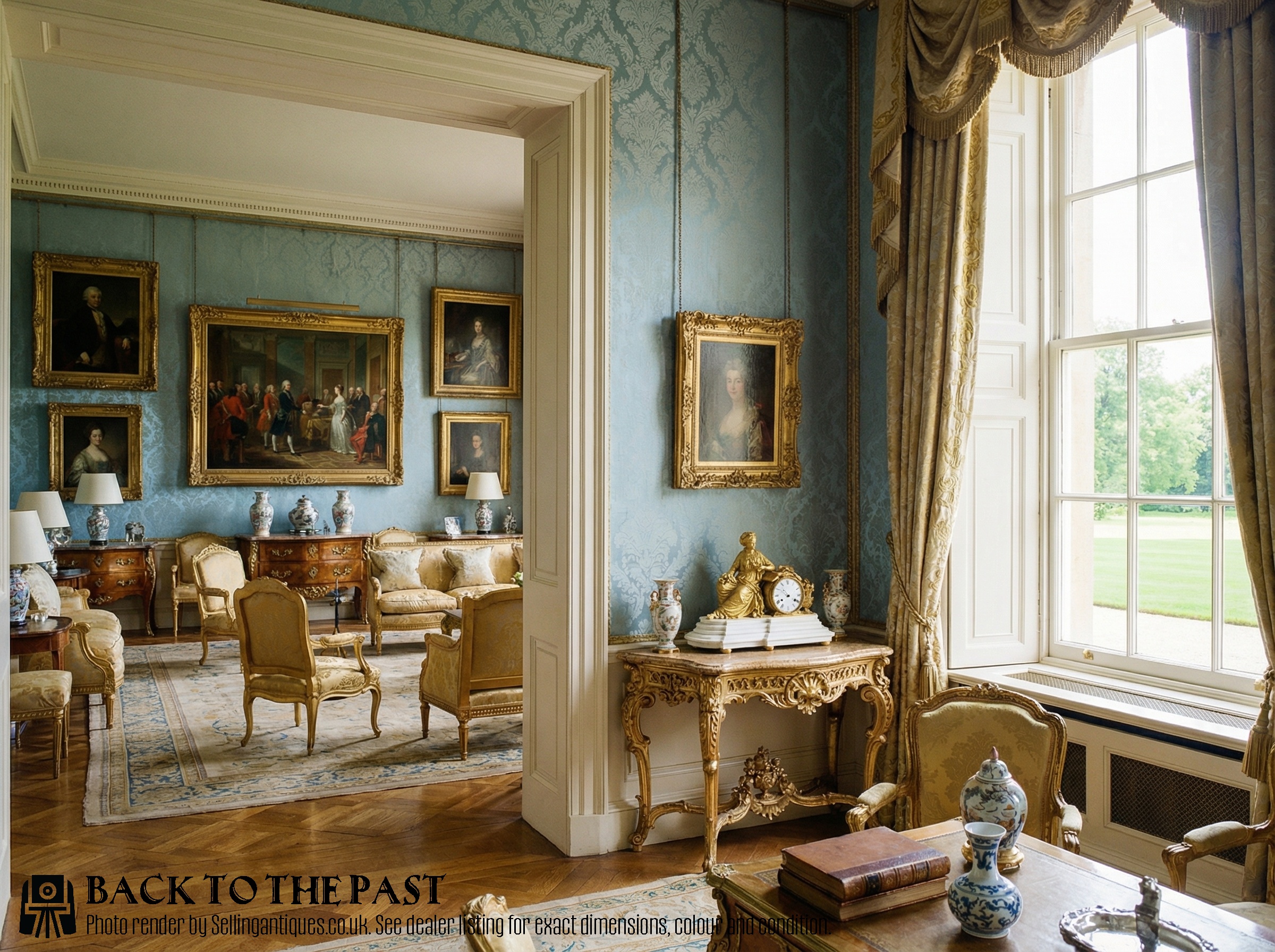
A neoclassical marble clock brings classical poise and heavy stone substance to a mantelpiece, rooted in eighteenth and nineteenth-century design.
Neoclassical Marble Clock
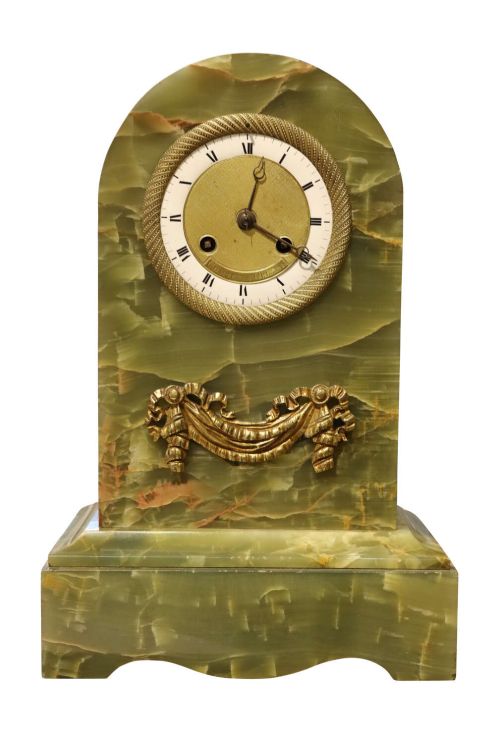
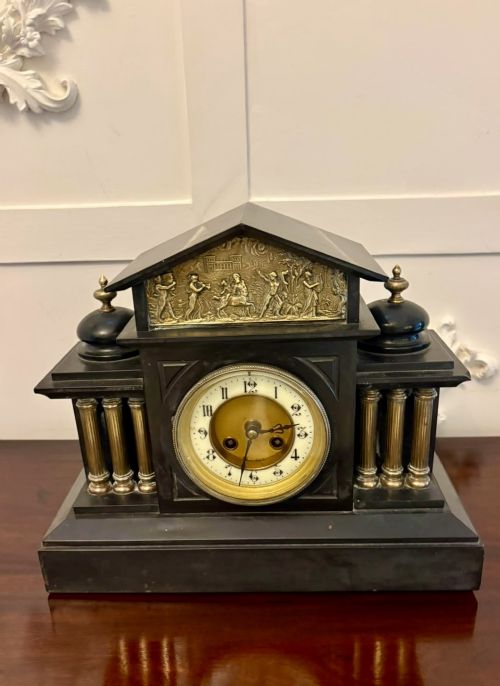
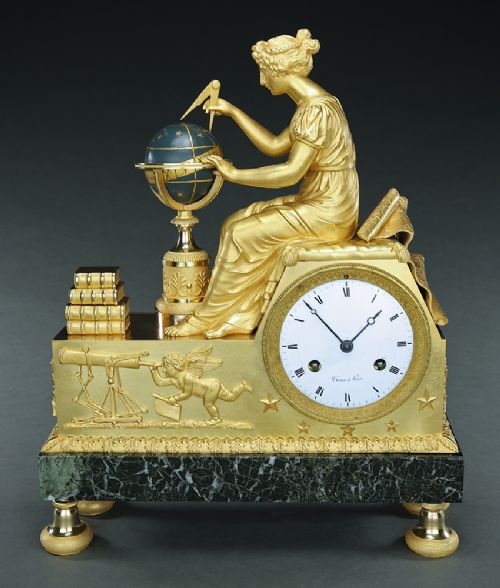
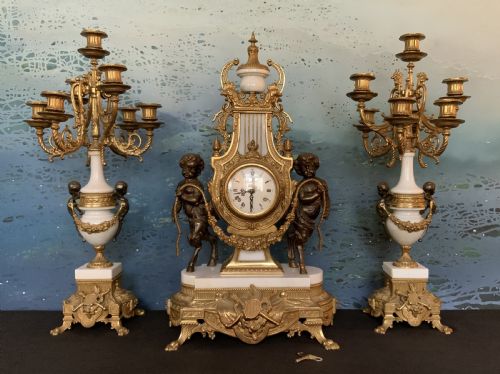
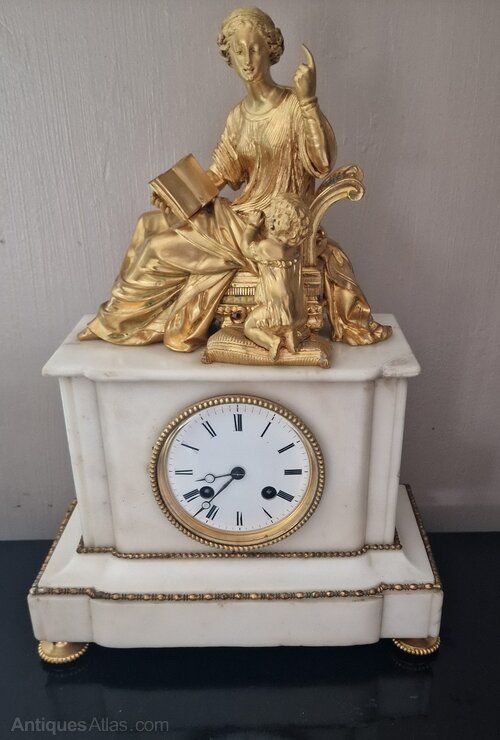
A neoclassical marble clock combines classical architectural forms with natural stone bodies, frequently appearing in white, black, green, pink, or sienna marble. You will often encounter mantel clocks and larger clock garniture sets that include matching candelabras or side urns.
Most examples originate from French workshops spanning the eighteenth, nineteenth, and early twentieth centuries, drawing heavily on Louis XVI and Empire styles. The designs range from simple portico clocks and urn shapes to elaborate lyre-shaped timepieces.
Makers and retailers housed movements inside stones carved into columns, architectural porticos, or classical urns. These pieces often measure sizable proportions and weigh heavily due to the dense combination of stone and metal mounts.

What varies in quality
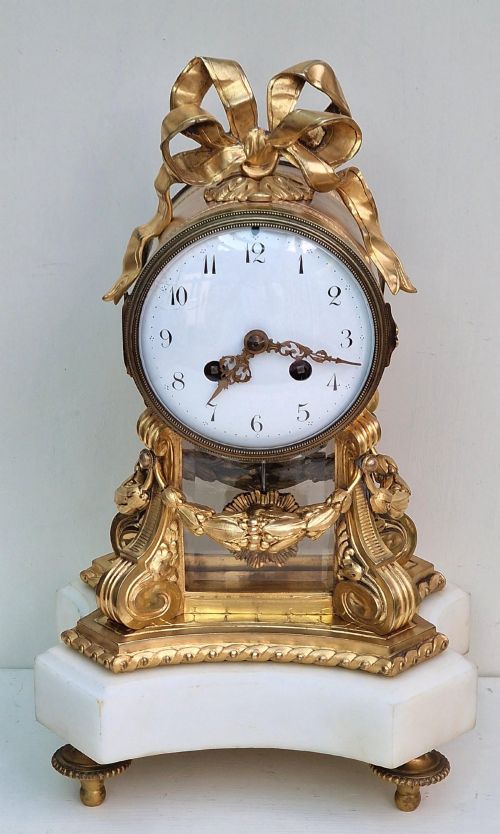
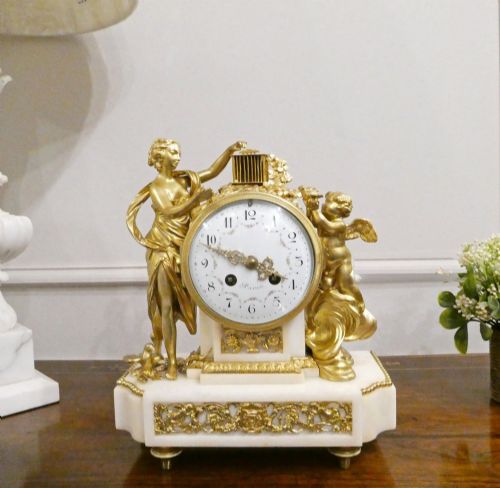
Quality rests in the crispness of the bronze or ormolu cast work and the depth of the hand-chasing on the metal mounts. Smoother, sharper detailing on floral swags and classical figures separates finer pieces from softer, later castings.
The selection of the marble itself dictates the grade of the piece, with richly figured sienna or uniform white marble commanding attention. The weight and thickness of the stone housing, alongside signed clockmaker movements, mark the upper tiers of production.
Neoclassical Marble Clock Retail Price Guide 2026
Typical asking prices for neoclassical marble clock among the pieces listed under this phrase on Sellingantiques today, from the lower quarter to the upper quarter. They describe what is for sale here now, not the wider market.
Mystery clocks suspend the pendulum visually in mid-air, baffling guests who hunt in vain for hidden rods.
Charles à Orléans·Berger·Louis Goret·Sacre·Remond·Baltazart·AD Mougin Paris·Ferdinand Berthoud·Reiche·Japy Freres
The Neoclassical Marble Clock Glossary
- Ormolu
- Gilded bronze, applied as a decorative mount to stone clock bodies. This technique involves using a mercury amalgam to bond gold to cast bronze.
- Garniture
- A set comprising a central clock flanked by matching decorative objects such as candelabras or urns. These sets are designed to balance a mantelpiece visually.
- Portico clock
- A timepiece suspended within an architectural frame supported by four or more marble columns. This form reflects classical temple architecture.
- Lyre clock
- A clock shaped like the ancient musical instrument, typically constructed from marble with ormolu stringing and mounts. The dial sits centrally within the curved frame.
- Movement
- The internal mechanical heart of the clock, comprising gears, springs, and escapements. Eight-day movements require winding weekly.
Neoclassical Marble Clock: Frequently Asked Questions
How do I wind a neoclassical marble clock?
Use the provided key to turn the winding arbors located on the enamel dial face. Take care not to over-wind the mainspring.
Ensure you stop winding the moment you feel firm resistance to protect the antique mechanical movement inside.
What is a clock garniture set?
A garniture set includes a central mantel clock accompanied by matching side pieces like candelabras or urns. These items share identical marble bodies and gilt bronze mounts.
They were designed to create a symmetrical display across a fireplace mantel or sideboard.
How do I identify the period of a marble clock?
Examine the style of the bronze mounts, the formulation of the enamel dial, and the signature stamped on the movement backplate. Louis XVI pieces display restrained classical geometry.
Later Victorian revivals often incorporate heavier proportions and machine-tooled elements that contrast with earlier hand-chased work.
Where should I place a heavy marble clock?
Position the clock on a sturdy, level piece of furniture capable of supporting considerable stone weight. Uneven surfaces can cause the pendulum to beat unevenly and stop the movement.
Keep the clock away from direct sunlight and damp environments to protect the marble polish and fire-gilt finish.