



Neoclassical Mahogany Storage Cabinet
A neoclassical mahogany storage cabinet brings architectural symmetry and warm timber tones to a room, offering refined storage grounded in classical design.
Neoclassical Mahogany Storage Cabinet
A neoclassical mahogany storage cabinet combines strict architectural lines with the rich grain of mahogany timber, forming a substantial storage piece for the home. These items appear across several distinct periods, ranging from the early nineteenth century through to twentieth-century revivals.
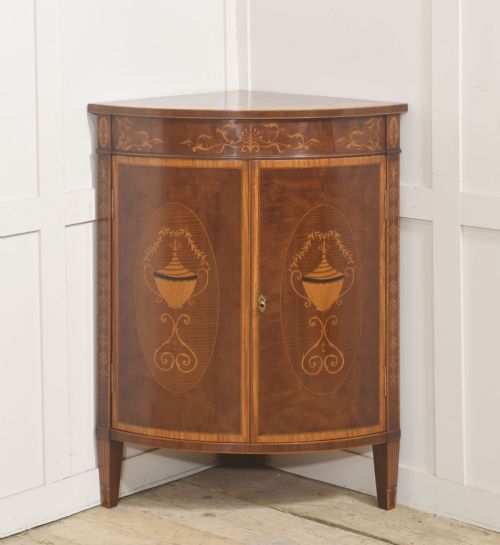
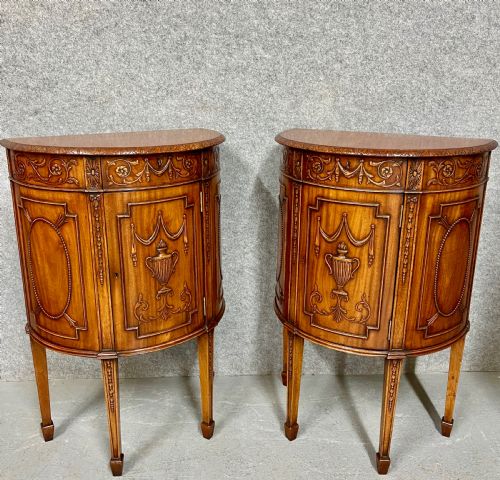
Buyers encounter various forms on this page, including demi-lune cabinets, corner units, and display credenzas. Pieces from the Sheraton Revival and Adam style traditions dominate the selection, bringing classical motifs and balanced proportions to interior spaces.
The objects serve practical storage needs while functioning as decorative focal points. Whether configured as a tall escritoire or a low console cabinet, each piece relies on disciplined geometry and restrained ornamentation.
Construction and Materials
Makers built these cabinets using solid and veneered mahogany over sturdy secondary timbers, applying satinwood and boxwood inlay to create delicate geometric borders and classical urn motifs. Brass mounts and handles provide metallic contrast to the deep brown wood.
Surface decoration frequently involves intricate marquetry or parquetry patterns, alongside ormolu mounts on French examples. Marble tops appear on specific continental forms, adding weight and a smooth contrasting texture to the timber base.
Neoclassical Mahogany Storage Cabinet Retail Price Guide 2026
Typical asking prices for neoclassical mahogany storage cabinet among the pieces listed under this phrase on Sellingantiques today, from the lower quarter to the upper quarter. They describe what is for sale here now, not the wider market.
Listings feature mahogany combined with satinwood inlay, boxwood, and marble across pieces dated from the early nineteenth to the mid-twentieth century.
Assessing Quality
Quality rests in the precision of the cabinetmaker's joinery and the crispness of the applied inlay work. Superior examples display tightly fitted door frames, smooth drawer movement, and well-matched mahogany veneer grains across the primary surfaces.
The refinement of brass hardware and the hand-carved detail of classical motifs distinguish finer output from standard production. Well-proportioned cornices and balanced marquetry panels elevate the architectural presence of the piece.
Edwards and Roberts·C Hindley and Sons
The Neoclassical Mahogany Storage Cabinet Glossary
- Demi-lune
- A half-moon shape used for the footprint of console and side cabinets designed to sit flush against a wall. This curved form became particularly popular during late eighteenth-century revivals.
- Marquetry
- A technique of applying decorative veneer pieces in wood, shell, or brass onto a structural surface to form pictorial or geometric designs. It differs from inlay by covering the entire background.
- Ormolu
- Gilded bronze mounts applied to furniture as decorative feet, keyhole surrounds, or corner ornaments. This technique was widely utilised in French cabinet making.
- Escritoire
- A writing cabinet featuring a fall-front desk flap concealing internal small drawers and pigeonholes. These pieces combine desk functionality with enclosed shelving storage.
- Parquetry
- Geometric mosaic woodwork arranged in patterns such as cubes or chequers. This technique demonstrates high precision in timber cutting.
Neoclassical Mahogany Storage Cabinet: Frequently Asked Questions
Where should I place a mahogany cabinet?
These cabinets suit dining rooms, hallways, or living spaces where their architectural presence can anchor the room. Corner units make efficient use of difficult angles, while demi-lune or console shapes fit neatly against flat walls.
Keep wooden furniture away from direct heat sources and strong sunlight to protect the mahogany polish and prevent timber movement over time.
How do I care for mahogany?
Dust the timber regularly with a soft, dry cloth to prevent particle buildup. Avoid silicone-based polishes, which can build up on the surface and dull the natural grain.
Maintain a stable indoor climate with moderate humidity to protect older veneers and prevent timber cracking.
What defines the neoclassical style?
Neoclassical design draws direct inspiration from the art and architecture of ancient Greece and Rome. It relies on symmetry, straight lines, balanced proportions, and restrained classical motifs like urns and swags.
This aesthetic stands in direct contrast to the curved exuberance of earlier rococo styles, favouring order and architectural dignity.
How can I tell a revival piece from an earlier one?
Examine the secondary timbers inside the drawers and the construction methods used for the frame. Nineteenth-century revivals often utilise machinery alongside hand skills, while eighteenth-century originals rely entirely on hand tools.
Hardware styles, timber conditioning, and the specific nuances of inlay work also provide reliable clues to a piece's exact age.