

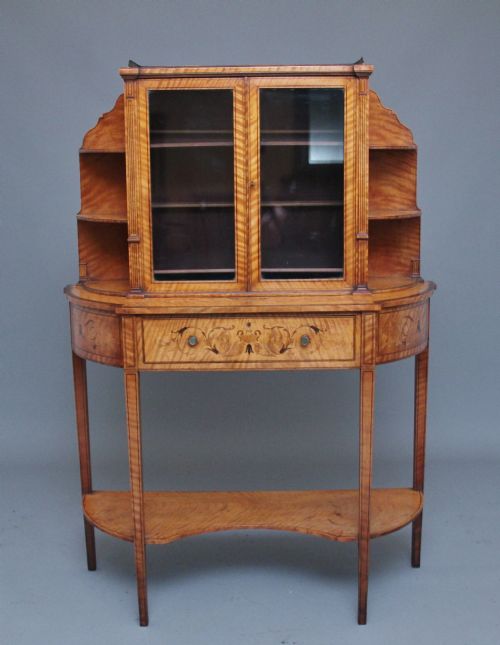


Sheraton Revival Console Cabinet
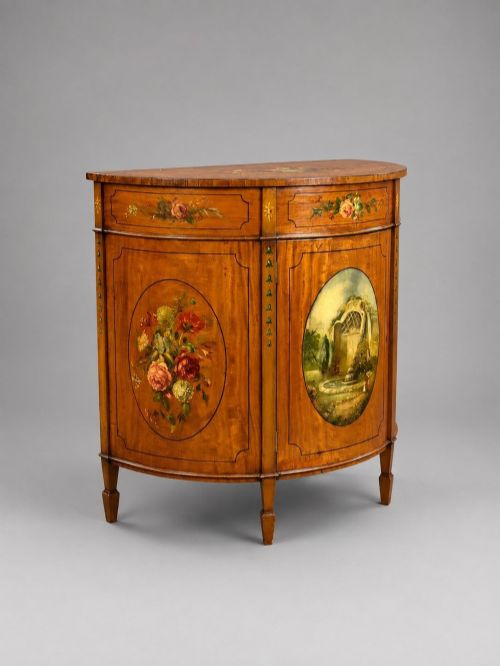
These sheraton revival console cabinet pieces bring light satinwood, elegant painted panels and curved demi-lune shapes into your hallway or drawing room.
Sheraton Revival Console Cabinet
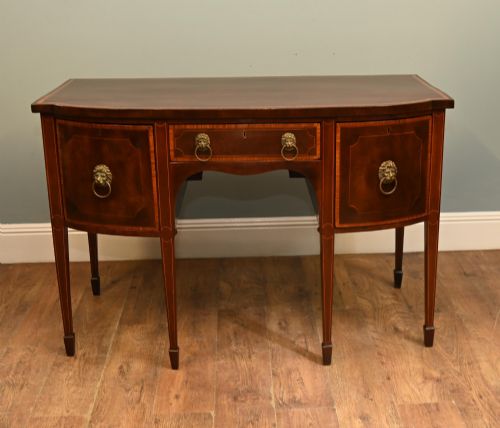
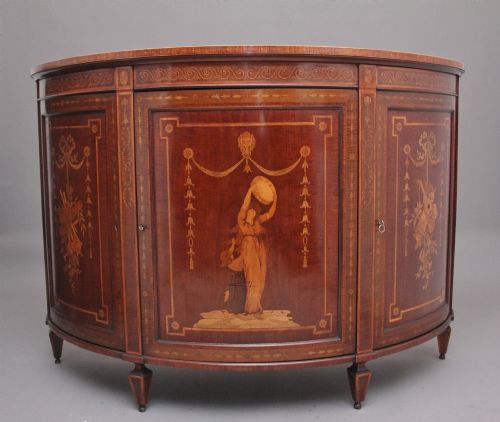
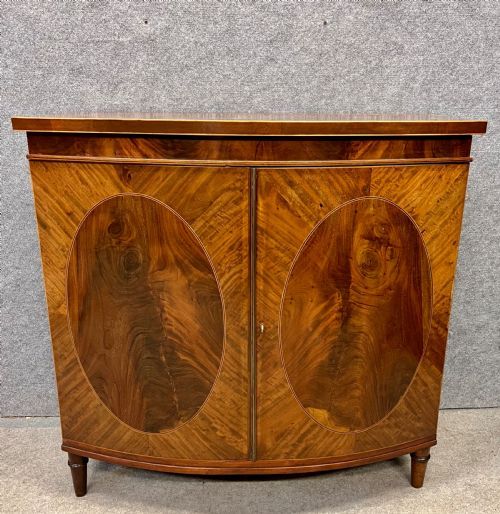
A sheraton revival console cabinet takes its design cues from late eighteenth-century classical furniture, reappearing in forms such as side cabinets, display cabinets, sideboards and corner tables. You are most likely to encounter satinwood and mahogany demi-lune commodes or sideboards produced during the Edwardian period, the nineteenth century and around nineteen hundred.
The objects serve as functional display pieces and surface storage within a room, often featuring curved bow fronts or semi-circular footprints. Makers of the revival era leaned heavily on classical symmetry and graceful proportions to update older Georgian motifs for modern Edwardian interiors.
How they were made
Carpenters constructed these cabinets using timber frames of mahogany, hardwood and satinwood, applying intricate wood inlay to accentuate the curves and edges. Cabinetmakers then added glass panels for display sections and fitted brass hardware to doors and drawers.
Surface decoration frequently involved detailed hand painting directly onto the wood, particularly on satinwood panels. This combination of fine timber, precise inlay and delicate paintwork defined the workshop techniques of the period.
Sheraton Revival Console Cabinet Retail Price Guide 2026
Typical asking prices for sheraton revival console cabinet among the pieces listed under this phrase on Sellingantiques today, from the lower quarter to the upper quarter. They describe what is for sale here now, not the wider market.
Listings span the Edwardian period, Victorian era and nineteen-hundreds, utilising satinwood, mahogany, brass and hand-painted panels.
What varies in quality
The standard of a piece rests largely on the fineness of its painted panels and the crispness of the wood inlay. Cabinets with hand-painted artwork display greater artistic ambition than those relying solely on simple banding or veneer.
Choice of primary wood also dictates character, with figured satinwood commanding attention through its natural grain depth compared to standard mahogany or mixed timber. Structural harmony in demi-lune and bow-front shapes marks out superior cabinet work.
The Sheraton Revival Console Cabinet Glossary
- Demi-lune
- Half-moon shape. This curve defines the footprint of many commodes and side cabinets designed to sit flat against a wall.
- Satinwood
- A yellow-brown tropical timber. It provides a luminous surface that accepts painted decoration and fine inlay with high contrast.
- Inlay
- Contrasting wood or material set into the surface. It creates geometric patterns or floral motifs across cabinet doors and tabletops.
- Sheraton Revival
- A late nineteenth and early twentieth-century design movement. It reproduces or reinterprets the neoclassical furniture style associated with Thomas Sheraton.
Sheraton Revival Console Cabinet: Frequently Asked Questions
How do I identify Sheraton Revival furniture?
Sheraton Revival pieces date from the late nineteenth and early twentieth centuries rather than the eighteenth century.
They replicate classical neoclassical elements such as tapered legs, satinwood surfaces and delicate floral painted panels.
Where should I place a side cabinet?
These cabinets suit reception rooms, dining areas and entrance halls where floor space is at a premium.
Their curved profiles soften the corners of a room and provide a surface for lamps or decorative objects.
What materials are used in these cabinets?
Builders primarily used satinwood and mahogany, supplemented by mixed timber frames and glass panels for display doors.
Decorative additions include contrasting wood inlay and hand-painted details on the timber panels.