




Neoclassical King Size Bed
A neoclassical king size bed brings grand architectural lines and classical symmetry to the bedroom, offering substantial scale alongside refined period detail.
Neoclassical King Size Bed
A neoclassical king size bed combines generous sleeping proportions with classical design motifs drawn from French and Italian traditions. These frames emerge from periods spanning the nineteenth and early twentieth centuries, reflecting enduring tastes for revivalist furniture. You are most likely to encounter French styles on this page, particularly pieces referencing Louis XVI aesthetics alongside broader continental interpretations.
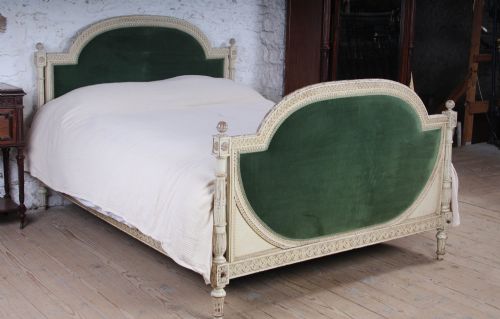
The forms encompass carved wooden bedsteads, painted finishes, and gilded woodwork alongside upholstered panels. Makers of these periods often adapted historic proportions to accommodate larger dimensions, resulting in grand silhouettes suitable for modern master bedrooms. Walnut and mahogany feature prominently alongside painted timber and giltwood, anchoring the traditional appearance of the furniture.
How they were made
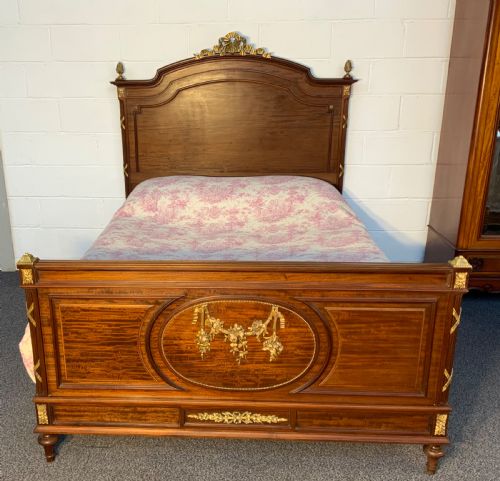
Cabinetmakers constructed these large frames using dense timbers such as mahogany and walnut, which provided the structural integrity required for expansive headboards and footboards. Brass detailing was frequently incorporated to highlight architectural lines, mounted directly onto the wood to create sharp metallic contrasts. Painted and gilded surfaces required meticulous preparation of the wooden substrate before layers of pigment or gold leaf were applied by hand.
Carved ornament relied on traditional joinery techniques, attaching moulded elements securely to the primary frame rather than relying on adhesives. Upholstered sections utilised woven fabrics, velvet, or caning inset into carved wooden borders, demanding precision handiwork from skilled artisans. Each bedstead was built to be dismantled for transport, employing robust internal iron bolts and brackets concealed within the wooden structure.
What varies in quality
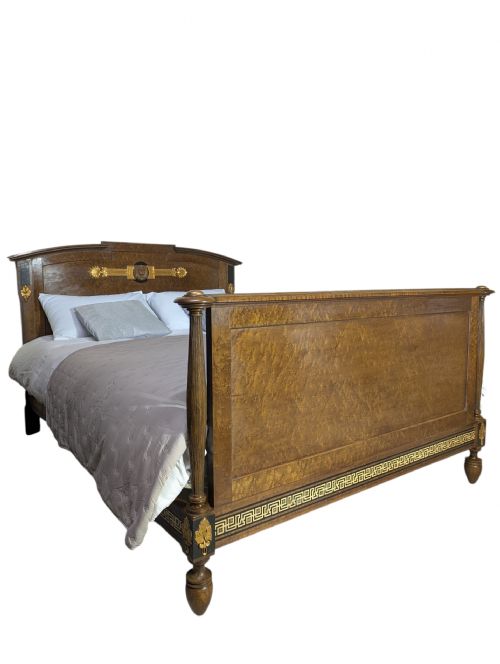
The distinction between standard production and exceptional work lies in the crispness of the carved detail and the selection of timber. Superior examples display deeply undercut wooden ornament and finely chased brass mounts, whereas lesser pieces rely on shallow surface moulding. The choice of wood grain, particularly figured mahogany or burr walnut, determines the visual richness of the finished bedstead.
Proportion and scale also separate ordinary constructions from masterworks, with better pieces maintaining balanced architectural lines across large dimensions. The integration of painted or gilded finishes indicates the original workshop tier, where layered patination outlasts simple surface decoration. Structural rigidity in the side rails and headboard joints distinguishes high-grade antique carpentry from more utilitarian framing.
The Neoclassical King Size Bed Glossary
- Giltwood
- Timber treated with gold leaf or metallic size to create a brilliant decorative surface. This finish appears frequently on high-status neoclassical frames.
- Caning
- Woven rattan material used to form light, airy panels within headboards or footboards. It provides textural contrast against solid wooden frames.
- Louis XVI
- A French design style defined by straight lines, symmetry, and classical restraint. It forms the basis for many continental beds produced during later revival periods.
- Mahogany
- A durable tropical hardwood prized for its deep reddish-brown colour and stable grain. It serves as a primary material for carved nineteenth-century furniture.
Neoclassical King Size Bed: Frequently Asked Questions
What size mattress do these beds fit?
These frames generally accommodate standard modern king size dimensions, though older European measurements can vary slightly from contemporary standards.
It is advisable to check the internal dimensions of the wooden side rails before ordering a new mattress to ensure a proper fit.
How are antique beds assembled?
Most period bedsteads utilise a system of heavy iron bolts or steel brackets that lock the side rails securely into the headboard and footboard.
This modular construction allows large wooden frames to be dismantled easily for transport and reassembled within the bedroom.
Are these beds structurally sturdy?
Period frames are built from dense timbers like mahogany and walnut, offering robust support when properly assembled with correct hardware.
Modern mattress slats are frequently added to the interior ledges to provide contemporary support without altering the historic exterior appearance.
How do I distinguish French styles?
French neoclassical and Louis XVI beds are recognised by straight tapered legs, fluted columns, and restrained classical carvings inspired by antiquity.
Earlier transitional pieces or Italian variants often incorporate bolder curves, richer walnut figuring, and more pronounced brass mountings.