

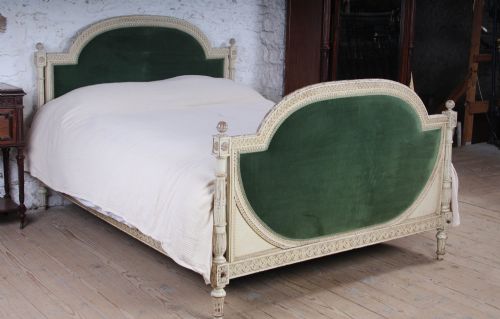


Antique Upholstered Bedstead
An antique upholstered bedstead brings period textile texture and substantial timber framing directly into the bedroom.
Antique Upholstered Bedstead
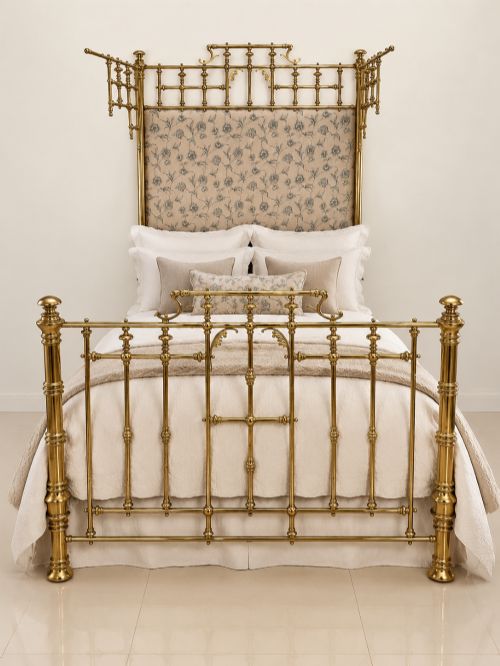
An antique upholstered bedstead combines exposed timber framing with soft textile panels, creating a commanding focal point for the bedroom. The selection spans single and double formats, grand king sizes, low-end frames, and distinct headboards designed for daily use.
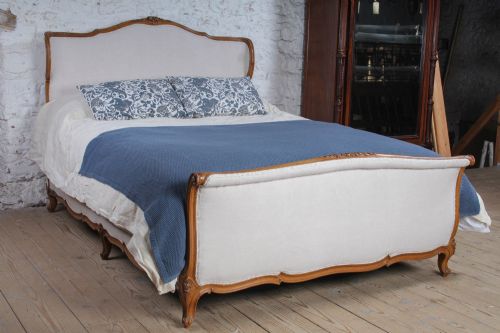
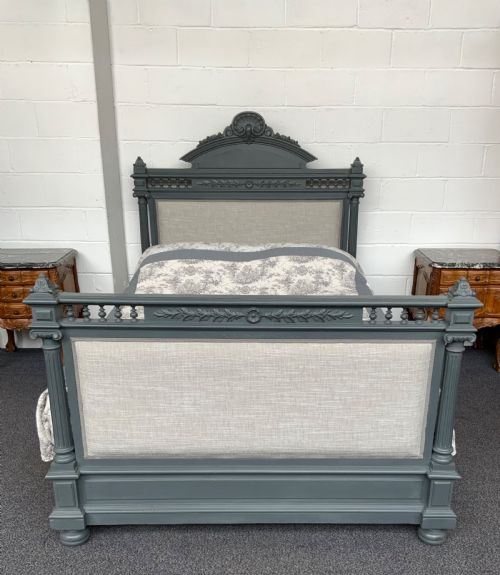
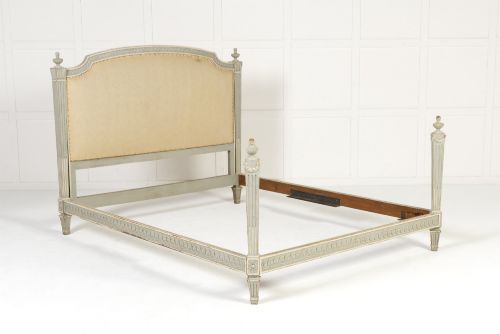
Continental workshops heavily influence the available selection, with French Chateau, Louis XV, Louis XVI, and Italian Rococo styles appearing alongside robust Victorian and Edwardian examples. These pieces date from the nineteenth century through the early twentieth century, offering varied headboard heights and carved profiles.
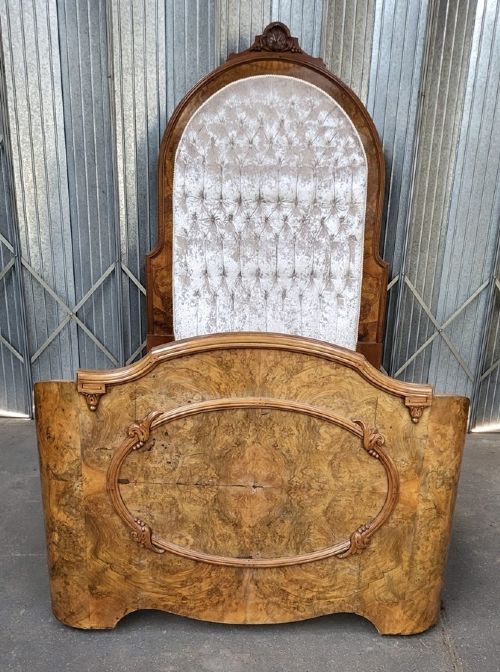
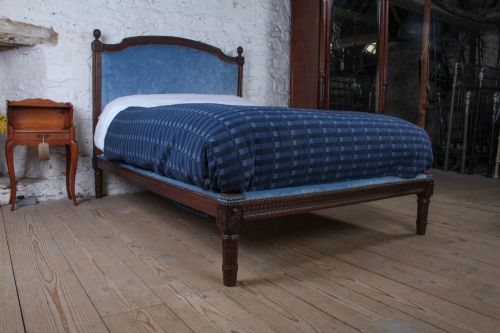
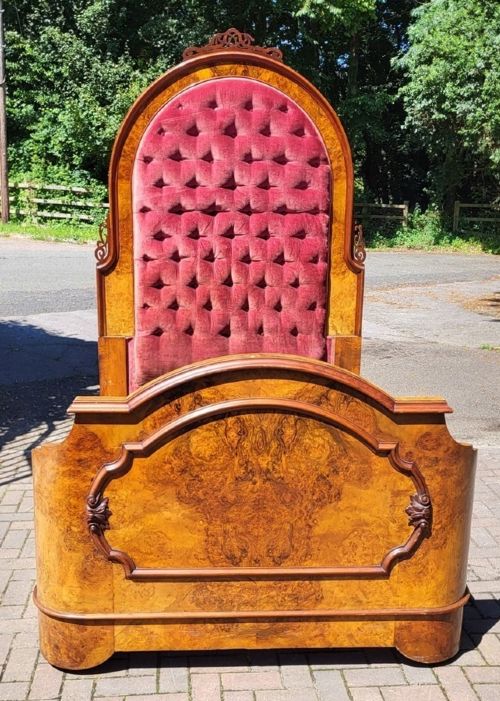
Buyers encounter painted wood, walnut, mahogany, burr walnut, and oak structures paired with contemporary or preserved fabric coverings. Some pieces incorporate carved details, gilt finishes, and distinctive button backs that reflect the aesthetic priorities of their original period.
Materials and Construction Methods
Cabinetmakers utilised solid timbers such as mahogany, oak, walnut, and Hungarian ash to build the foundational framework of each bedstead. These woods were frequently shaped through carving, turning, or applying paint and parcel gilt finishes to achieve specific period aesthetics.
Upholstery formed an integral part of the construction, employing textiles, velvet, tapestry, and fabric panels secured within or against the wooden structure. High button back techniques and newly applied upholstery sit alongside preserved original fabric treatments on surviving frames.
One listed bedstead previously appeared on screen in the second series of the television drama The Great.
Distinctions in Quality and Craftsmanship
The degree of hand-carved detail in the timber frame separates standard production models from exceptional workshop pieces. Crisp lines in carved foliage, scrolling motifs, and gilt work indicate skilled joinery and thoughtful design.
The integrity of the structural wood and the precision of the joinery determine the longevity of the bedstead. Heavier timbers like burr walnut and mahogany provide substantial weight and structural stability compared to simpler painted pine alternatives.
Harrods
The Antique Upholstered Bedstead Glossary
- Bedstead
- The complete framework of a bed, including the headboard, footboard, and side rails. It supports the mattress and bedding without requiring built-in box structures.
- Half Tester
- A bed canopy that extends only partway over the head of the bed from the wall or headboard. This configuration provides decorative presence while keeping the foot of the bed open.
- Louis XVI Style
- A neoclassical design vocabulary characterised by straight tapering legs, rectangular proportions, and classical carved motifs. It reflects eighteenth-century French taste revived in later periods.
- Button Back
- An upholstery method where tufts or buttons are pulled deep into the padding in a diamond pattern. This technique secures the internal stuffing while creating distinct surface texture.
- Parcel Gilt
- A surface treatment where gold leaf is applied selectively to raised carved details rather than the entire object. It highlights specific ornamentation against a painted or polished wood background.
Antique Upholstered Bedstead: Frequently Asked Questions
Will an antique bedstead fit a modern mattress?
Many antique bedsteads accommodate standard mattress sizes, though historical dimensions can vary slightly from contemporary measurements. Checking the internal rail length and width ensures proper compatibility.
Custom slats or modern base inserts frequently adapt older frames to support contemporary mattresses safely while maintaining the original exterior appearance.
How do I care for the upholstered fabric?
Regular gentle dusting with a soft brush or vacuum attachment removes surface debris from velvet, tapestry, and standard textile panels. Protecting the fabric from direct sunlight prevents fading over time.
Professional textile cleaning preserves older or original fabrics without damaging the underlying padding and internal structure of the headboard.
How do I identify the period of a bedstead?
Period identification relies on examining the timber species, carved decorative motifs, and construction techniques used in the frame. Victorian examples often feature dark hardwoods and deep buttoning, while Edwardian and 1920s pieces frequently display painted finishes or lighter French stylistic influences.
Matching the stylistic markers, such as Louis XVI straight lines or Rococo curves, helps narrow down the manufacturing decade when documentation is absent.
Are these beds easy to assemble?
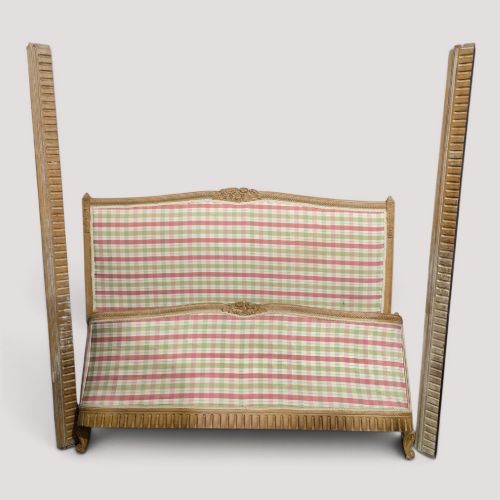
Most antique bedsteads utilise bolt-in side rails or drop-in joints that allow the headboard, footboard, and rails to separate for transport. Assembly typically requires basic hand tools to secure the iron bolts into the wooden mounts.
Enlisting assistance during assembly ensures the heavy timber components align correctly without straining the historical joinery.