

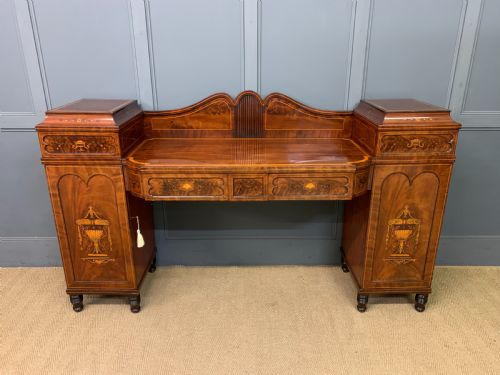
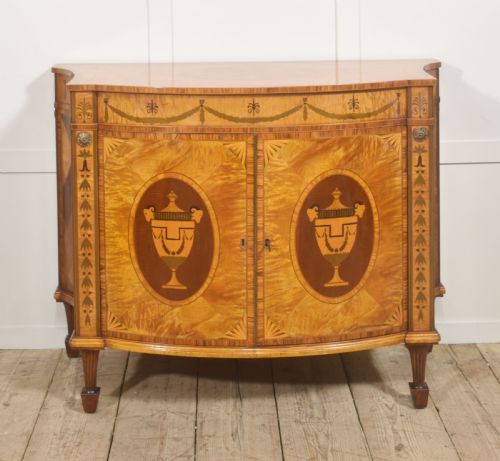


Neoclassical Inlaid Sideboard
A neoclassical inlaid sideboard brings formal symmetry and delicate marquetry to a dining room or hall.
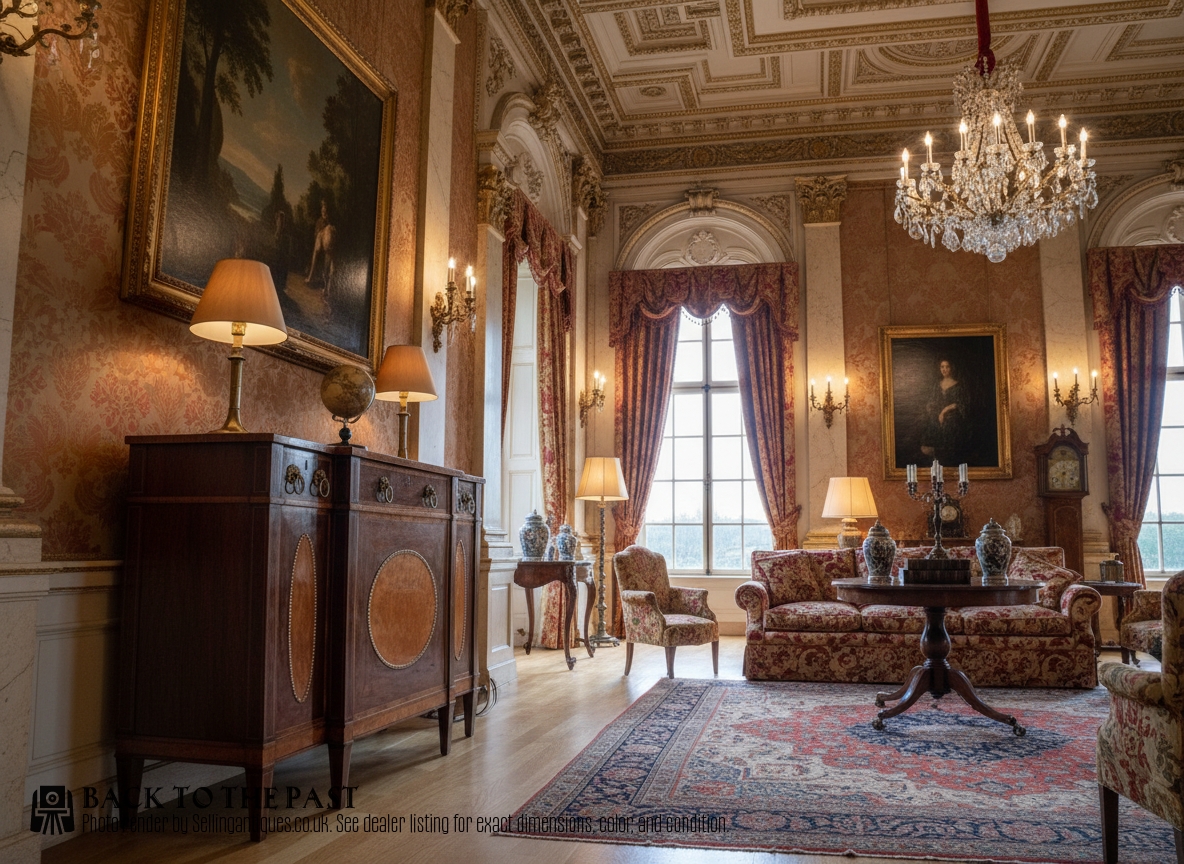
Neoclassical Inlaid Sideboard
A neoclassical inlaid sideboard provides formal storage with clean architectural lines and balanced proportions. These serving and display pieces appear across several periods, from the eighteenth century through revival eras of the nineteenth and twentieth centuries.
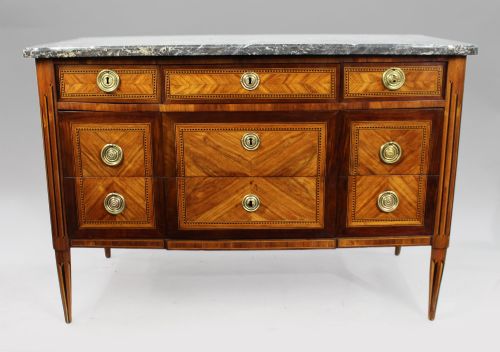
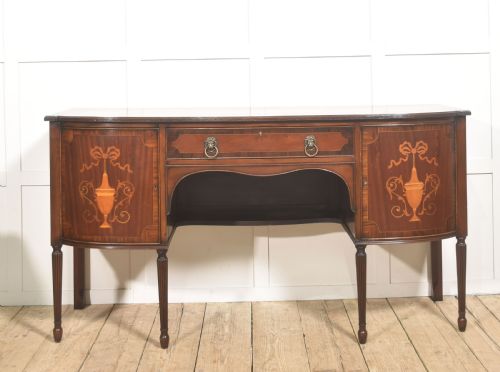
The selection here includes pedestal sideboards, bow-front designs, and demi-lune cabinets alongside commodes. Pieces emerge from English workshops as well as French, Italian, Dutch, and Austrian makers.
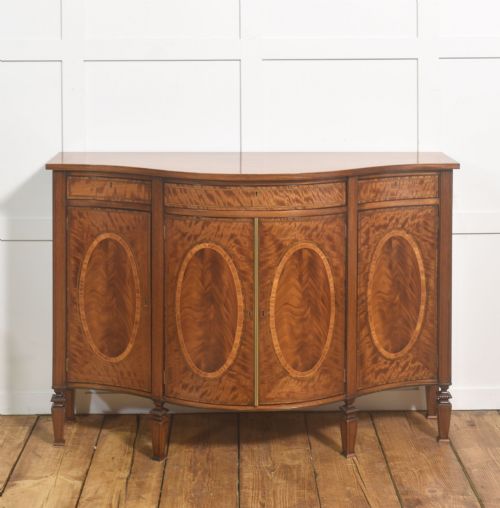
Makers utilised various formats, constructing serpentine side cabinets, breakfront forms, and tambour front cupboards. Buyers encounter eighteenth-century originals alongside later Sheraton and Adam revival interpretations.
Materials and construction
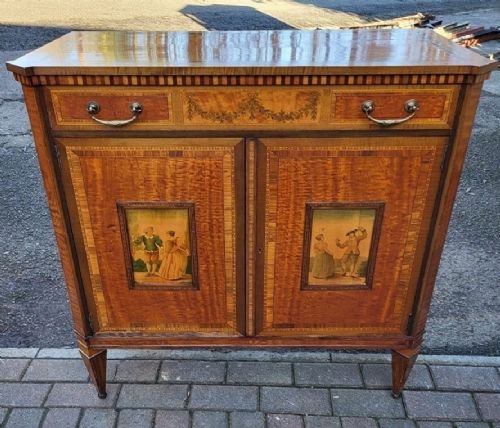
Cabinet makers built carcases primarily in mahogany, satinwood, and walnut, often applying burr elm or maple veneers. Surfaces receive intricate marquetry and parquetry patterns formed from contrasting timber sections.
Detailed inlay work incorporates boxwood lines and delicate floral motifs alongside parcel gilding. Metal components include cast brass handles, feet, and mounts, while top surfaces frequently feature fitted marble slabs.
Primary materials recorded include satinwood, mahogany, walnut, and marble, accented with boxwood, brass, and ormolu.
Assessing quality
Quality rests upon the crispness of the timber inlay and the precision of the cabinet maker's joinery. Superior examples display dense marquetry panels with varied wood species that retain natural grain contrasts.
The choice of primary timber and secondary woods dictates structural integrity, while heavy marble tops and cast brass mounts elevate the standing of a piece. Finer items demonstrate fluid curves on bow-front and demi-lune carcases.
James Hicks·Maple and Co·Pietro Ferrario·Edwards and Roberts
The Neoclassical Inlaid Sideboard Glossary
- Marquetry
- Decorative veneer work forming pictorial or geometric patterns using various coloured woods. Craftsmen assemble thin wood pieces like satinwood and rosewood into intricate designs.
- Demi-lune
- Half-moon shape used for cabinets and sideboards designed to stand flush against a wall. This curved form became popular during the eighteenth century.
- Parquetry
- Geometric mosaic woodwork used for floors and cabinet surfaces. Small wooden tiles form repeating angular patterns.
- Breakfront
- A piece of furniture where the central section projects forward from the flanking sides. This creates architectural depth and visual weight.
- Ormolu
- Gilt bronze mounts applied to furniture edges and feet. The technique involves coating cast bronze with a mercury and gold amalgam.
Neoclassical Inlaid Sideboard: Frequently Asked Questions
What is a neoclassical inlaid sideboard?
A neoclassical inlaid sideboard is a serving or storage cabinet defined by symmetrical geometry, classical motifs, and contrasting wood veneers. These items function as formal focal points within dining spaces and reception rooms.
Craftsmen combined structural utility with decorative surfaces, integrating drawers and cupboards behind refined façades. The category spans late eighteenth-century originals and later revival pieces.
How do I identify a revival piece?
Revival furniture copies the aesthetic codes of earlier centuries, typically emerging during the Victorian and Edwardian eras. Makers utilised period forms like the demi-lune cabinet while employing contemporary machinery and finishing techniques.
Examination of the interior construction and secondary timbers helps distinguish nineteenth-century revival work from eighteenth-century originals. Revival pieces often display exhibition-standard marquetry and polished satinwood surfaces.
Where should I place a demi-lune cabinet?
A demi-lune cabinet fits neatly against flat walls in hallways, drawing rooms, or dining spaces due to its semicircular footprint. The curved profile softens rigid room geometry while offering useful surface display area.
These cabinets often feature cupboards or drawers suited for storing linens or tableware. Their finished backs and refined marquetry allow placement in visible circulation areas.
What woods were used for inlay?
Cabinet makers selected contrasting timbers to create sharp visual separation within inlaid designs. Satinwood, mahogany, and walnut served as primary surfaces, while boxwood provided pale linear stringing.
Rosewood and various dyed veneers introduced darker tones for floral urns and classical ribbon motifs. The natural variation in grain direction catches ambient light across the polished surface.