





Neoclassical Inlaid Desk
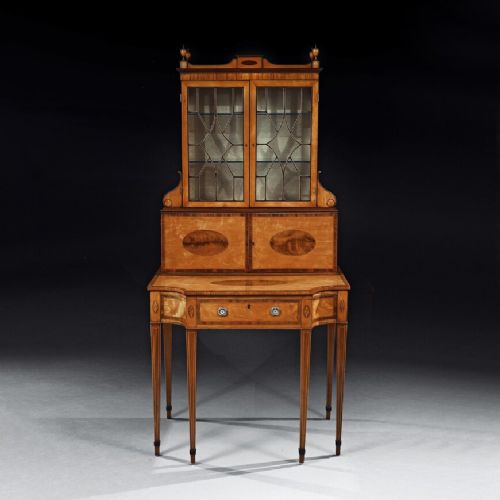
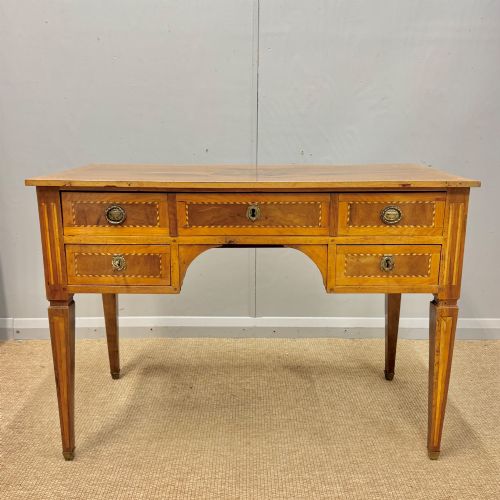
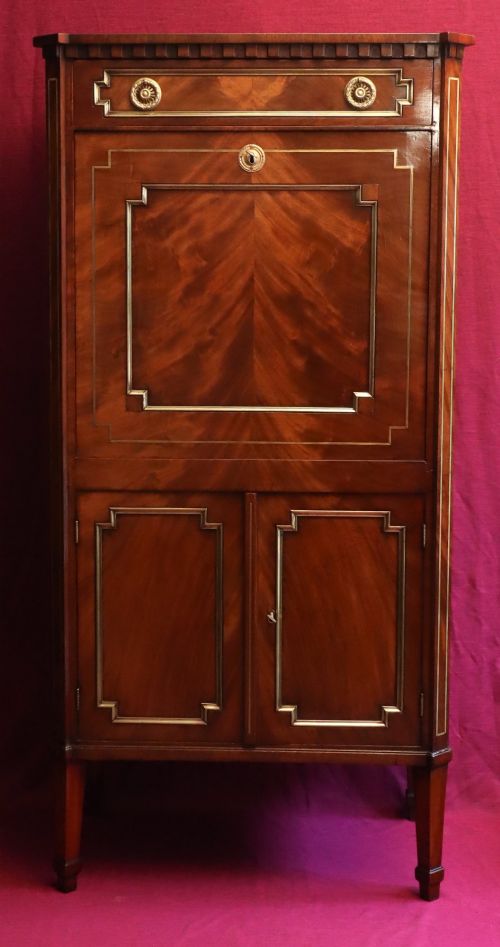
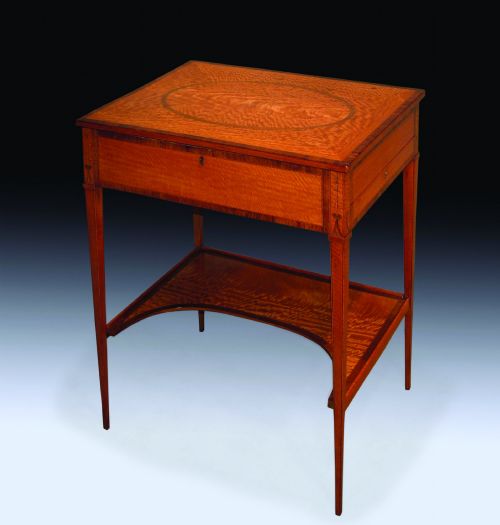
These neoclassical inlaid desk examples combine fine woods and precise marquetry to create sophisticated writing spaces for period interiors.
Neoclassical Inlaid Desk
A neoclassical inlaid desk represents a refined form of writing furniture, drawing upon classical restraint and symmetrical design principles. These pieces emerge in various iterations across the eighteenth and nineteenth centuries, alongside later revival pieces.
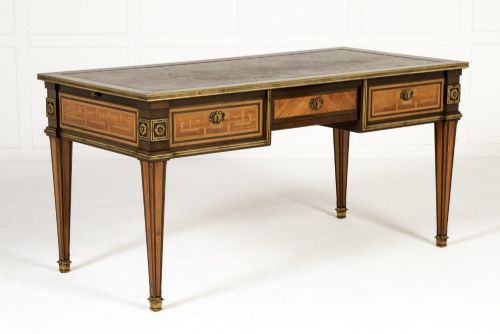
Buyers searching for a neoclassical inlaid desk encounter forms ranging from freestanding marquetry tables to tambour desks and Carlton House desks. Mahogany, satinwood, and partridgewood serve as the primary carcasses for these sophisticated writing surfaces.
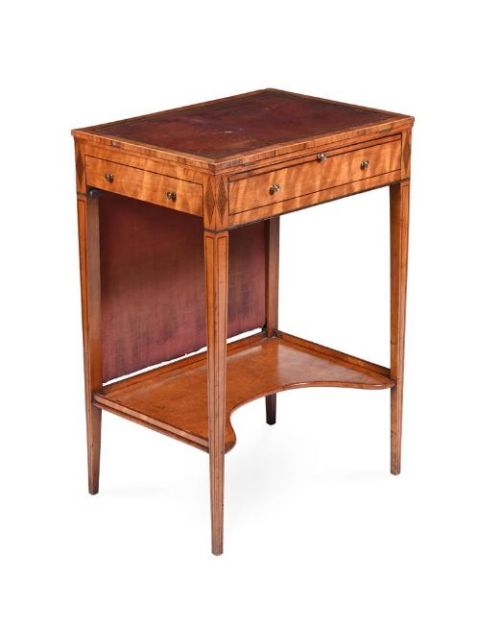
The selection frequently includes pieces bearing Sheraton and Louis XVI stylistic influences, often complemented by satinwood or contrasting boxwood stringing. These writing tables balance decorative marquetry with practical workspace utility.
How they were made
Cabinetmakers constructed these desks using dense timbers such as mahogany, walnut, and rosewood, applying fine veneers of satinwood and partridgewood to the primary surfaces. Detailed marquetry panels utilised contrasting woods and boxwood to form geometric or classical motifs.
Brass mounts, ormolu details, and leather writing inserts frequently completed the construction, adding tactile contrast to the polished timber frames. Joinery relied on traditional framing and dovetailing methods suited to high-end domestic furniture.
Neoclassical Inlaid Desk Retail Price Guide 2026
Typical asking prices for neoclassical inlaid desk among the pieces listed under this phrase on Sellingantiques today, from the lower quarter to the upper quarter. They describe what is for sale here now, not the wider market.
Secret compartments and hidden drawers remind us that historical letter-writers valued their privacy just as much as we do.
What varies in quality
The sophistication of the marquetry and the choice of timbers dictate the standing of an individual piece. Dense mahogany and figured satinwood paired with crisp boxwood inlay distinguish superior examples from simpler constructions.
Proportion and the integration of secondary elements, such as brass mounts or fitted interior compartments, separate standard items from works associated with notable makers. The crispness of the carving and the fidelity to classical proportions remain key indicators of execution.
Paul Sormani·Hepplewhite
The Neoclassical Inlaid Desk Glossary
- Marquetry
- Decorative patterns formed by the insertion of different woods, veneers, or shell into a solid timber background. This technique defines the surface ornamentation on many neoclassical writing tables.
- Satinwood
- A durable, lustrous timber native to Ceylon and India, prized for its golden sheen and smooth grain. It frequently forms the primary veneer on late eighteenth and nineteenth-century desks.
- Tambour
- A sliding surface made of narrow strips of wood glued to a canvas backing, allowing it to curve around a cylinder. This mechanism conceals pigeonholes and small drawers in writing desks.
- Ormolu
- Gilded bronze used for decorative mounts and fittings on fine furniture. It provides metallic contrast against dark mahogany and rosewood surfaces.
- Escritoire
- A writing cabinet featuring a fall-front flap that opens to reveal a fitted interior. These vertical pieces combine storage with a compact writing surface.
Neoclassical Inlaid Desk: Frequently Asked Questions
What is a Carlton House desk?
A Carlton House desk is a distinctive form of writing table featuring a curved superstructure of small drawers and compartments surrounding the main writing surface. This layout provides extensive organisation while maintaining a compact footprint.
Such desks often incorporate fine satinwood veneers and delicate boxwood stringing, reflecting refined neoclassical tastes. They suit studies and drawing rooms where both surface space and concealed storage matter.
How do I care for antique satinwood?
Satinwood surfaces require gentle dusting with a soft, dry cloth and protection from direct sunlight to prevent fading. Maintaining stable room humidity prevents the timber and underlying veneers from drying out.
Avoid using silicone-based polishes, opting instead for traditional wax applied sparingly when the wood appears dry. Regular, careful maintenance preserves the golden lustre of the timber.
Are these desks suitable for daily use?
These writing desks function well for everyday tasks when treated with appropriate care for antique timber and leather surfaces. Using blotters protects the original leather writing inserts from ink marks and scuffs.
Placing the desk away from direct heat sources prevents the joints and veneers from warping over time. Their sturdy mahogany or walnut frames ensure structural stability for regular writing.
How do I identify Sheraton revival pieces?
Sheraton revival pieces date from the late nineteenth and early twentieth centuries, mimicking the light proportions and classical ornamentation of eighteenth-century originals. They frequently utilise satinwood, painted decoration, and tapered legs.
Examining the secondary timbers, construction methods, and screw types helps distinguish these later interpretations from genuine Georgian pieces. The crispness of the inlay often points to the manufacturing period.