
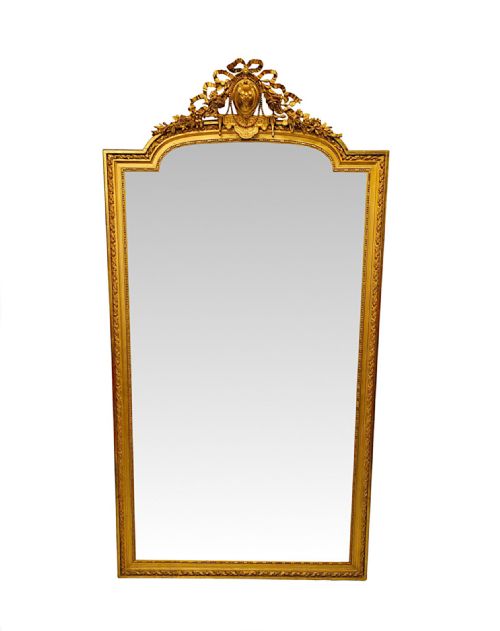


Neoclassical Gold Wall Mirror
A neoclassical gold wall mirror brings architectural proportion and radiant reflection to an interior, drawing on classical motifs like urns and swags.
Neoclassical Gold Wall Mirror
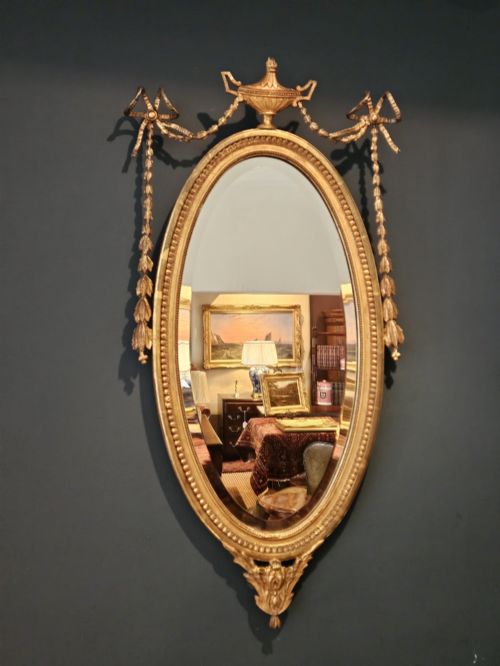
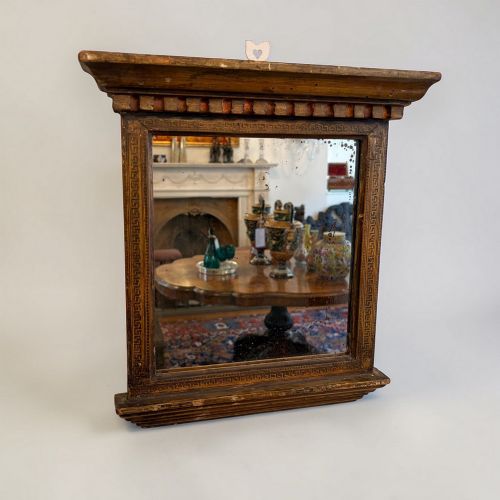
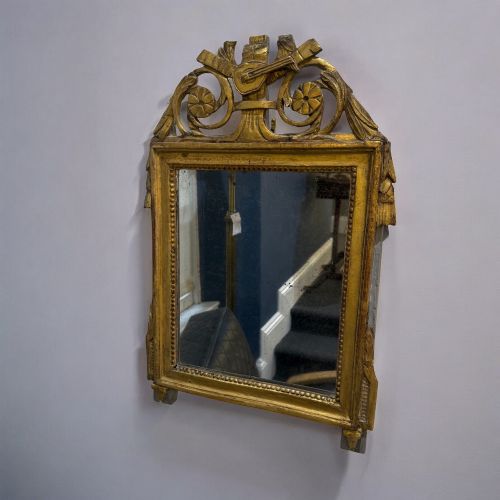
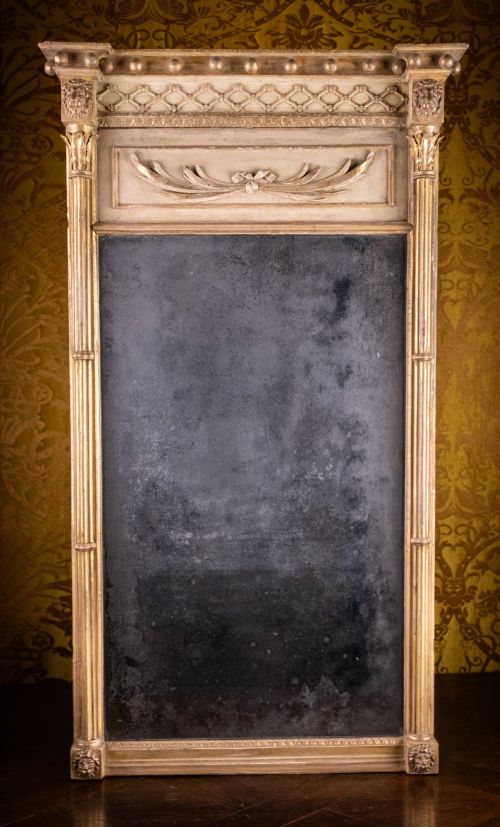
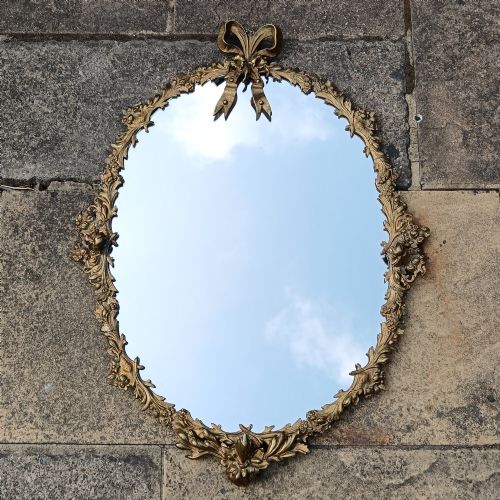
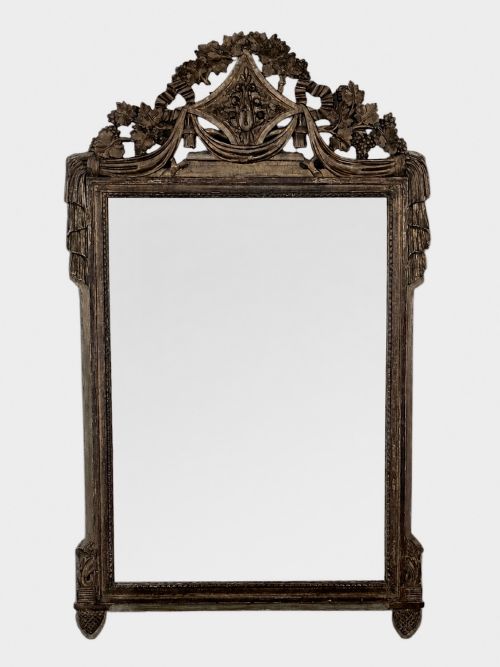
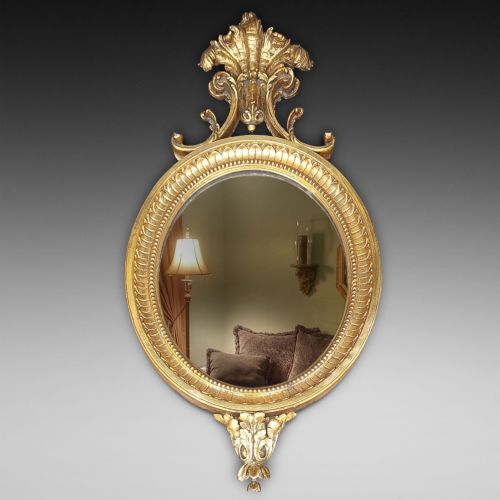
A neoclassical gold wall mirror is a reflective centrepiece defined by classical symmetry, architectural moulding and gilded surfaces. When searching this phrase, buyers encounter pieces originating primarily from the eighteenth and nineteenth centuries, spanning Georgian, Regency and Louis XVI styles.
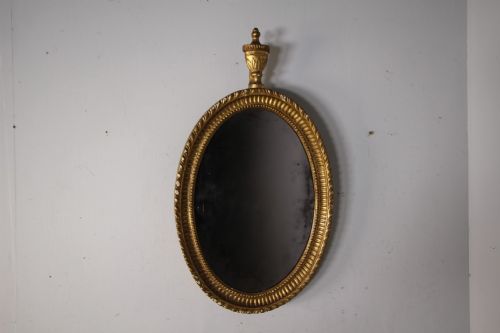
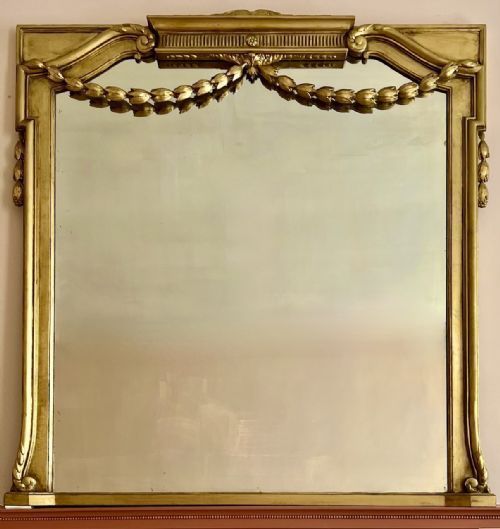
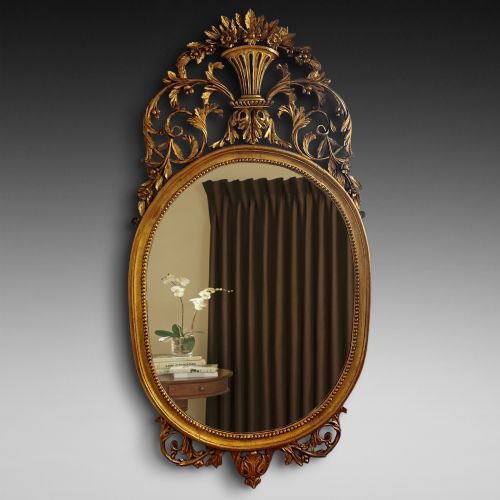
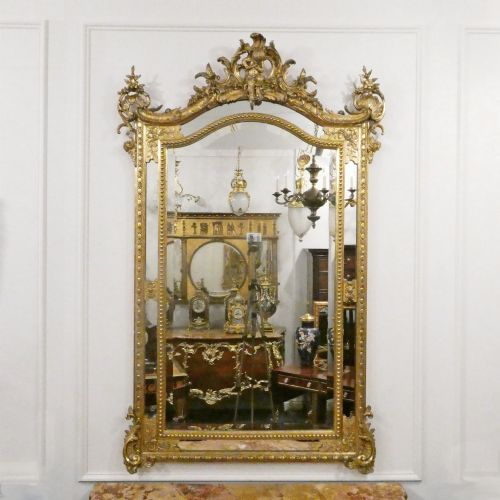
The selection ranges from tall overmantel mirrors and pier mirrors designed for placement between windows to oval wall mirrors and girandoles. Many examples incorporate period elements such as lion masks, urns and swags within their carved timber or composition frames.
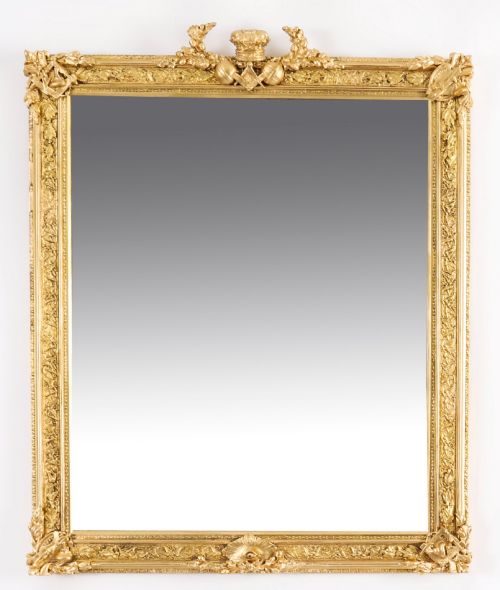
Originating from English, French and Italian workshops, these mirrors vary from restrained classical panels to grand decorative statements. The nineteenth-century revivals, including Adam and Louis XVI styles, appear frequently alongside genuine eighteenth-century pieces.
How they were made
Frames were constructed from carved wood, often giltwood, where thin gold leaf was applied over a prepared bole. Many pieces utilise gesso and composition moulded ornamentation applied to a wooden base to achieve intricate classical relief work.
Mirrors employ either early mercury glass plates or original bevelled glass, showing the characteristic ageing and silvering of period manufacture. Painted wood and parcel-gilt finishes also occur, sometimes combined with ebonised details or gilt bronze mountings.
Listings feature periods from the eighteenth century through to the Edwardian era, predominantly employing giltwood, gesso and mercury glass.
What varies in quality
Quality rests in the crispness of the hand-carved detail and the depth of the gilding. Superior examples display sharply defined motifs like swags and urns moulded in gesso or carved directly into the timber, rather than soft or muddy relief.
The integrity of the glass plate contributes significantly to the character, with period mercury plates and original bevelled edges retaining greater authenticity than modern replacements. Frame construction depth and the retention of original backboards further distinguish higher grade pieces.
The Neoclassical Gold Wall Mirror Glossary
- Giltwood
- Wood that has been coated with gold leaf. This finish provides a warm, reflective metallic surface characteristic of period frames.
- Gesso
- A plaster-like mixture applied to wood frames to create a smooth surface for gilding or to be moulded into relief decoration. It allows for intricate classical ornamentation.
- Composition
- A moulded mixture of whiting, resin, linseed oil and glue used to form decorative details on frames. It replaced hand carving for repetitive elements like swags and beads.
- Pier Mirror
- A tall mirror designed to hang on the wall space between two windows, often placed above a pier table. These pieces frequently share proportions with overmantel mirrors.
- Mercury Plate
- An early mirror glass produced using a tin and mercury amalgam. This technique results in a mottled, atmospheric reflection distinctive of eighteenth and nineteenth-century looking glasses.
Neoclassical Gold Wall Mirror: Frequently Asked Questions
Where should I hang an overmantel mirror?
An overmantel mirror traditionally sits directly above a fireplace mantelpiece, anchoring the vertical space of a chimney breast. Its scale usually reflects the width of the hearth below.
In modern interiors, the same placement works to bounce natural light around the room while creating a formal architectural focal point.
How do I identify a Regency mirror?
Regency mirrors date from the early nineteenth century and typically display bold classical restraint, often incorporating motifs like lion masks, reeded columns or convex round frames.
Their construction combines heavy giltwood or painted finishes with distinct architectural proportions suited to Regency domestic interiors.
What is mercury glass?
Mercury glass refers to mirror plates silvered using a tin-mercury mixture before the invention of the modern chemical silvering process. This older method produces a characteristic speckled, soft reflection.
Finding an original mercury plate in a nineteenth-century frame adds significant historical integrity to the piece.
Are these mirrors heavy?
Period wall mirrors built from solid timber, gesso and thick glass possess substantial weight. Proper wall fixings into structural studs or masonry are essential for secure hanging.
Overmantel and pier mirrors particularly require robust hardware to support their extended wooden frames safely.