


Neoclassical Gilt Console
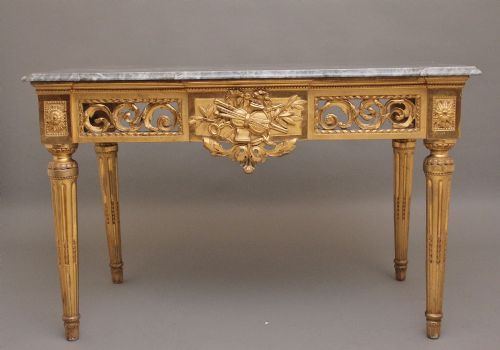
A neoclassical gilt console brings classical proportion and reflective light into a room, combining carved wood and polished stone.
Neoclassical Gilt Console
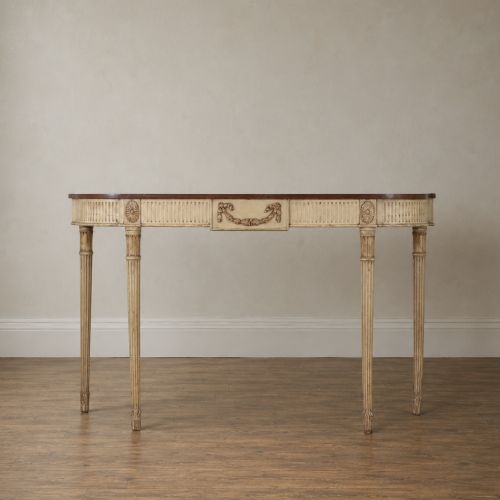
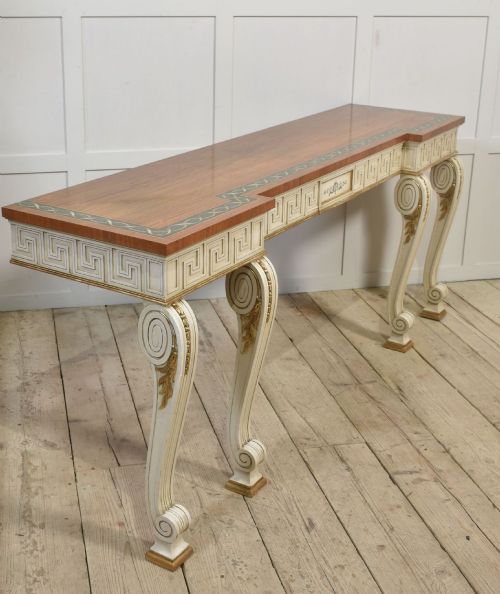
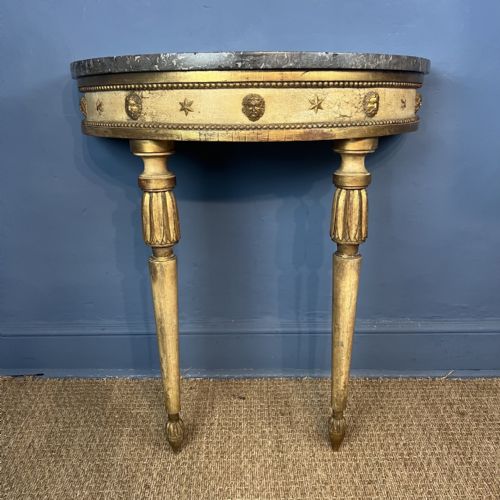
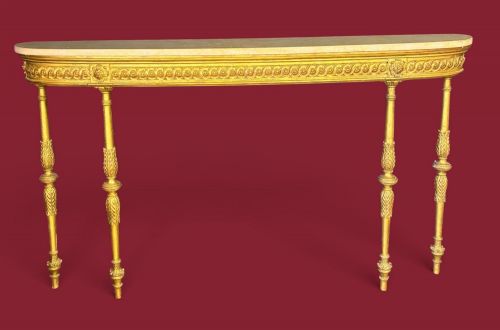
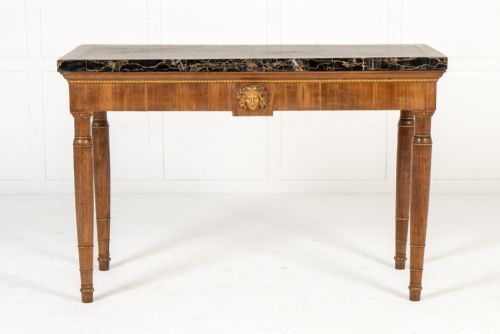
A neoclassical gilt console stands against a wall as a focal point, often paired with a matching pier mirror above it. The selection spans console tables, side tables, and wall brackets rooted in 18th Century and 19th Century design.
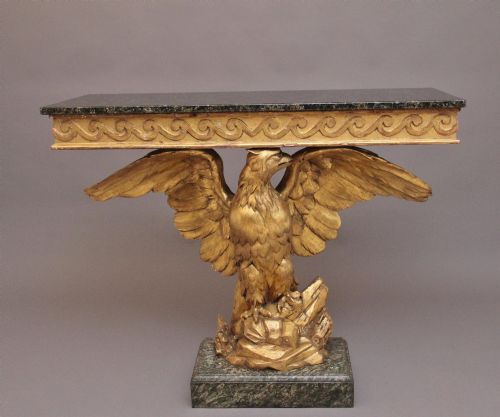
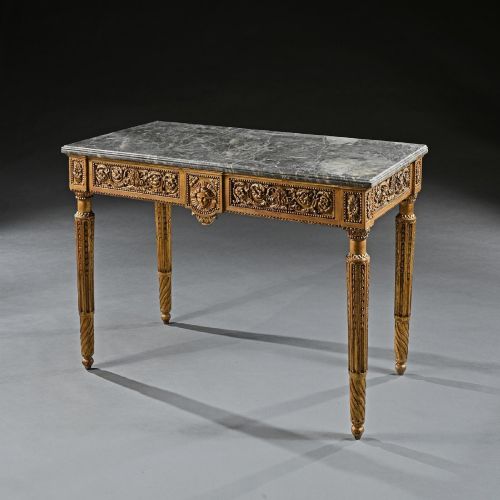
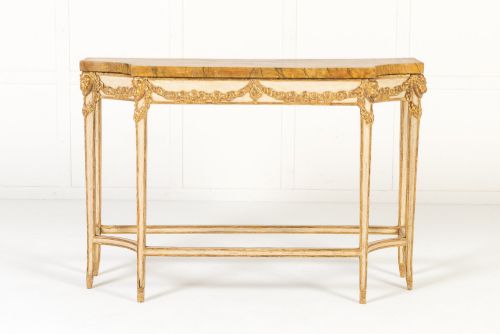
Italian, French, and English variations dominate the selection, referencing Louis XVI, Empire, and Adam styles. Surfaces range from white and rouge marble tops to faux porphyry, supported by painted wood, mahogany, or walnut.
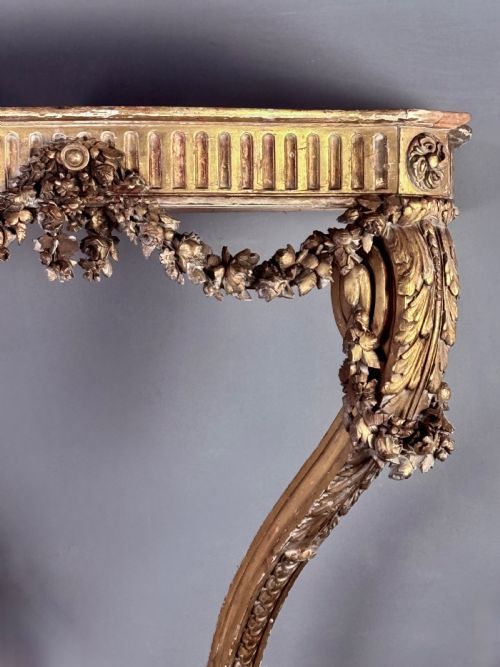
Formats include demi-lune shapes designed to fit flush against a wall alongside rectangular side tables and smaller display pieces. Many examples employ carved giltwood, gesso, and parcel gilt finishes to catch the daylight.
How they were made
Carvers shaped structural timber from mahogany, walnut, or pine before applying layers of gesso to smooth the surface for gilding. Artisans laid gold leaf or used painted finishes alongside parcel gilt details to accentuate classical motifs.
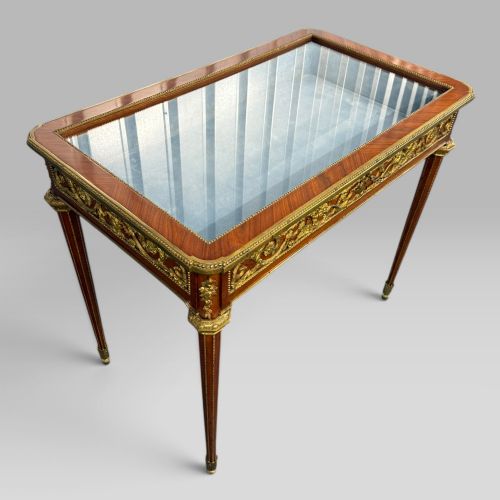
Heavy marble slabs, including rouge and white varieties, were cut and polished to fit precisely onto the wooden frames. Ormolu mounts and bronze details were cast and applied to French Empire and Louis XVI style pieces to complete the composition.
Some Italian tables feature carved wooden dolphins supporting the frame beneath the marble.
What varies in quality
Depth and crispness in the wood carving separate standard joinery from superior work, particularly around acanthus leaves, fluted legs, and applied giltwood ornamentation. Hand-carved elements display sharper undercut details and smoother transitions than moulded compositions.
The choice and thickness of the marble top influence the overall integrity of the piece, with dense natural stone slabs fitted securely to the subframe. The application of gold leaf and the preservation of original painted or faux porphyry surfaces dictate the visual impact of the finish.
Felix-Alfred Ternisien·François Linke·Gillows
The Neoclassical Gilt Console Glossary
- Giltwood
- Wood that has been coated with gold leaf or powder over a prepared gesso ground. This finish provides a luminous surface that catches ambient light.
- Ormolu
- Gilded bronze used for decorative mounts on furniture. It adds metallic contrast to wood and marble surfaces.
- Demi-lune
- A half-moon shape characteristic of tables designed to stand flat against a wall. This profile saves floor space in narrower rooms and hallways.
- Pier glass
- A tall mirror designed to hang on the wall space between windows, frequently positioned directly above a console table. It helps to bounce natural light further into the interior.
Neoclassical Gilt Console: Frequently Asked Questions
Where should I place a console table?
These tables fit naturally in entrance halls, long corridors, or against living room walls where floor space is limited. Their shallow profiles allow them to sit flush against plaster without obstructing movement.
Pairing a console with a matching wall bracket or pier mirror creates a balanced focal point. The surface provides a practical spot for lighting or decorative objects.
How do I care for a marble top?
Clean the stone surface regularly with a soft, damp cloth and mild soap, avoiding acidic or abrasive household cleaners. Marble is porous and susceptible to staining from liquids if left unattended.
Protect the polish by using coasters under glasses and placing felt pads beneath heavy decorative objects. Routine dusting keeps the stone and the surrounding giltwood frame in stable condition.
What defines the neoclassical style?
Neoclassical design draws inspiration from the classical architecture and art of ancient Greece and Rome. It relies on symmetry, straight lines, fluted legs, and restrained ornamentation rather than heavy curves.
Tables from this design movement often feature geometric motifs, urns, and swags rendered in carved wood or painted finishes. This approach creates a sense of order and classical proportion.
Can these tables support heavy objects?
The structural strength depends on the wooden framework and the weight of the fitted marble top. Most pieces serve well for displaying lamps, ceramics, and books.
Console tables with wall brackets or multiple legs offer additional stability for daily use. Placing the table against a wall prevents tipping and ensures secure support.