






Neoclassical French Bedstead
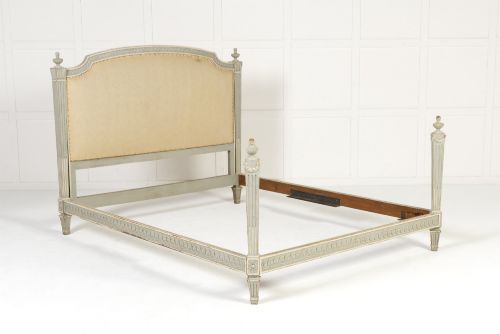
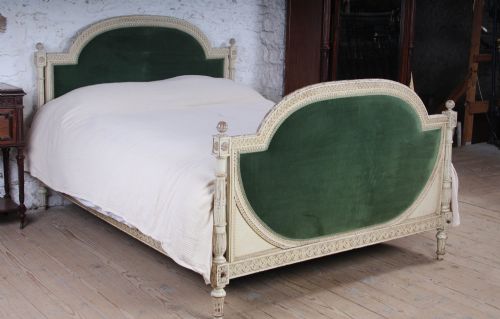
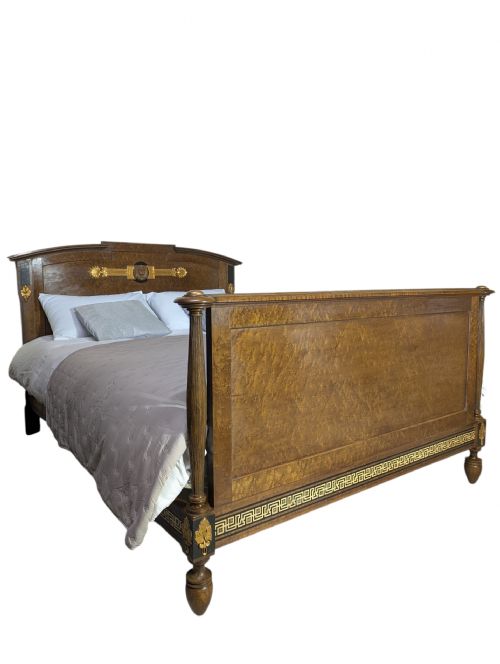
These neoclassical french bedstead examples bring monumental timber framing and restrained classical detailing straight into a grand bedroom.
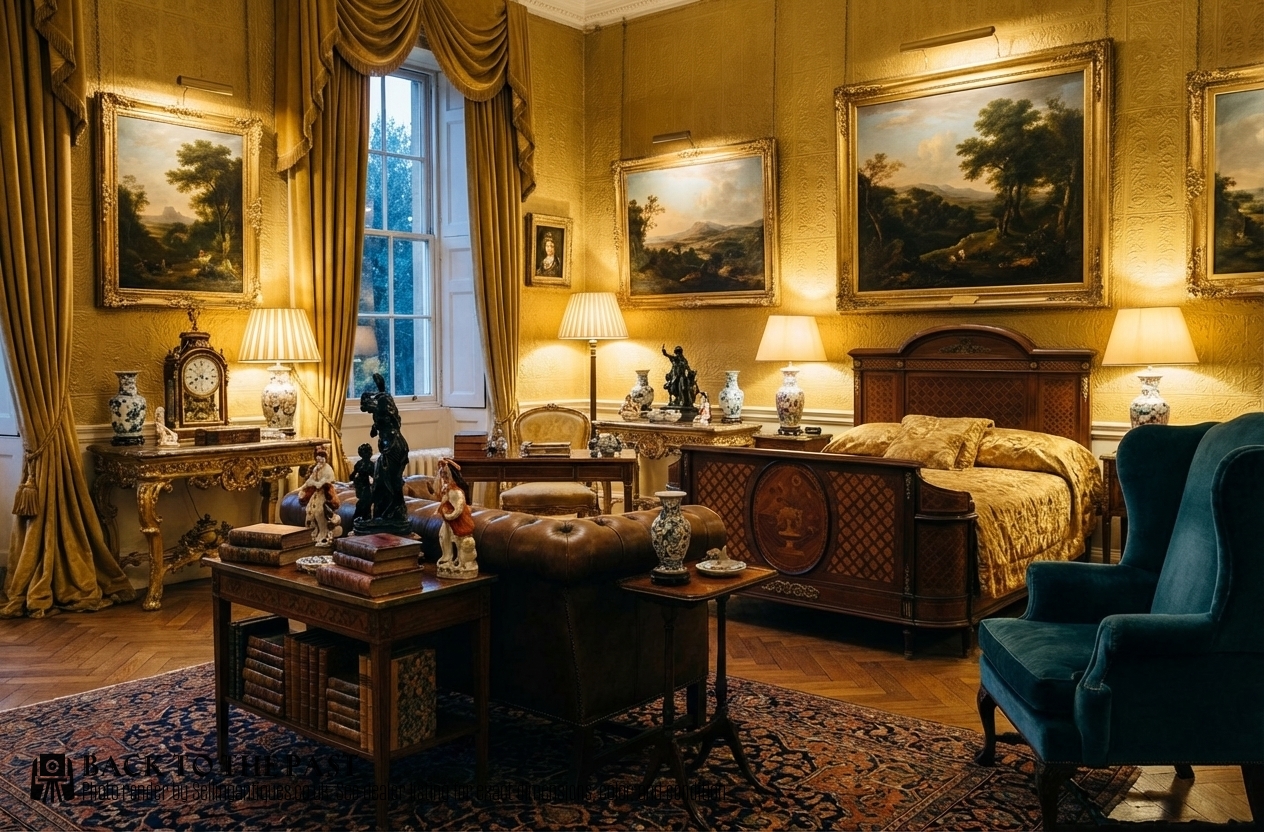
Neoclassical French Bedstead
A neoclassical french bedstead is a substantial sleeping frame originating from periods spanning the nineteenth and early twentieth centuries, including pieces built around 1800 through to the 1920s. These pieces include single beds, double beds, king size frames, and large marriage beds designed with distinct classical proportions.
Buyers seeking this phrase encounter variations styled after the Louis XVI period, French Empire, and French chateau aesthetics. Painted finishes, polished mahogany, walnut, and fruitwood dominate the forms available on the market.
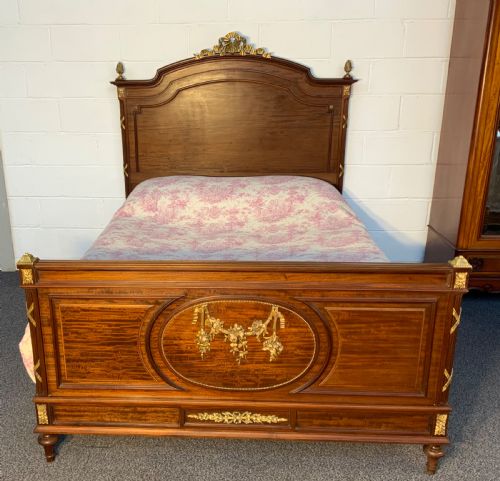
Many examples incorporate decorative elements such as brass detailing, ormolu mounts, parquetry, and hand painted portrait panels. Caned panels and gilded carvings also appear across the surviving inventory of these items.
Materials and construction
Cabinet makers constructed these bedframes using solid timbers including mahogany, walnut, fruitwood, and general wood painted in polychrome or monochrome schemes. Plum pudding mahogany and marquetry veneers provide distinct surface textures on select refined pieces.
Metal embellishments play a structural and decorative role, with brass fittings and ormolu mounts fixed to timber frames. Cane work is utilised for open headboards and footboards on specific lighter designs.
Listings for this phrase include pieces from the 1800s, the 19th century broadly, and specific decades from 1880 through to 1920.
Judging the quality
Quality in a neoclassical french bedstead depends on the precision of the timber selection and the complexity of the parquetry work. Pieces utilising dense mahogany veneers or carefully matched fruitwood demonstrate superior cabinet making compared to plain painted alternatives.
The execution of decorative hardware separates standard production from finer work. Heavy, crisp ormolu mounts and finely cast brass detailing indicate a higher grade of workshop origin than simple stamped metal strips.
The Neoclassical French Bedstead Glossary
- Ormolu
- Gilded bronze mounts applied to furniture. This technique gives metallic decorative highlights against polished wood surfaces.
- Parquetry
- Geometric wood mosaic work used for surface decoration. Small pieces of contrasting timber form patterned veneers on headboards and footboards.
- Louis XVI Style
- A design movement characterised by straight lines, classical symmetry, and restrained ornamentation. It draws directly upon ancient Roman and Greek architectural motifs.
- Plum pudding mahogany
- A decorative tropical hardwood variety featuring speckled grain patterns. It provides rich visual texture across large flat panels.
Neoclassical French Bedstead: Frequently Asked Questions
What mattress size fits these beds?
These historical frames were built before modern standardised sizing became universal. Many accommodate standard king or double dimensions, but individual inner rails require careful measurement.
Buyers should verify internal rail lengths and widths prior to sourcing a contemporary mattress for the frame.
How do I care for polished wood?
Polished mahogany and walnut surfaces require regular dusting with a soft, dry cloth. Avoid placing timber frames near direct heat sources to prevent veneer cracking.
Natural beeswax polish applied sparingly helps maintain the lustre of nineteenth century wood finishes over time.
Are these beds easy to assemble?
Most antique French bedsteads utilise standard bolt-together side rail connections rather than modern interlocking brackets. Assembly typically requires basic spanners to secure the headboard, footboard, and side rails together.
Having two people manage the heavy timber components ensures the structure remains square during tightening.
How do I identify Louis XVI revival pieces?
Louis XVI revival pieces exhibit straight fluted columns, symmetrical proportions, and classical motifs such as ribands and urns. These decorative traits emulate eighteenth century ideals despite dating from later periods.
Examining the underlying timber construction helps distinguish nineteenth century revival work from earlier originals.