
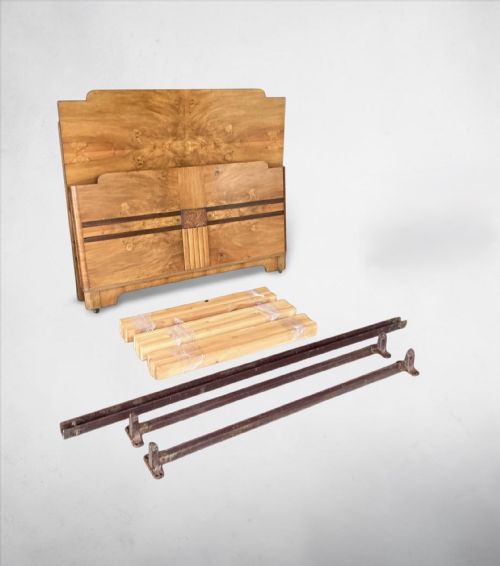


French Marquetry Bed Frame
A French marquetry bed frame brings intricate floral wood patterns and rich walnut or mahogany into the bedroom.
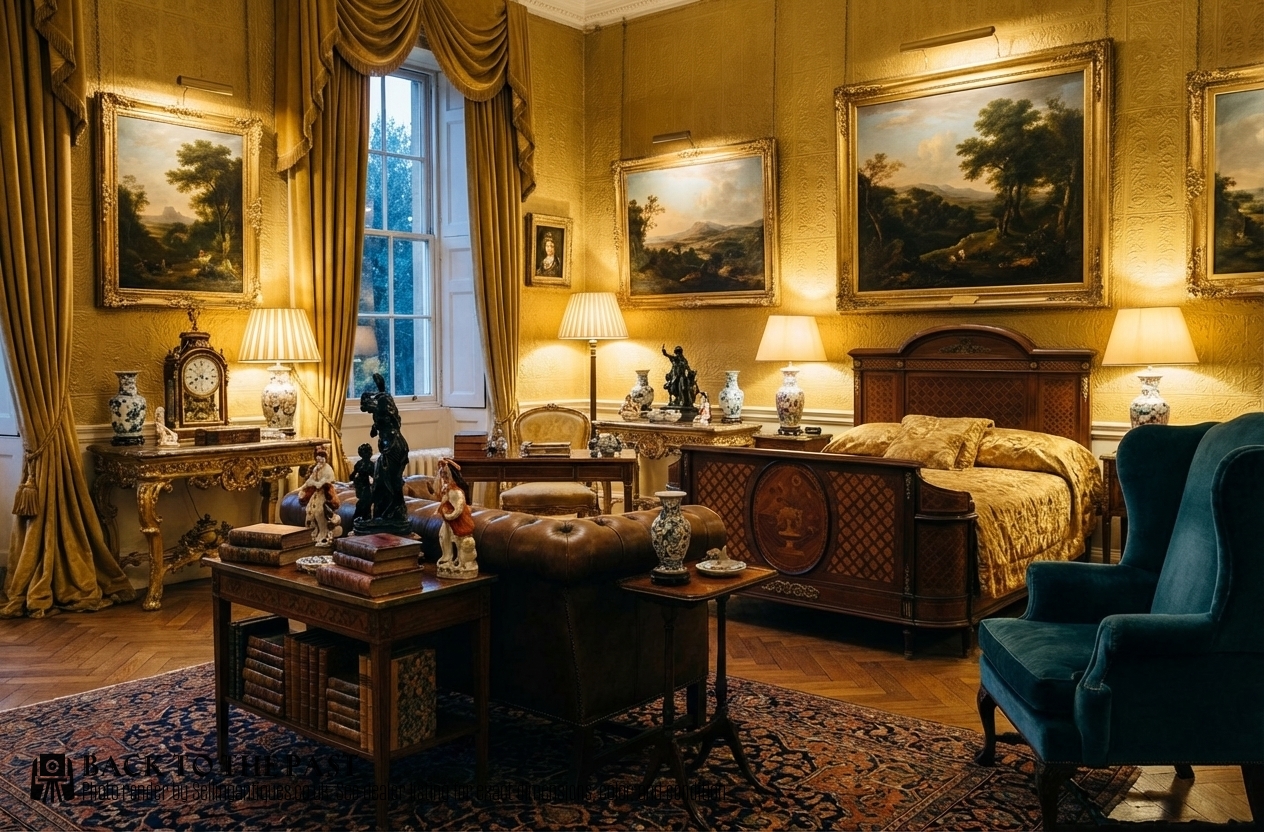
French Marquetry Bed Frame
A French marquetry bed frame is a statement piece for the bedroom, combining large sleeping furniture with detailed wood veneer inlay. When searching for a french marquetry bed frame, buyers encounter pieces spanning the nineteenth and twentieth centuries, from the 1800s through to the Art Deco period.
The selections on this page appear in various styles including Louis XVI revival, French Empire, and Art Nouveau. Formats range from standard double beds to king-size bedsteads, sometimes accompanied by matching bedside cabinets or marble top nightstands.
Makers and designers of the period utilised specific regional aesthetics, such as Louis XV styles and French Chateau forms. These grand pieces serve as the visual anchor of a bedroom suite.
How they were made
These bed frames rely on solid timbers and applied veneers, principally walnut, burr walnut, mahogany, and fruitwood. Craftsmen arranged contrasting wood slices to form pictorial or geometric marquetry patterns across the headboards and footboards.
Many examples incorporate cast or chased ormolu mounts to accent the corners and borders of the woodwork. Structural elements occasionally utilise steel alongside traditional cabinetmaking timbers to ensure stability.
Listings span the 1800s, 1870, 1890, 1900, 1910, 1920, and 1930 periods.
What varies in quality
Quality rests in the precision of the veneer work and the complexity of the marquetry motifs. Finer examples display tight, seamless grain matching and expressive tonal variations in the fruitwood and burr walnut.
The crispness of the applied ormolu mounts and the depth of the timber carving separate standard productions from superior commissions. Comprehensive bedroom suites with matching bedside cabinets demonstrate a higher tier of original patronage.
Louis Majorelle
The French Marquetry Bed Frame Glossary
- Marquetry
- Decorative veneer work arranged in pictorial or geometric patterns on a wooden surface. This technique requires exceptional skill to cut and fit disparate wood species together.
- Ormolu
- Gilt bronze mounts applied to furniture for ornamentation. Makers cast and chased these metal elements to highlight structural lines.
- Burr Walnut
- Timber taken from a tree growth that produces swirling, highly figured grain patterns. Cabinetmakers prize this wood for its rich visual texture.
- Louis XVI Revival
- A nineteenth-century design movement drawing on classical symmetry and straight lines. Pieces in this style often feature restrained proportions and architectural detailing.
French Marquetry Bed Frame: Frequently Asked Questions
What sizes are these beds?
These bed frames appear primarily in double and king sizes, reflecting historical dimensions alongside adaptations for modern mattresses.
Buyers should check exact internal dimensions within individual listings to ensure compatibility with modern bedding standards.
How do I identify the style?
Styles range from ornate Louis XV and Louis XVI revivals to geometric Art Deco and flowing Art Nouveau lines. Reviewing the decorative motifs, such as floral marquetry or classical mounts, reveals the primary design period.
Cabinetmaking details and timber choices further clarify whether a piece originates from the nineteenth century or the early twentieth century.
Are bedside cabinets usually included?
Some listings offer complete bedroom suites or matched pairs of bedside cabinets alongside the main bedstead. These companion pieces often feature matching marble tops and complementary marquetry.
Individual bed frames also appear independently for buyers seeking a single focal point.
What woods are most common?
Walnut, burr walnut, mahogany, and various fruitwoods dominate the construction and veneer work of these frames. Ormolu and marble frequently appear as secondary materials for mounts and nightstand surfaces.
Steel components occasionally support the internal structure of twentieth-century frames.