
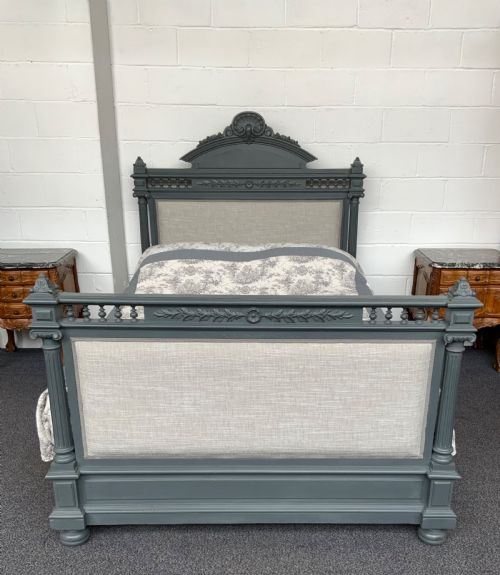


Kingsize Wooden Bed Frame
A kingsize wooden bed frame offers generous proportions paired with traditional craftsmanship, bringing historic character and practical comfort to a bedroom.
Kingsize Wooden Bed Frame
A kingsize wooden bed frame provides a substantial sleeping platform created from timbers such as oak, walnut, mahogany burr, fruitwood and painted wood. These pieces span the late nineteenth century through to the interwar period, specifically covering dates from 1890 to 1930.
The aesthetic leans heavily toward continental traditions, with French Chateau, Louis XV Style, Louis XVI Style, Louis XV Revival, Louis XVI Revival and French Neoclassical designs appearing frequently among the forms. Buyers encounter beds featuring carved details, cane panelling, or upholstered elements alongside plain painted finishes.
The scale accommodates modern mattress sizes while retaining period integrity through traditional joinery and timber selection. Pieces range from robust carved oak constructions to refined French walnut frames and painted surfaces.
How they were made
Cabinetmakers utilised solid hardwoods like oak and walnut, alongside decorative veneers such as mahogany burr and fruitwood, shaping them with hand-carved ornamentation. Ormolu mounts and painted finishes occasionally supplemented the exposed woodwork.
Canework panels and textile upholstery were integrated into headboards and footboards using traditional webbing and stitching methods. Frame structures relied on sturdy mortise and tenon joinery designed to support heavy mattress loads securely.
Several beds boast cane panels sturdy enough to survive a century of leaning while you read the morning broadsheet.
What varies in quality
The depth and crispness of hand-carving distinguish finer examples from simpler production, particularly in the floral and scroll motifs found on French revival frames. Timber selection also dictates grade, with figured burrs and dense quarter-sawn oak commanding higher regard than plain or secondary woods.
The preservation of original surface treatments, whether patinated walnut or early painted finishes, separates untouched examples from those heavily altered or stripped later in life.
The Kingsize Wooden Bed Frame Glossary
- Ormolu
- Gilt bronze ornamentation applied to furniture, often cast and chased with rococo or neoclassical motifs. It adds a bright metallic contrast to dark woods.
- Cane
- Woven rattan or split reed material used for lightweight panel inserts in headboards and footboards. It provides a breathable and decorative surface.
- Burr
- A growth on a tree that produces highly figured, swirling wood grain when sliced into veneers. Cabinetmakers prized it for dramatic cabinet and bed fronts.
- Louis XV Revival
- A nineteenth-century design movement mimicking the asymmetrical curves, cartouches and foliage of the mid-eighteenth-century French court. It remains popular in continental bed frames.
- Fruitwood
- Timber sourced from fruit-bearing trees such as pear or apple, utilised for its smooth texture and warm tone.
Kingsize Wooden Bed Frame: Frequently Asked Questions
Will a modern mattress fit?
These frames were built to accommodate standard sizing parameters, though historical dimensions can occasionally vary slightly from modern metrics.
Checking the internal length and width dimensions before sourcing a mattress ensures a flush fit within the wooden rails.
How do I care for polished wood?
Polished wood benefits from occasional treatment with traditional beeswax to nourish the timber and maintain a soft lustre.
Avoiding direct sunlight and excessive humidity prevents the walnut, oak or mahogany from drying and splitting over time.
Can I dismantle the frame?
Period wooden beds typically utilise knockdown bolt systems or interlocking timber rails designed for straightforward transport and assembly.
Keeping the original metal bolts and fittings secure during moves preserves the structural integrity of the joints.
How do I identify French styles?
French styles display distinct regional traits, such as the cabriole legs and floral carvings of Louis XV designs versus the straight fluted columns of Louis XVI pieces.
Upholstered panels and painted or polished walnut finishes further reinforce this continental aesthetic.